
Chicken And Chorizo Paella Recipe
This post contains affiliate links. As an Amazon Associate I earn from qualifying purchases.
Picture this: it’s a Saturday evening in Manhattan, the kind where the air smells like fall spices and possibility. Your guests are arriving in twenty minutes, and you’re about to pull off something that LOOKS impossibly complicated but tastes like pure magic. That’s the power of paella—especially when chorizo’s smoky heat meets tender chicken in one stunning pan. I discovered this dish years ago while experimenting in my tiny Astoria kitchen, trying to recreate the vibrant energy of the Spanish restaurants I’d visit with friends. One golden, saffron-scented pan later, I realized I’d found my showstopper. Whether you’re planning a weeknight dinner or impressing guests at your next celebration, this chicken and chorizo combination rivals even the richest gravies for pure, satisfying flavor. Let me walk you through making it absolutely effortless.
When to Make Chicken And Chorizo Paella Recipe
This dish isn’t just food—it’s an EXPERIENCE. Here’s when it becomes your secret weapon:
- Dinner parties where you want to impress without stress – The entire dish cooks in one pan, and it LOOKS like you spent hours in the kitchen. Your guests will be blown away while you’re actually relaxed.
- Crisp fall and early winter gatherings – The warm spices (turmeric, paprika, saffron) feel seasonal without being heavy. Perfect for that first cool evening when people crave comfort.
- Weekend family meals when you want something special – Not a weeknight rush, but you’re not spending all day cooking either. This hits that sweet spot between “I care” and “I still have my sanity.”
- Celebrations where you need to feed 6-10 people from one pan – Paella is literally built for shared dining. One beautiful pan, everyone gathered around it—that’s memory-making right there.
- When you’re craving something with real depth and character – This isn’t mild or timid. The chorizo brings SMOKE, the saffron brings complexity, and the chicken brings substance. No boring bites here.
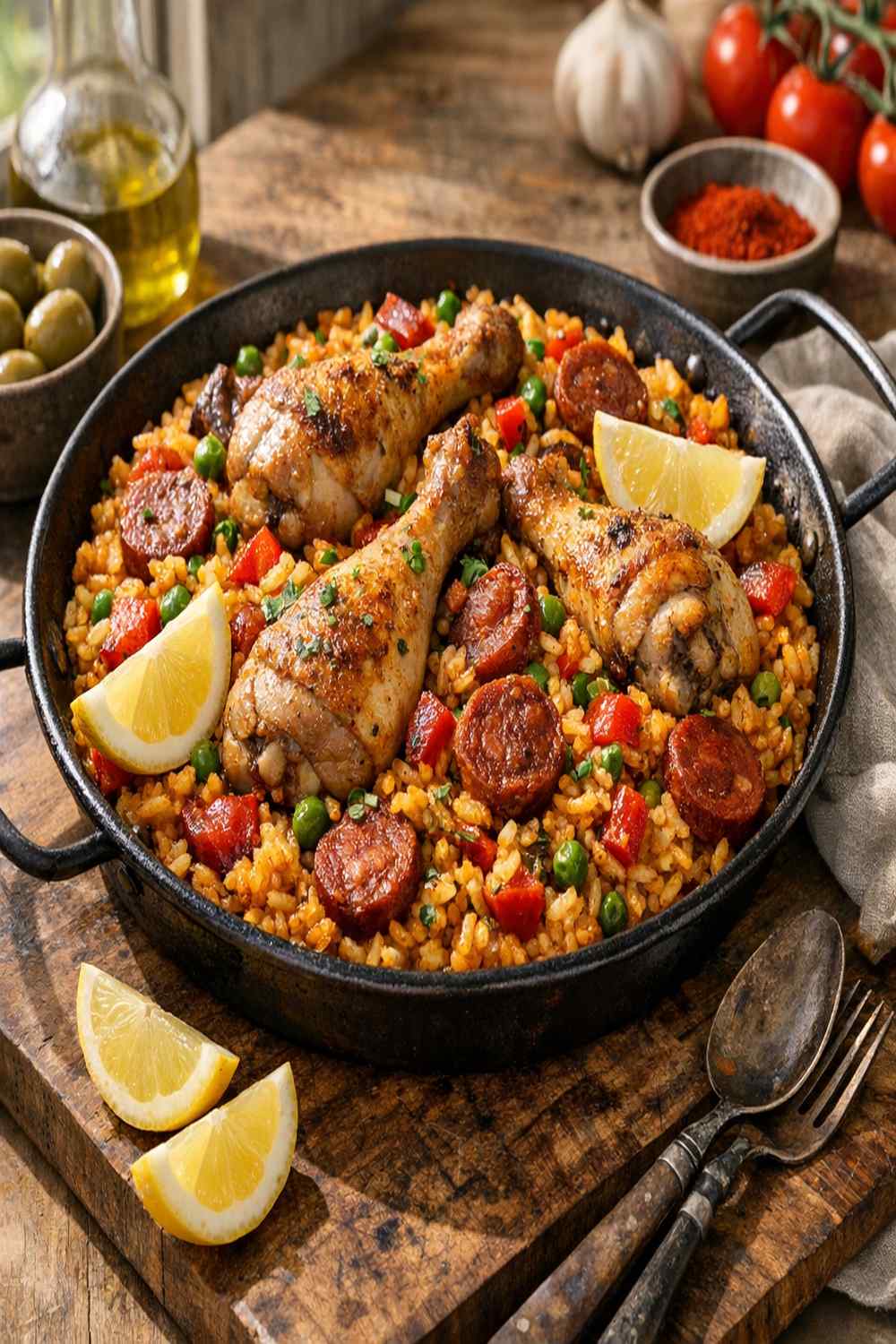
What Makes This Chicken And Chorizo Paella Recipe Special
Here’s what I’ve learned working with diverse ingredient cultures across New York City: the BEST dishes respect tradition while staying practical for real life. This paella does exactly that. Instead of hunting down obscure ingredients or spending your entire paycheck at a specialty market, you’re using everyday proteins and strategic spice choices that create the SAME depth and richness as traditional Spanish paella.
The magic happens when three things align: first, chorizo releases its oils as it cooks, flavoring every single grain of rice with its smoky essence. Second, saffron and turmeric create that signature golden color AND earthy complexity—but we’re using restrained amounts so it’s not overwhelming. Third, the technique of toasting rice in those flavorful oils before adding broth locks in taste that no pre-cooked rice could ever deliver.
What elevates this beyond everyday cooking is the complete lack of fussiness combined with the maximum flavor payoff. You’re not babying a soufflé or watching for splits like you would with fish. Once the liquid hits that rice, you can actually BREATHE. This is sophisticated food that doesn’t demand your constant attention—it demands your trust. And it always delivers.
Scaling for Your Crowd
One of the BEST aspects of paella is how beautifully it scales. Whether you’re cooking for two or twenty, the technique stays exactly the same—you’re just adjusting quantities and pan size. Here’s how I think about it:
- For 2-3 people – Use a 10-inch non-stick skillet or deep sauté pan. Cut the recipe in half: ½ tbsp oil, 1 chicken breast, 1 small onion, 70g chorizo, 150g rice, 425ml stock. Everything else (spices, peas, seasonings) scales down proportionally. Cooking time stays the same—rice takes what it takes.
- For 4-6 people (this recipe as written) – A standard 12-inch paella pan or large deep skillet works perfectly. This is my FAVORITE size because it’s dramatic enough to feel special but manageable on a home stove.
- For 8-10 people – Double the recipe, but use a 16-inch paella pan if you have access to one. If cooking on a standard home stove, you might want to make TWO batches instead—paella requires decent heat distribution, and cramming too much in one pan means uneven cooking and frustration. I’ve learned this the hard way.
- For 12+ people – Make multiple pans simultaneously, or consider paella as one component of a larger menu rather than the only main.
The Ingredients
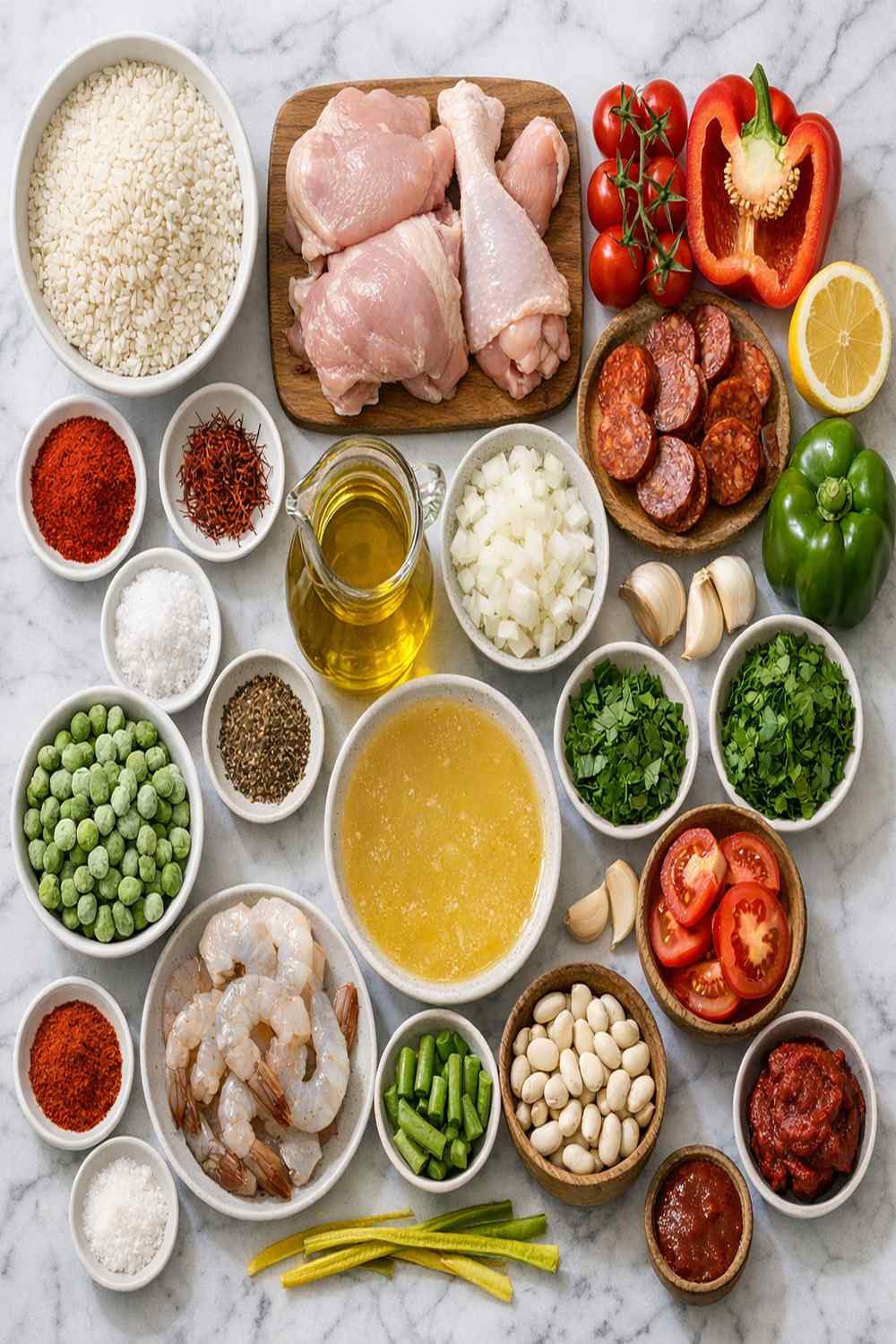
Here’s everything you need for a stunning, impressive spread that tastes like Spain but works with NYC groceries:
- 2 boneless, skinless chicken breasts (about 8 oz total, cut into 1-inch chunks for even cooking)
- 140g Spanish chorizo, cooking style (sliced into thin half-moons—look for the real stuff, not breakfast links)
- 1 teaspoon smoked paprika (Spanish paprika if possible, for authentic smoke notes)
- 1 large garlic clove (crushed, which releases more flavor than mincing)
- 1 teaspoon ground turmeric (adds earthiness and color)
- 200g frozen peas (honestly? better than fresh for paella—they stay firm and bright)
- 1 fresh lemon (cut into wedges for serving and brightness)
- ½ small bunch fresh flat-leaf parsley (finely chopped, for color and freshness)
- 1 tablespoon extra virgin olive oil (fruity varieties add dimension)
- Sea salt and freshly cracked black pepper (to taste at the end)
- 300g short-grain paella rice (bomba or Arborio, never long-grain)
- 2 small yellow onions (finely sliced, about 1 cup)
- 1 generous pinch saffron threads (the real deal—even a small amount transforms flavor)
- 850ml hot chicken or vegetable stock (MUST be hot—cold stock stops the cooking process)
How to Make Chicken And Chorizo Paella Recipe for Your Occasion
This is where the magic happens. I’m breaking down every step with the kind of detail that means you’ll feel CONFIDENT instead of nervous. This recipe might LOOK complicated, but it’s actually a beautiful sequence of simple moves. Let’s walk through it together.
Step 1: Brown Your Chicken and Build Your Foundation
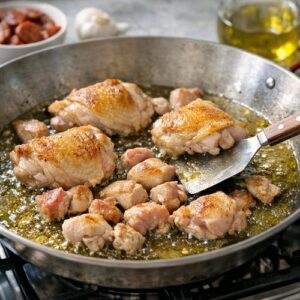
Heat your olive oil in a large deep skillet or paella pan over medium-high heat. Once it’s shimmering—when you can see the oil literally moving around the pan—add your chicken chunks in a SINGLE LAYER. This is CRITICAL. If you crowd the pan, you’ll steam instead of sear.
Let the chicken sit undisturbed for 3-4 minutes on each side until you see golden-brown color developing. You’re not cooking it through—just developing flavor through browning (what chefs call the Maillard reaction). Once both sides have color, transfer to a clean plate. The chicken will finish cooking later, so slight undercooking now is PERFECT.
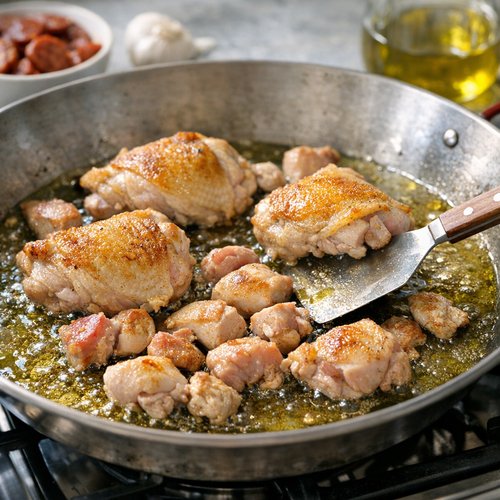
Pro tip for entertaining: You can brown your chicken up to 4 hours ahead, cover it, and refrigerate. This removes stress on cooking day and lets you focus on the final assembly.
Step 2: Create Your Flavor Base With Onions and Garlic
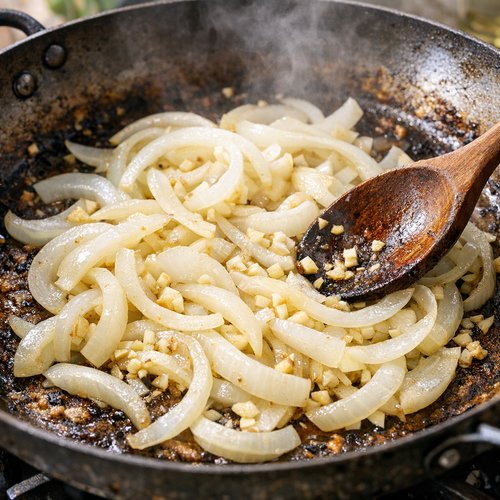
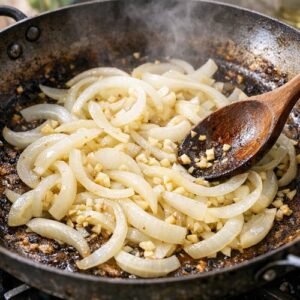
Reduce heat to medium (this is important—LOW, not high). Add your sliced onions to the same pan with all those browned bits stuck to the bottom (we call this fond, and it’s LIQUID GOLD for flavor). Stir occasionally and let them cook slowly for about 10 minutes until completely softened and turning translucent at the edges.
You’re not rushing this step. Slow-cooked onions develop natural sweetness that balances the smokiness coming next. This is where patience pays dividends—RESIST the urge to turn up heat and hurry.
After 10 minutes, add your crushed garlic and stir constantly for exactly 1 minute. Garlic burns quickly, and burnt garlic tastes bitter and acrid. One minute—that’s it—then you move forward.
Step 3: Introduce Chorizo and Release Its Smoke
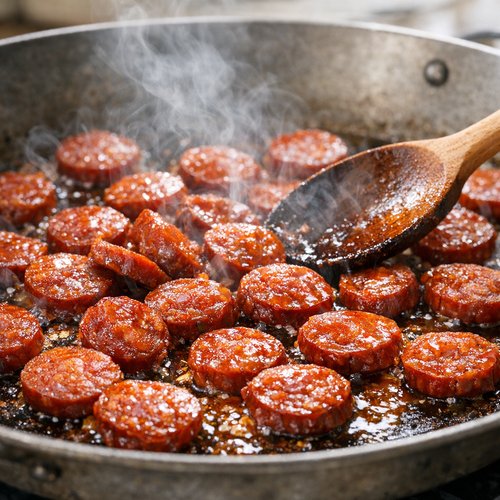
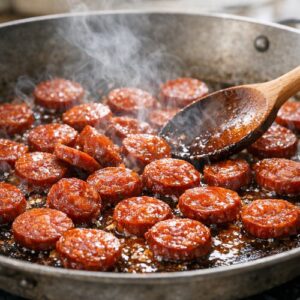
This is where things get EXCITING. Add your sliced chorizo to the pan and fry it over medium heat for 3-4 minutes, stirring occasionally. Watch as it releases its gorgeous reddish-orange oils into the pan—that’s the smoke essence coating everything. This step is NON-NEGOTIABLE for authentic paella flavor.
WARNING: Do not skip chorizo cooking. Raw chorizo tastes greasy and unfinished. Those 3-4 minutes transform it from ingredient to flavor foundation.
Step 4: Toast Your Spices and Rice
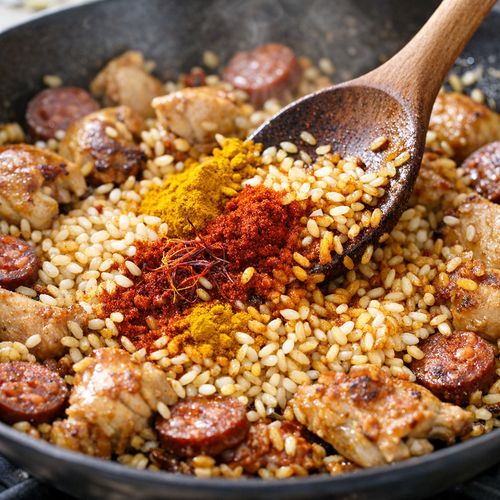
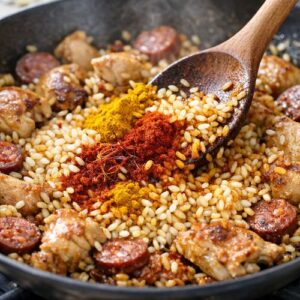
Add your turmeric, saffron threads, and smoked paprika directly to the pan. Stir constantly for about 30 seconds—you’re blooming the spices in those hot oils, which intensifies their flavor dramatically. You’ll smell that beautiful warm earthiness filling your kitchen. THAT’S how you know it’s working.
Now add your 300g paella rice. Stir for 2 full minutes, coating every grain in those golden, spice-infused oils. The rice should look glossy and slightly translucent. This toasting step is what separates paella from regular rice—it creates structural integrity so grains stay separate and firm instead of mushing together.
Step 5: Add Hot Stock and Return the Chicken
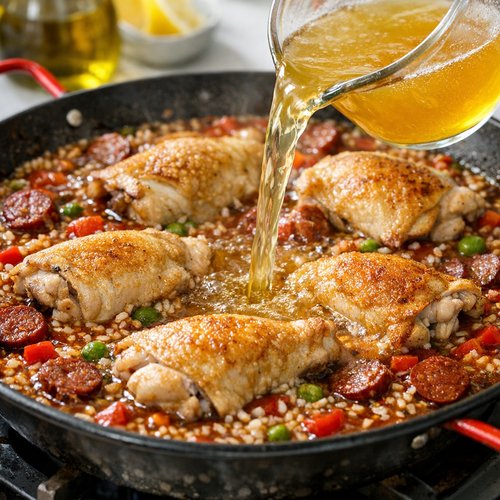
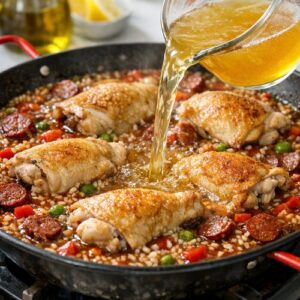
Pour in your 850ml hot stock (TEMPERATURE MATTERS—cold stock disrupts the cooking process and extends cooking time unpredictably). Stir once, then bring to a boil over medium-high heat.
Once boiling, return your partially cooked chicken pieces to the pan. Do NOT stir anymore from this point forward—paella isn’t risotto. You’re not stirring constantly. Instead, you’re letting the liquid absorb into the rice from the bottom while the top stays exposed to heat and steam. This creates the coveted crispy bottom layer (called socarrat) that makes paella so extraordinary.
Reduce heat to medium and let it simmer gently for about 20 minutes. Liquid will gradually absorb, rice will soften, and chicken will finish cooking. You can stir occasionally if you’re worried, but honestly? Patience serves you better here.
Step 6: Finish With Peas and Final Seasoning
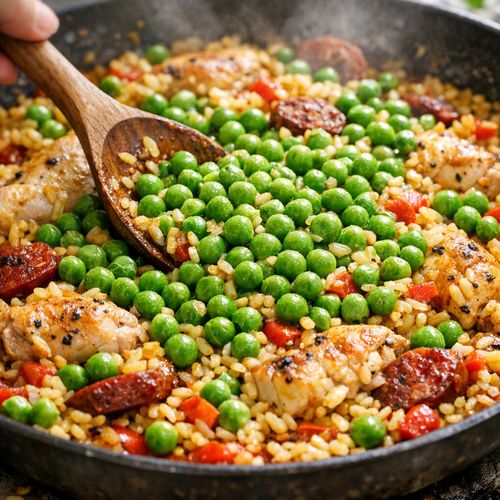
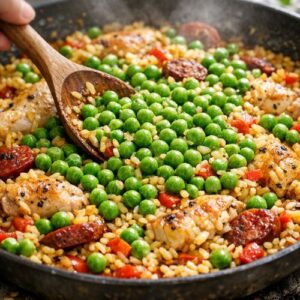
After 20 minutes, scatter your frozen peas across the top and stir them in gently. Simmer for another 5 minutes. The rice should be tender but still have a slight firmness (never mushy), the chicken should be cooked through and tender, and the peas should be bright green and heated through.
Remove from heat. Taste and season generously with sea salt and freshly cracked black pepper. Everyone’s stock salt level differs, so trust your palate here.
CRITICAL DONENESS TEST: Taste a grain of rice. It should be tender but have a tiny bit of resistance when you bite down. Overcooked paella is mushy and sad. Undercooked is crunchy and wrong. That sweet spot takes practice, but you’ll nail it.
Expert’s Nutritional Insight
As a registered dietitian, I want to highlight something about this dish that people often miss: the combination of chicken protein with chorizo’s fat creates exceptional satiety. You’re not overeating because you’re actually satisfied. Plus, the saffron in this recipe contains compounds that research suggests may support mood and cognitive function—meaning this comfort food is literally feeding your brain health alongside your hunger. The peas add fiber and plant-based nutrients that pair beautifully with the animal proteins, creating a more balanced plate than you might initially realize.
Make-Ahead Timeline
- 3 days before – Buy your chorizo and store it properly in the coldest part of your fridge. Spanish chorizo keeps beautifully and actually tastes better after a day or two.
- 2 days before – Purchase all other ingredients except herbs (herbs are better fresh). Check that your stock is hot-ready or that you have a plan to heat it.
- 1 day before – Cut and prep your onions, garlic, and chicken. Store in separate containers. Crush your saffron threads gently into a small bowl to release their color. This overnight steeping actually intensifies flavor.
- Morning of – Chop your parsley fresh (never chop herbs the night before—they oxidize and darken). Arrange your lemon wedges on a small plate.
- 1 hour before guests arrive – Ensure your stock is heating and ready to go. Brown your chicken if you haven’t already. At this point, you’re just assembly and heat.
- 20 minutes before serving – Start cooking. This dish takes about 25-30 minutes total from pan to plate, which means you’re actually FINISHING as guests settle in—no standing around with cold food.
How to Present and Plate Chicken And Chorizo Paella Recipe
Paella is one of those rare dishes where the PAN itself is the presentation. You’re not transferring to individual plates (unless you’re doing a formal plated dinner, which would be overkill for this beauty). Instead, you’re bringing the whole gorgeous pan to the table, letting guests see that golden rice, the chicken pieces nestled throughout, those bright peas—it’s VISUALLY stunning without any extra effort.
- Bring the pan directly to the table while still on the stove – This creates a moment. People lean in, the aromas hit, and suddenly dinner feels like an EVENT instead of just eating.
- Garnish immediately before serving with fresh parsley and lemon wedges – The bright green parsley against golden rice is beautiful, and lemon adds both visual pop and the acidic brightness that balances all that richness. These final touches take 10 seconds and transform presentation from good to restaurant-quality.
- Scoop from the center outward, ensuring everyone gets rice, chicken, chorizo, and peas – This is important for flavor balance on each plate. Every bite should taste intentional.
Seasonal Variations
- Spring and early summer version – Replace frozen peas with fresh spring peas (shelled fresh, not frozen), add 150g fresh asparagus cut into 2-inch pieces (add these instead of peas in the final 5 minutes so they stay crisp), and use fresh mint instead of parsley for herbaceous brightness. Keep everything else the same. This version feels lighter and celebrates green vegetables at peak season.
- Fall and winter version – Add 150g diced bell peppers (red or orange) when you add the onions, include 100g diced roasted red peppers from a jar in the final minutes, and maybe add ¼ teaspoon red pepper flakes for warmth. Replace some of the peas with diced roasted butternut squash if you want extra seasonal richness. The spices become even more welcome in cool weather.
What to Serve Alongside Chicken And Chorizo Paella Recipe
Paella is SUBSTANTIAL on its own, but here’s how I think about building a complete, memorable menu around it. Since paella already contains rice as its base, you’re not adding starch—you’re adding contrast and brightness.
- Simple green salad with sherry vinaigrette – This is your palate cleanser. Arugula or mixed greens with a basic vinaigrette (3 parts oil, 1 part sherry vinegar, salt, pepper) cuts through the richness beautifully. Dress it just before serving so greens stay crisp.
- Crusty bread or garlic toast – Not for soaking up paella (the rice is already the base), but for texture contrast and because bread at Spanish tables is non-negotiable. Toast thick slices with garlic and olive oil under the broiler.
- Roasted or marinated vegetables – If you’re making paella for 8+ people, roasted vegetables on the side add color and another vegetable serving. Try roasted cherry tomatoes, zucchini, or spiced vegetables with heat elements similar to jalapeños if your crowd enjoys warmth.
- Spanish olives and manchego cheese board – Set this out as guests arrive, before paella is served. It buys you time in the kitchen and sets a Spanish theme. Olives, aged manchego, maybe some marcona almonds.
- Citrus-forward dessert – Since paella is smoky and savory, finish with something bright. Lemon panna cotta, orange sorbet, or even store-bought churros with chocolate would be perfect. You don’t need to stress about dessert when you’ve already impressed with the main.
Common Mistakes to Avoid
Mistake #1: Using cold stock – I cannot STRESS this enough. Cold stock hitting hot rice creates temperature shock that disrupts cooking time and leads to uneven results. Always—and I mean ALWAYS—heat your stock before adding it. Pour it into a saucepan while you’re prepping and let it simmer gently. This single step removes 80% of paella failures.
Mistake #2: Stirring too much after liquid is added – Paella isn’t risotto. That constant stirring motion breaks down rice structure and creates mush. Once your stock hits that pan and you’ve returned the chicken, step back and let physics do the work. Stir occasionally if you’re nervous, but that constant motion is the enemy.
Mistake #3: Skipping the chorizo cooking step – I see people add cold chorizo straight to rice, expecting magic. Raw chorizo tastes greasy and unfinished. Those 3-4 minutes in the pan transform it into the flavor foundation that makes paella extraordinary. Don’t skip it.
Mistake #4: Using long-grain rice instead of short-grain – Long-grain rice (like basmati) breaks down and becomes mushy under paella’s cooking method. Short-grain rice (bomba or Arborio) has a higher starch content that keeps grains firm and separate. This ingredient swap is CRITICAL.
Can I Store Chicken And Chorizo Paella Recipe?
Paella is best served immediately, but real life means leftovers happen. Here’s how to handle them with grace:
Refrigeration (0-3 days): Cool the paella to room temperature, transfer to an airtight container, and refrigerate. Don’t leave it at room temperature for more than 2 hours—chicken food safety matters. When reheating, add 2-3 tablespoons of stock or water, cover loosely, and warm gently over medium-low heat until heated through (about 5-7 minutes). The rice will never be quite as perfect as fresh, but it’s still delicious.
Freezing (up to 3 months): Let paella cool completely, transfer to a freezer-safe container, label with the date, and freeze. Thaw in the refrigerator overnight before reheating using the method above. Frozen paella is practical for meal prep but tastes slightly different—rice texture becomes softer. For entertaining purposes, I recommend cooking fresh.
Pro tip for entertaining: Make paella just before guests arrive instead of trying to keep it warm. It takes 25-30 minutes total, which is PERFECT timing for appetizers and drinks to happen in those first minutes. Everyone’s seated by the time you’re plating.
Nutrition Information
Per serving (based on 4 servings; USDA data): 520 calories, 18g protein, 22g fat, 58g carbohydrates, 4g fiber, 380mg sodium, 2mg iron.
This is a nutrient-dense main dish that doesn’t need much additional support. The protein from chicken and chorizo combined with the complex carbs from paella rice creates sustained energy. The saffron and spices add flavor without empty calories, and frozen peas contribute micronutrients (vitamin C, folate, manganese) that you might miss if you weren’t paying attention.

Chicken And Chorizo Paella Recipe
Ingredients
Method
- Heat your olive oil in a large deep skillet or paella pan over medium-high heat. Once it's shimmering—when you can see the oil literally moving around the pan—add your chicken chunks in a SINGLE LAYER. This is CRITICAL. If you crowd the pan, you'll steam instead of sear. Let the chicken sit undisturbed for 3-4 minutes on each side until you see golden-brown color developing. You're not cooking it through—just developing flavor through browning (what chefs call the Maillard reaction). Once both sides have color, transfer to a clean plate. The chicken will finish cooking later, so slight undercooking now is PERFECT. Pro tip for entertaining: You can brown your chicken up to 4 hours ahead, cover it, and refrigerate. This removes stress on cooking day and lets you focus on the final assembly.
- Reduce heat to medium (this is important—LOW, not high). Add your sliced onions to the same pan with all those browned bits stuck to the bottom (we call this fond, and it's LIQUID GOLD for flavor). Stir occasionally and let them cook slowly for about 10 minutes until completely softened and turning translucent at the edges. You're not rushing this step. Slow-cooked onions develop natural sweetness that balances the smokiness coming next. This is where patience pays dividends—RESIST the urge to turn up heat and hurry. After 10 minutes, add your crushed garlic and stir constantly for exactly 1 minute. Garlic burns quickly, and burnt garlic tastes bitter and acrid. One minute—that's it—then you move forward.
- This is where things get EXCITING. Add your sliced chorizo to the pan and fry it over medium heat for 3-4 minutes, stirring occasionally. Watch as it releases its gorgeous reddish-orange oils into the pan—that's the smoke essence coating everything. This step is NON-NEGOTIABLE for authentic paella flavor. WARNING: Do not skip chorizo cooking. Raw chorizo tastes greasy and unfinished. Those 3-4 minutes transform it from ingredient to flavor foundation.
- Add your turmeric, saffron threads, and smoked paprika directly to the pan. Stir constantly for about 30 seconds—you're blooming the spices in those hot oils, which intensifies their flavor dramatically. You'll smell that beautiful warm earthiness filling your kitchen. THAT'S how you know it's working. Now add your 300g paella rice. Stir for 2 full minutes, coating every grain in those golden, spice-infused oils. The rice should look glossy and slightly translucent. This toasting step is what separates paella from regular rice—it creates structural integrity so grains stay separate and firm instead of mushing together.
- Pour in your 850ml hot stock (TEMPERATURE MATTERS—cold stock disrupts the cooking process and extends cooking time unpredictably). Stir once, then bring to a boil over medium-high heat. Once boiling, return your partially cooked chicken pieces to the pan. Do NOT stir anymore from this point forward—paella isn't risotto. You're not stirring constantly. Instead, you're letting the liquid absorb into the rice from the bottom while the top stays exposed to heat and steam. This creates the coveted crispy bottom layer (called socarrat) that makes paella so extraordinary. Reduce heat to medium and let it simmer gently for about 20 minutes. Liquid will gradually absorb, rice will soften, and chicken will finish cooking. You can stir occasionally if you're worried, but honestly? Patience serves you better here.
- After 20 minutes, scatter your frozen peas across the top and stir them in gently. Simmer for another 5 minutes. The rice should be tender but still have a slight firmness (never mushy), the chicken should be cooked through and tender, and the peas should be bright green and heated through. Remove from heat. Taste and season generously with sea salt and freshly cracked black pepper. Everyone's stock salt level differs, so trust your palate here. CRITICAL DONENESS TEST: Taste a grain of rice. It should be tender but have a tiny bit of resistance when you bite down. Overcooked paella is mushy and sad. Undercooked is crunchy and wrong. That sweet spot takes practice, but you'll nail it.
FAQs
Can I make paella ahead for a dinner party and just reheat it?
Technically yes, but I don’t recommend it for your FIRST paella. Fresh paella is so superior to reheated that for entertaining, I suggest cooking fresh while guests have appetizers. HOWEVER, if you’re making paella for a casual gathering where perfection isn’t the goal, absolutely make it 2-3 hours ahead, let it rest at room temperature (food safety consideration: no more than 2 hours), then reheat gently with added stock. The quality will be noticeably different, but it’s still delicious and removes timing stress.
What if I can’t find Spanish chorizo?
Look for “cooking chorizo” or “Spanish chorizo” specifically—not Mexican chorizo and definitely not breakfast sausage links. If your grocery store is limited, check the international aisle or ask your butcher. That said, if you truly cannot find it, Portuguese linguiça or even good-quality Italian sausage (removed from casing) works in a pinch. The flavor profile will shift slightly, but the technique and result will still be impressive. This is one area where a quick phone call to your butcher saves the day.
How do I know when the rice is done?
Bite a grain. It should be tender with just a tiny bit of firmness—never mushy, never crunchy with a hard center. This takes practice, and honestly, the first time you might slightly undercook or overcook. That’s NORMAL. By the third time you make paella, you’ll have the feel for it. Timing is approximately 25 minutes total from when you add stock, but environmental factors (stove heat, stock temperature, pan material) affect this. Trust your taste buds, not the clock.
Can I substitute the saffron if it’s too expensive?
Saffron is expensive, but a tiny pinch goes a LONG way. The amount in this recipe (one generous pinch) costs maybe $1-2 if you buy it from a spice shop instead of a grocery store. However, if budget truly doesn’t allow it, you can omit it and increase turmeric to 1.5 teaspoons. The color will be similar, but the flavor will be earthier and less complex. It’s still paella, just not quite as magical. Saffron is worth the investment for special occasions.
What’s the best pan for making paella at home?
A 12-inch paella pan (if you have one), a large deep skillet, or even a large shallow Dutch oven all work beautifully. Cast iron is my personal preference because it distributes heat evenly, but stainless steel or non-stick work fine too. What matters more than the specific pan is EVEN HEAT DISTRIBUTION and enough surface area that ingredients aren’t piled on top of each other. If you’re investing in a true paella pan for regular entertaining, the 16-inch carbon steel versions are gorgeous and practical.
More Recipes for Your Table
- Beef Teriyaki Recipe With Teriyaki Sauce – A completely different flavor profile that works beautifully for a diverse entertaining menu
- Beef Ramen Recipe Easy – Perfect for casual entertaining where you want impressive but low-stress
- Best Beef Noodle Recipe – Another one-pan wonder for feeding crowds with grace
There’s something MAGICAL about paella—the way one beautiful pan becomes the center of conversation, the way the combination of chicken and chorizo feels both simple and sophisticated, the way your guests leave talking about the meal instead of the stress it took to create it.
I’ve made this dish dozens of times now, for intimate dinners and bigger celebrations, and every single time it delivers. You’re not going to mess this up. Follow the steps, use hot stock, resist the urge to overcomplicate, and trust the technique. That’s all paella asks of you.
Your next dinner party is going to be UNFORGETTABLE. Make it with confidence, make it with joy, and most importantly, make it with people you love gathered around your table. That’s when cooking becomes more than just feeding people—it becomes making memories.
Let’s make cooking a breeze!
