
Chinese Beef Noodle Stir Fry Recipe
This post contains affiliate links. As an Amazon Associate I earn from qualifying purchases.
I still remember my first encounter with authentic beef noodle stir fry. It wasn’t in a fancy Manhattan restaurant—it was in a tiny hole-in-the-wall spot in Flushing, Queens, on a rain-soaked Tuesday night. The wok was SIZZLING so loudly I could barely hear my friend order, and watching that chef toss tender beef strips with hand-pulled noodles over screaming-hot flames felt like witnessing pure culinary magic. I was absolutely mesmerized. That moment sparked my obsession with understanding HOW to recreate that magic at home, and honestly? It changed everything about how I approach cooking. When you understand the “why” behind each technique, stir frying transforms from intimidating to absolutely THRILLING. Today, I’m sharing exactly how to build this dish in your own kitchen—no special equipment required, just technique, timing, and a little urban food wisdom.
Authentic Chinese Beef Noodle Stir Fry Recipe: The Story Behind This Wok-Fired Classic
Growing up in NYC, I was surrounded by culinary traditions from every corner of Asia. My neighbors were from Shanghai, my favorite lunch spot owner was from Sichuan, and my physical therapist’s family ran a noodle house in Chinatown. These weren’t just casual acquaintances—they were my food teachers, whether they knew it or not. I spent years asking questions, watching techniques, and slowly understanding that Chinese home cooking is about RESPECTING the ingredients and the heat source. This isn’t complicated food; it’s honest food built on precision and passion. When I became a registered dietitian, I realized something crucial: the best nutritional advice means nothing if people don’t actually ENJOY eating that way. Stir fries are my secret weapon because they’re faster than takeout delivery, cheaper than restaurants, loaded with vegetables and lean protein, and genuinely delicious enough to make you forget you’re eating something nutritious.
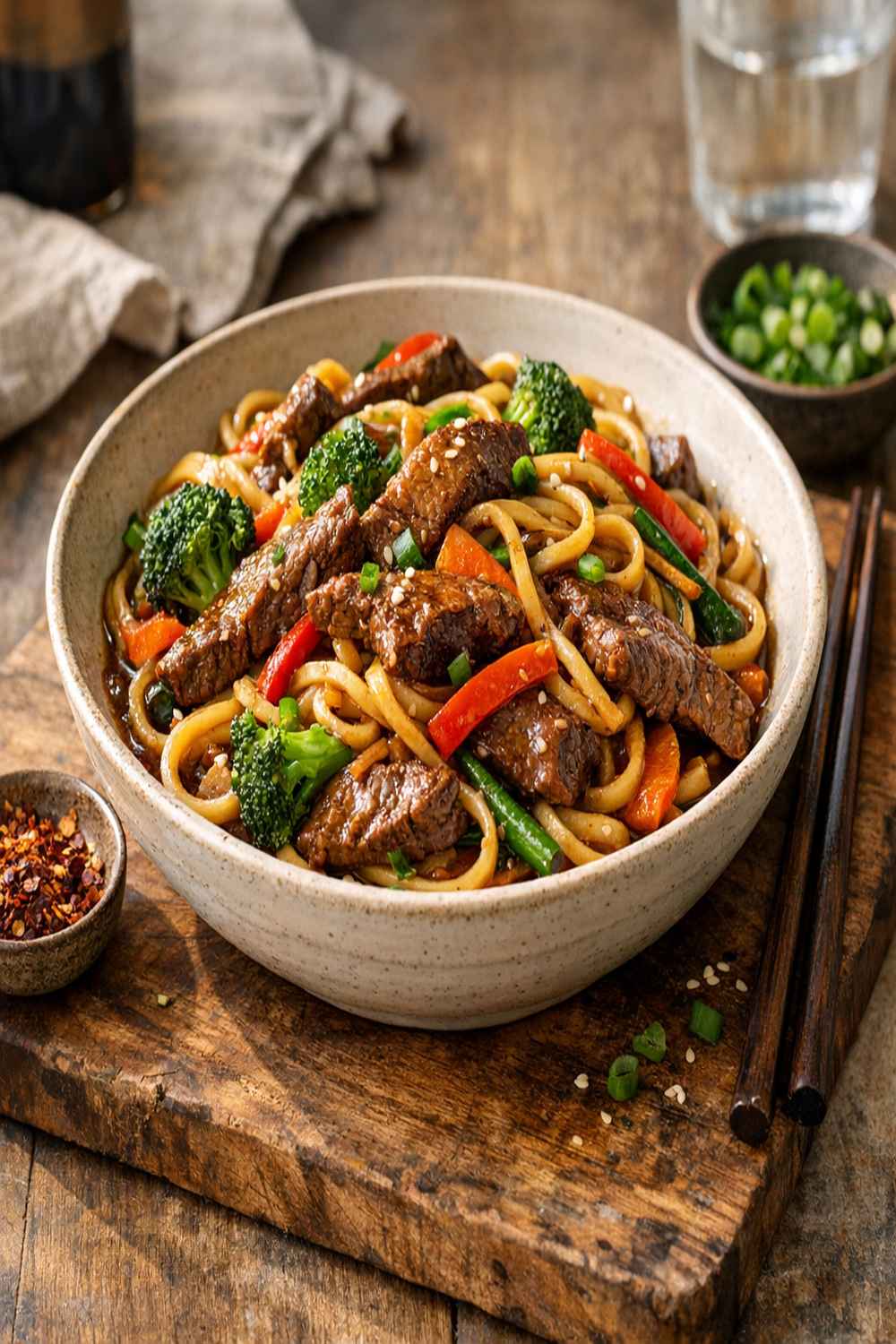
The History and Cultural Significance of Chinese Beef Noodle Stir Fry
Beef noodle stir fry isn’t ancient—and that’s actually what makes it fascinating. This dish emerged in the early 20th century when Chinese communities adapted traditional cooking methods to available ingredients in new cities. In Taiwan and Shanghai, beef noodle soups and stir fries became comfort food staples during times of rapid urbanization. Unlike imperial Chinese cuisine that favored pork and poultry, beef represented modernization and Western influence being reclaimed and transformed into something distinctly Chinese.
The stir fry technique itself dates back centuries—high heat, constant motion, and quick cooking preserve texture and nutrients. But beef noodle stir fry specifically became iconic in urban centers where speed mattered. Factory workers, students, and busy families needed meals that could be prepared in minutes using accessible ingredients. Fast-forward to today: this dish is comfort food across Asia, beloved in diaspora communities worldwide, and honestly? It’s one of the HEALTHIEST quick dinners you can make. The balance of protein, vegetables, whole grains, and minimal added fat makes it nutritionally intelligent AND delicious.
What Makes an Authentic Chinese Beef Noodle Stir Fry Recipe
Here’s where I need to be real with you: authentic doesn’t mean complicated or inaccessible. It means respecting the fundamental techniques and flavor principles that make this dish what it is. I’ve seen a lot of “simplified” versions that basically turn this into seasoned beef and noodles, and that’s a missed opportunity. TRUE authenticity comes from understanding WHY each step matters and executing it with intention.
- High-heat wok cooking – This creates the signature texture where beef is caramelized on the outside but stays tender inside, and noodles get slightly crispy edges. It’s not just about temperature; it’s about building complex flavors through the Maillard reaction. Most home stoves can achieve this if you use the right technique.
- Cornstarch coating – Traditional stir frying relies on this technique to create a silky exterior on the beef while keeping the inside juicy. This isn’t a shortcut; it’s a CORE technique used in professional Chinese kitchens worldwide.
- Balanced sauce ratios – Authentic beef noodle stir fry balances salty, sweet, sour, and spicy elements in specific proportions. The sauce should complement the noodles and beef, never overpower them. This isn’t about dousing everything in soy sauce; it’s about harmony.
- Ingredient quality matters – Using fresh ginger, proper soy sauce (not the light imitation versions), and good-quality beef makes an ENORMOUS difference. These aren’t luxury ingredients; they’re foundational.
The Ingredients – Sourcing the Real Thing
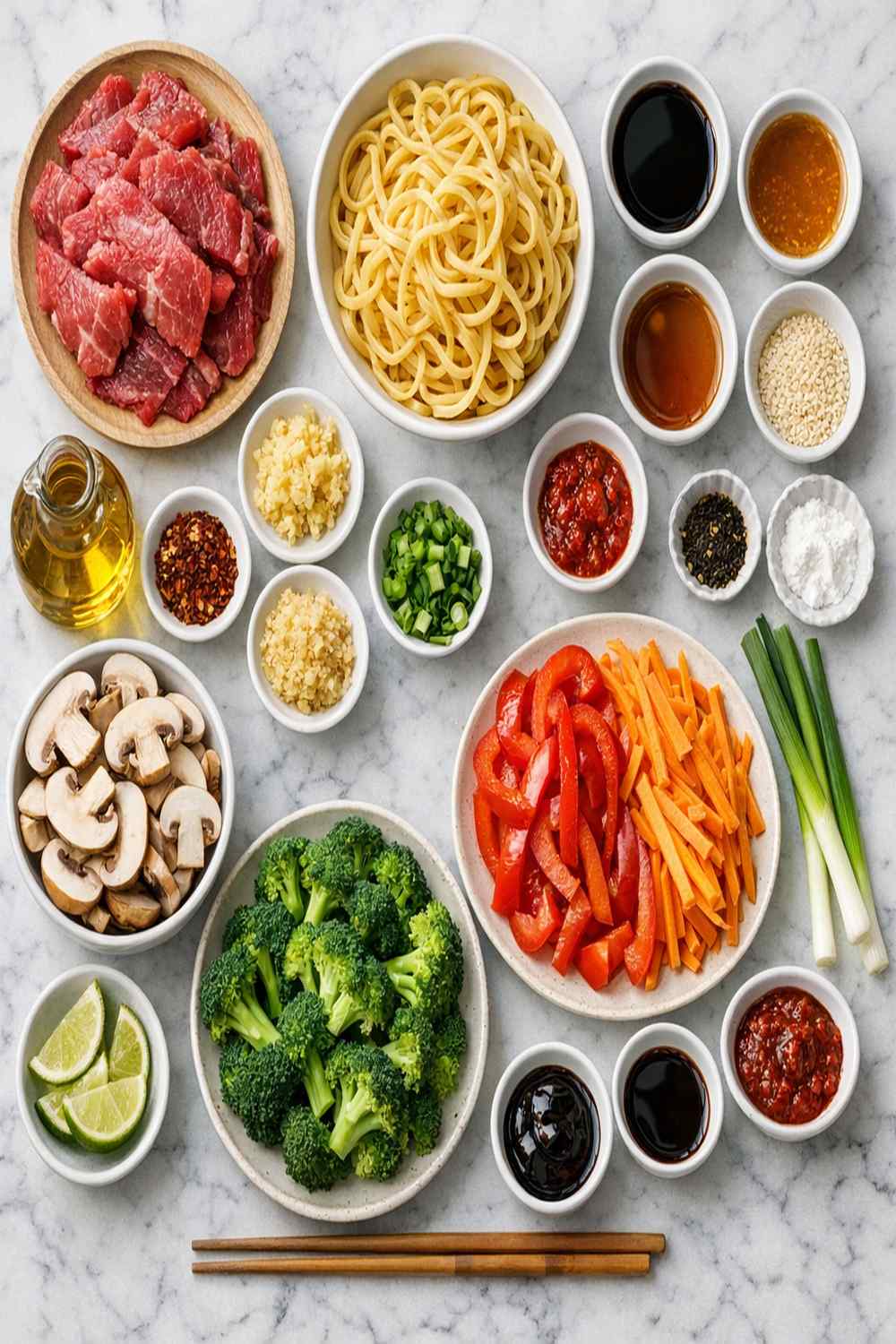
Here’s my honest take: you don’t need to hunt down seventeen specialty items to make authentic beef noodle stir fry. BUT the ingredients you DO use should be intentional and, ideally, sourced from places that take Asian cuisine seriously. I’m lucky to have amazing markets in NYC, but I also use online sources (which have gotten SO much better in recent years). The substitutions I mention below are tested and genuine—I wouldn’t suggest them otherwise.
- 4 centimeters fresh ginger (peeled and minced; quality matters enormously—look for firm, fragrant ginger with thin skin)
- 2 cloves garlic (minced finely; fresh garlic is non-negotiable here)
- 2 tablespoons cornstarch (use pure cornstarch, not mixed starch blends; this creates that signature silky coating)
- 3 tablespoons soy sauce (use regular soy sauce, not low-sodium; the salt content is part of the flavor profile)
- 150 grams dried egg noodles (Chinese egg noodles have a specific texture; they’re different from Italian pasta and worth seeking out)
- 3 spring onions (trimmed and sliced, keeping white and green parts separate for layered flavor)
- 500 grams beef steak (flank or sirloin work best; look for marbling that will stay tender during quick cooking)
- 2 teaspoons fresh red chili (finely chopped; fresh chili provides heat that dried versions can’t replicate)
- 3 tablespoons sweet chili sauce (look for authentic Thai or Chinese brands; they’re different from American chili sauces)
- 2 tablespoons sunflower oil (or other high-heat neutral oil; this is critical because your wok needs a smoke point above 400°F)
- 2 green bell peppers (deseeded and sliced into thin, uniform strips for even cooking)
- 2 tablespoons tomato ketchup (yes, really—this adds subtle umami depth without overpowering sweetness)
- 1 teaspoon sesame oil (drizzled at the very end; this adds the finishing touch of aromatic richness)
- 2 teaspoons Chinese five-spice powder (authentic versions contain star anise, cloves, cinnamon, Sichuan pepper, and fennel—check ingredient labels for quality)
- 4 tablespoons water (for sauce dilution and steaming vegetables)
- 3 tablespoons rice vinegar (this adds the crucial sour note that balances richness; white vinegar is an acceptable substitute if rice vinegar isn’t available)
The Traditional Method: How to Make Authentic Chinese Beef Noodle Stir Fry
Alright, let’s do this. I’m going to walk you through each step like you’re standing next to me in my kitchen. This isn’t just a recipe; it’s a technique lesson that applies to SO many other stir fries once you understand the principles. The beauty of this method is that every step builds on the previous one, creating layers of flavor and texture.
Step 1: Prepare Your Mise en Place (Organization is Everything)
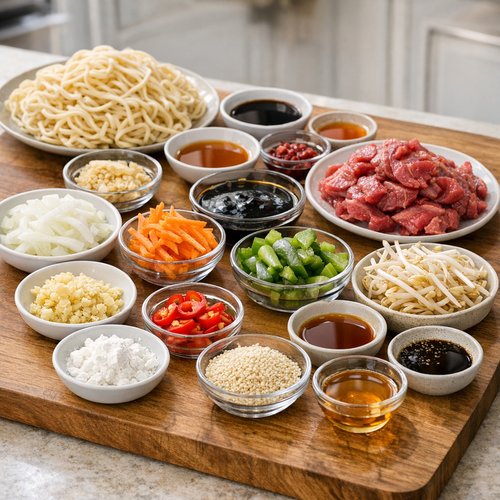
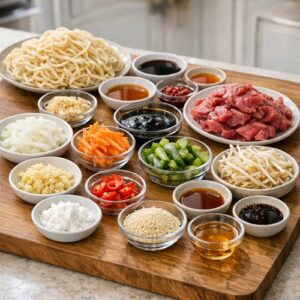
This is non-negotiable. Before ANY heat touches your wok, have EVERY ingredient prepped, measured, and arranged in the order you’ll use it. This is called mise en place in French, and it’s universal across professional kitchens worldwide. Why? Because once your wok is screaming hot and your beef is cooking, you have SECONDS to react. You cannot chop garlic while your steak is already hitting 500°F. I set up small bowls for my aromatics (garlic, ginger, chili), slice my peppers and spring onions, and measure my sauce ingredients into one combined bowl. This takes ten minutes but saves your entire dish.
Step 2: Prepare Your Beef for Perfect Stir Fry Texture
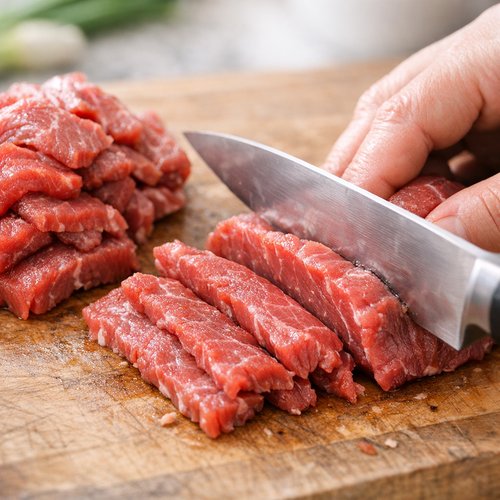
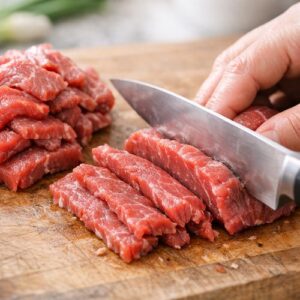
Slice your beef against the grain into thin strips (about ¼-inch thick). Against the grain means cutting perpendicular to the muscle fibers—this shortens them and makes even thin-sliced beef incredibly tender. Toss your beef strips in a bowl with the cornstarch and Chinese five-spice powder, making sure EVERY piece is evenly coated. This coating is doing THREE things: it’s creating a protective layer that seals in juices, it’s providing texture contrast, and it’s distributing the five-spice flavor evenly throughout. Don’t skip this step or rush it. Let the coated beef sit for five minutes—this helps the coating adhere properly.
Step 3: Cook Your Noodles While Your Wok Heats
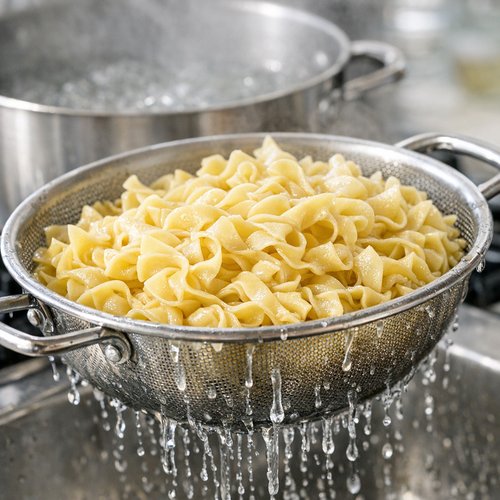
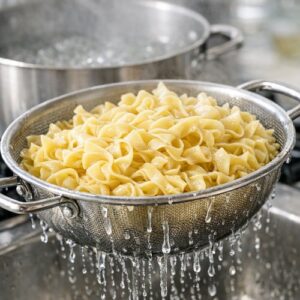
Boil water in a separate pot and cook your egg noodles according to package directions (usually 4-5 minutes). Drain them thoroughly—and I mean THOROUGHLY. Any excess water on the noodles will steam instead of fry, robbing you of those crispy edges. Toss the drained noodles lightly with a small drizzle of oil to prevent sticking. Set them aside. While your noodles cook, place your wok over HIGH heat. Let it sit there for 2-3 minutes to get properly hot. You’ll know it’s ready when a drop of water dances across the surface.
Step 4: Sear the Beef in Batches (Critical Temperature Control)
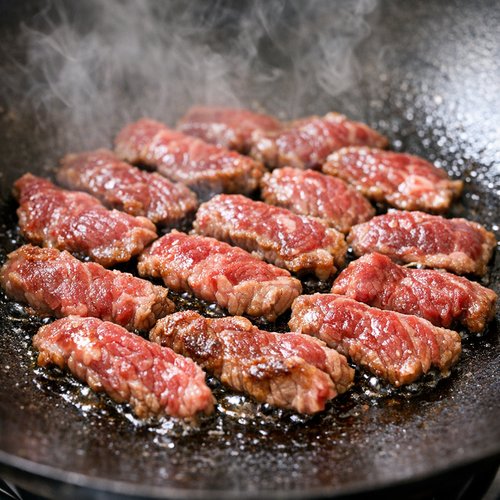
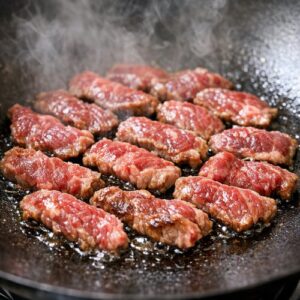
Add one tablespoon of oil to your screaming-hot wok. The moment it shimmers, add your beef in a SINGLE LAYER. DO NOT STIR immediately. Let it sit for 60-90 seconds. This is where the magic happens—the high heat creates a caramelized crust through the Maillard reaction. You’ll see the edges turning brown. THEN stir and cook for another 60-90 seconds until the beef is mostly cooked but still has slight pink inside (it will continue cooking). Remove the beef to a clean plate. If you cooked all your beef at once, the wok temperature would drop and you’d end up steaming instead of searing. Do this in two batches if needed.
Step 5: Build Your Aromatic Base
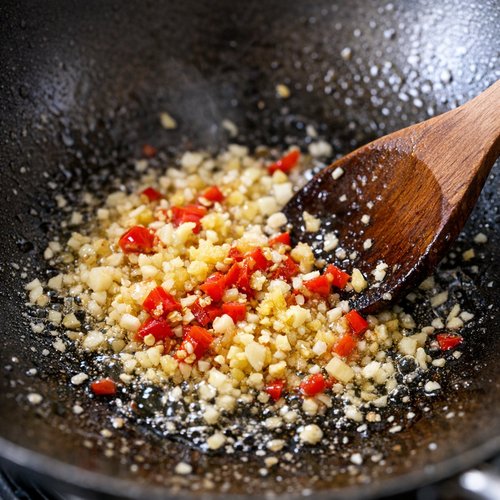
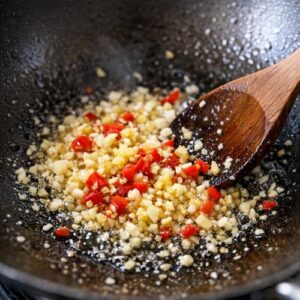
Add the remaining tablespoon of oil to your wok. Immediately add your minced garlic, ginger, and fresh chili. Stir constantly for 30 seconds. You want the aromatics to release their fragrance and flavor without burning. If they start smoking heavily, add your vegetables immediately to cool things down slightly. This aromatic base is traditional because it builds the foundation flavor that makes everything else taste cohesive and authentic.
Step 6: Add Vegetables with Timing Precision
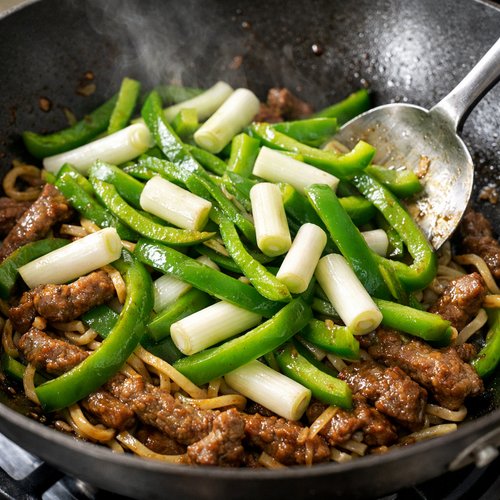
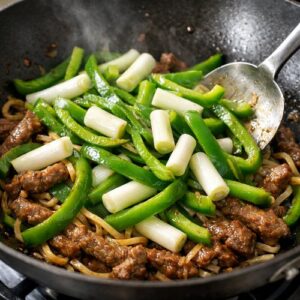
Add your sliced green peppers and the white parts of your spring onions (save the green parts for garnish). Stir-fry for 2-3 minutes until the peppers are tender-crisp but still have slight firmness. This isn’t the time to make them soft—you want them to maintain texture and their nutritional integrity. The peppers add not just color and crunch but also vitamin C and fiber that balance the richness of the beef and noodles.
Step 7: Combine Everything Together
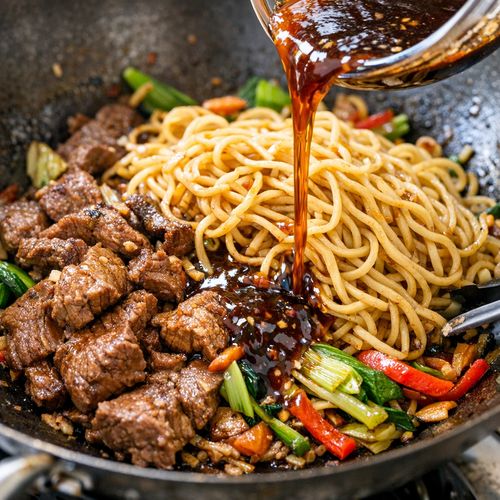
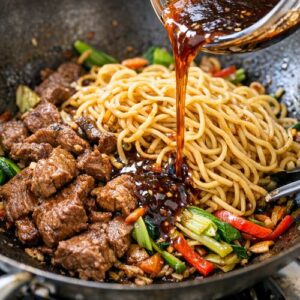
Return your cooked beef to the wok. Add your cooked noodles. Pour in your sauce mixture (the combination of soy sauce, sweet chili sauce, rice vinegar, tomato ketchup, and water). Toss EVERYTHING together constantly for 1-2 minutes so the sauce coats the noodles evenly and the beef reheats gently without overcooking. The noodles should glisten with sauce, and every ingredient should be evenly distributed. This is where it all comes together.
Step 8: Finish with Aromatic Oil and Green Onion
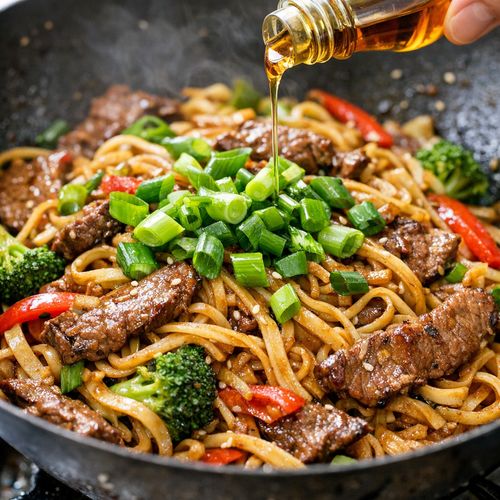
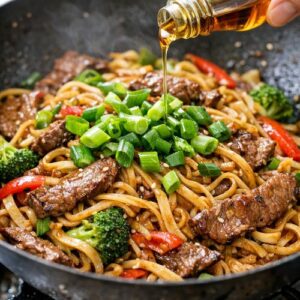
Turn off the heat. Drizzle with sesame oil and scatter your reserved green spring onion parts over the top. DO NOT COOK the sesame oil—its aromatic compounds are destroyed by heat. This finishing drizzle is what makes your dish smell incredible and taste finished. Toss gently one final time.
Regional Variations Around the World
- Shanghai Style – Uses darker soy sauce (aged versions) for deeper color and more savory depth. Shanghai versions often include star anise and rely less on sugar in the sauce. This reflects Shanghai’s proximity to soy sauce production regions and the region’s preference for subtle sophistication over obvious sweetness.
- Sichuan Variation – Incorporates Sichuan peppercorns (creating that distinctive numbing sensation) and significantly more chili heat. The sauce tends to be oilier because Sichuan cuisine celebrates the flavor of quality oils. If you’re in a region where Sichuan peppercorns are available, crushing a teaspoon into your five-spice blend transforms this dish entirely.
- Cantonese Approach – Emphasizes ingredient quality over complex sauce; uses less added sauce and relies on the natural juices released by vegetables. Cantonese versions often include bok choy or other leafy greens instead of bell peppers. This reflects Cantonese philosophy of letting ingredients speak for themselves.
Traditional Serving Customs
Beef noodle stir fry is traditionally served as a complete meal in itself—it’s not a side dish. In China and across Asia, it typically comes out piping hot on a single plate or bowl, often in a casual setting. Street vendors serve it in noodle cups or on paper, making it portable. Family-style at home, the entire wok’s contents come to the table, and people serve themselves generous portions. The ritual of watching the stir fry come together—the sound, the steam, the aroma—is part of the experience. In my NYC kitchen, I often serve this with a simple cucumber salad on the side (coolness balances the heat and richness), and honestly? It’s a complete, balanced meal with no other components needed. Rice is NOT traditional with this dish; the noodles ARE the starch base.
Can I Store Chinese Beef Noodle Stir Fry Recipe?
Yes, and I’ll give you the honest breakdown. Refrigerate in an airtight container for up to 3 days. The noodles will soften slightly, but the flavor actually deepens. Reheat gently in a wok or large skillet over medium-high heat, adding a tablespoon of water if needed to prevent sticking. The sesame oil aroma will be less pronounced after storage, so consider drizzling a little fresh sesame oil when reheating. DO NOT freeze because the egg noodle texture becomes unpleasantly mushy once thawed. This is why I recommend making this in portions you’ll actually eat within a few days rather than making a massive batch. That said, you can prep the components in advance: cooked beef and vegetables store well for 3 days, and the sauce can be made several days ahead. Just keep them separate until you’re ready to quickly stir-fry and combine.
Nutrition Information
According to USDA nutrient data, one serving of this beef noodle stir fry (approximately 1½ cups) provides roughly 480 calories, 32 grams protein, 42 grams carbohydrates, 18 grams fat, and 5 grams fiber. The protein content comes from both the beef (which provides complete amino acids and B vitamins) and the egg noodles. The fiber comes from your vegetables and noodles. This is nutritionally dense—you’re not getting empty calories here. From a dietitian perspective, what makes me LOVE this dish is the balance: you’ve got lean protein, complex carbohydrates, healthy vegetables, and minimal added sugar (despite the “sweet” chili sauce—the proportions keep total sugar reasonable). The traditional diet patterns in Asian cuisines that feature stir fries regularly are associated with lower obesity rates and better cardiovascular health outcomes, primarily because stir fries deliver high satisfaction and nutritional density in reasonable portions. The ginger and garlic provide anti-inflammatory compounds that research suggests may support immune function and digestive health. This isn’t health food that tastes like health food—it tastes incredible AND happens to be nutritious.
What Can I Serve With Chinese Beef Noodle Stir Fry Recipe?
As I mentioned, this is traditionally a complete, standalone meal. But if you want to expand the experience, here are authentic pairings that make sense:
- Cucumber salad with rice vinegar dressing – The cool, crisp contrast balances the warm, rich noodles. Culturally, palate cleansing sides are standard in Chinese meal traditions.
- Steamed bok choy or gai lan – These leafy greens complement the heartiness of noodles and beef while adding nutritional balance without heaviness.
- Edamame – Steamed and lightly salted, edamame provides another protein source and is served in many Chinese restaurants as a casual appetizer.
- Simple egg fried rice – If you’re feeling extravagant, a small side of Cantonese fried rice creates a more complete feast, though traditionally these would be served as separate meals, not together.
Expert’s Nutritional Tip: The Power of Your Cornstarch
Here’s something most recipes DON’T explain: that cornstarch coating isn’t just about texture—it actually affects nutrient absorption. When proteins are sealed with a light coating, they retain moisture and don’t overcook, which preserves amino acid structure. Overcooked meat loses bioavailability of certain nutrients. Additionally, the cornstarch gelatinization in the sauce helps your body absorb fat-soluble vitamins from the vegetables (like vitamin A from the peppers) because fat is needed for that absorption. This is why traditional technique and modern nutrition science actually align here. You’re not just making something taste great; you’re optimizing how your body processes it.
Make-Ahead Guide: Meal Prep Like a Professional
Day-of prep (morning of cooking): Slice your beef, coat it with cornstarch and five-spice, and refrigerate in a container. Prep all your vegetables (peppers, spring onions, garlic, ginger, chili) and store in separate containers. Combine your sauce ingredients in a jar. Doing this takes 15 minutes and makes dinner effortless.
Two days ahead: Make your sauce mixture completely. Prepare and cook your egg noodles, drain thoroughly, and store with a light oil toss. They’ll be ready to quickly heat in your wok.
The night before: Slice your beef and season it, covered in the refrigerator. This actually helps the seasonings penetrate slightly.
Efficient cooking night: From the moment you turn on your wok until you’re eating takes approximately 15 minutes. This is legitimate faster-than-ordering-delivery speed, and it tastes SO much better.
Common Mistakes to Avoid
MISTAKE #1: Not heating your wok properly – A lukewarm wok is the enemy of great stir fry. You’ll end up steaming instead of searing, and your dish becomes limp and one-dimensional. Seriously, let that wok sit over high heat for 2-3 minutes. Your gas flame or electric burner needs time to transfer heat through the metal.
MISTAKE #2: Overcrowding the wok with beef – I know it’s tempting to dump all your beef in at once, but you’re sabotaging yourself. Overcrowding drops the temperature, and you end up with grey, stewed beef instead of caramelized exterior with tender interior. Cook in two batches and BE PATIENT with the process.
MISTAKE #3: Adding sauce too early – Your sauce should go in AFTER your beef is cooked and your vegetables are tender-crisp. Adding it earlier means your sauce thickens before everything is ready, and you’re left with gloppy noodles that aren’t evenly coated. TIMING IS EVERYTHING.
MISTAKE #4: Cooking sesame oil in the wok – This is a finishing touch, never part of the cooking process. High heat destroys sesame oil’s entire flavor profile. Add it after you turn off the heat. This is one of those moments where your patience rewards you with authentic flavor.
Seasonal Variations
Spring: Replace green bell peppers with fresh pea shoots or tender broccoli. Spring vegetables are lighter and pair beautifully with fresh ginger. Add a handful of fresh snap peas for sweetness.
Summer: Incorporate zucchini or summer squash (cut into thin half-moons). The mild flavor complements beef without competing. Add fresh Thai basil if you can find it—it’s aromatic and traditionally used in Southeast Asian stir fries.
Fall: Use shiitake mushrooms (sliced) alongside your peppers. The earthy umami of mushrooms becomes more appealing as temperatures drop. Add a touch of oyster sauce (just ½ tablespoon extra) for deeper savory notes.
Winter: Incorporate baby bok choy or napa cabbage. These heartier greens suit winter appetites. Add a teaspoon of black vinegar instead of rice vinegar for deeper, more complex sour notes.

Chinese Beef Noodle Stir Fry Recipe
Ingredients
Method
- This is non-negotiable. Before ANY heat touches your wok, have EVERY ingredient prepped, measured, and arranged in the order you'll use it. This is called mise en place in French, and it's universal across professional kitchens worldwide. Why? Because once your wok is screaming hot and your beef is cooking, you have SECONDS to react. You cannot chop garlic while your steak is already hitting 500°F. I set up small bowls for my aromatics (garlic, ginger, chili), slice my peppers and spring onions, and measure my sauce ingredients into one combined bowl. This takes ten minutes but saves your entire dish.
- Slice your beef against the grain into thin strips (about ¼-inch thick). Against the grain means cutting perpendicular to the muscle fibers—this shortens them and makes even thin-sliced beef incredibly tender. Toss your beef strips in a bowl with the cornstarch and Chinese five-spice powder, making sure EVERY piece is evenly coated. This coating is doing THREE things: it's creating a protective layer that seals in juices, it's providing texture contrast, and it's distributing the five-spice flavor evenly throughout. Don't skip this step or rush it. Let the coated beef sit for five minutes—this helps the coating adhere properly.
- Boil water in a separate pot and cook your egg noodles according to package directions (usually 4-5 minutes). Drain them thoroughly—and I mean THOROUGHLY. Any excess water on the noodles will steam instead of fry, robbing you of those crispy edges. Toss the drained noodles lightly with a small drizzle of oil to prevent sticking. Set them aside. While your noodles cook, place your wok over HIGH heat. Let it sit there for 2-3 minutes to get properly hot. You'll know it's ready when a drop of water dances across the surface.
- Add one tablespoon of oil to your screaming-hot wok. The moment it shimmers, add your beef in a SINGLE LAYER. DO NOT STIR immediately. Let it sit for 60-90 seconds. This is where the magic happens—the high heat creates a caramelized crust through the Maillard reaction. You'll see the edges turning brown. THEN stir and cook for another 60-90 seconds until the beef is mostly cooked but still has slight pink inside (it will continue cooking). Remove the beef to a clean plate. If you cooked all your beef at once, the wok temperature would drop and you'd end up steaming instead of searing. Do this in two batches if needed.
- Add the remaining tablespoon of oil to your wok. Immediately add your minced garlic, ginger, and fresh chili. Stir constantly for 30 seconds. You want the aromatics to release their fragrance and flavor without burning. If they start smoking heavily, add your vegetables immediately to cool things down slightly. This aromatic base is traditional because it builds the foundation flavor that makes everything else taste cohesive and authentic.
- Add your sliced green peppers and the white parts of your spring onions (save the green parts for garnish). Stir-fry for 2-3 minutes until the peppers are tender-crisp but still have slight firmness. This isn't the time to make them soft—you want them to maintain texture and their nutritional integrity. The peppers add not just color and crunch but also vitamin C and fiber that balance the richness of the beef and noodles.
- Return your cooked beef to the wok. Add your cooked noodles. Pour in your sauce mixture (the combination of soy sauce, sweet chili sauce, rice vinegar, tomato ketchup, and water). Toss EVERYTHING together constantly for 1-2 minutes so the sauce coats the noodles evenly and the beef reheats gently without overcooking. The noodles should glisten with sauce, and every ingredient should be evenly distributed. This is where it all comes together.
- Turn off the heat. Drizzle with sesame oil and scatter your reserved green spring onion parts over the top. DO NOT COOK the sesame oil—its aromatic compounds are destroyed by heat. This finishing drizzle is what makes your dish smell incredible and taste finished. Toss gently one final time.
FAQs
Can I use a regular skillet instead of a wok?
You CAN, but you’re compromising on heat distribution and the sloped sides that make tossing easier. A wok is designed to concentrate heat at the bottom and gradually decrease toward the edges, creating temperature zones. A flat skillet heats evenly everywhere. That said, a large stainless steel or cast-iron skillet will work in a pinch—just expect slightly different texture because the heat dynamics change. If you go this route, increase your cooking time slightly and keep ingredients moving constantly.
What type of beef is most authentic?
Flank steak and sirloin are your best choices because they have good marbling (which keeps them tender despite quick, high-heat cooking) without being overly fatty. Chuck steak works too if you slice thinner. AVOID tenderloin because it’s too expensive for stir frying and doesn’t have the texture contrast you want. Authentic Chinese stir fry isn’t about premium cuts; it’s about technique that makes good cuts sing.
Is there a substitute for five-spice powder?
If five-spice isn’t available, you can make a close approximation: ½ teaspoon cinnamon, ¼ teaspoon ground cloves, ¼ teaspoon star anise (crushed), ¼ teaspoon ground ginger, and a pinch of white pepper. It won’t be identical, but it captures the spirit. HONESTLY? Order five-spice online—it’s inexpensive and you’ll use it repeatedly. It’s worth having in your pantry.
Can I make this without the sweet chili sauce?
You CAN, but you’re losing an ingredient that adds complexity without making the dish overly sweet. If you don’t have sweet chili sauce, combine 1 tablespoon of regular chili sauce with 1 tablespoon honey and ½ tablespoon water. The sweet chili sauce serves a purpose—it adds umami depth, heat, and subtle sweetness that balances the salty soy sauce. Don’t just skip it entirely.
Why does my sauce seem too thin?
The cornstarch coating on your beef will release into the sauce as it cooks, naturally thickening it. If your sauce is still too thin after cooking everything together, it means your wok wasn’t hot enough (sauce didn’t reduce) or you added too much water. If this happens, drain any excess liquid and return the wok to heat for another 30 seconds. The noodle starch will also absorb some sauce as it sits. Give it 2-3 minutes after plating and the sauce will continue thickening.
More Recipes From This Tradition
- Beef and Noodle Stir Fry Recipe – A slightly different take using different sauce proportions and cooking methods
- Black Pepper Beef Recipe – Focuses on Sichuan peppercorn variations that create numbing heat
- Best Beef Noodle Recipe – A comprehensive guide to variations across different Asian regions
- Cantonese Fried Rice Recipe – The perfect complement if you want to expand your meal beyond just noodles
This dish represents something I genuinely believe about food: your best meals don’t come from fancy restaurants or complicated recipes. They come from understanding TECHNIQUE, respecting your INGREDIENTS, and cooking with real intention. Every time I make beef noodle stir fry, I’m honoring those teachers I mentioned—the chefs and families in my neighborhood who shared their knowledge. You’re doing the same thing now. You’re connecting to a culinary tradition that spans generations and continents, adapting it for your own kitchen and life. That’s how food survives, evolves, and matters. So get your wok screaming hot, embrace the sounds and smells, and cook something that makes you proud. Let’s make cooking a breeze!
