
Deconstructed Wonton Soup Recipe
This post contains affiliate links. As an Amazon Associate I earn from qualifying purchases.
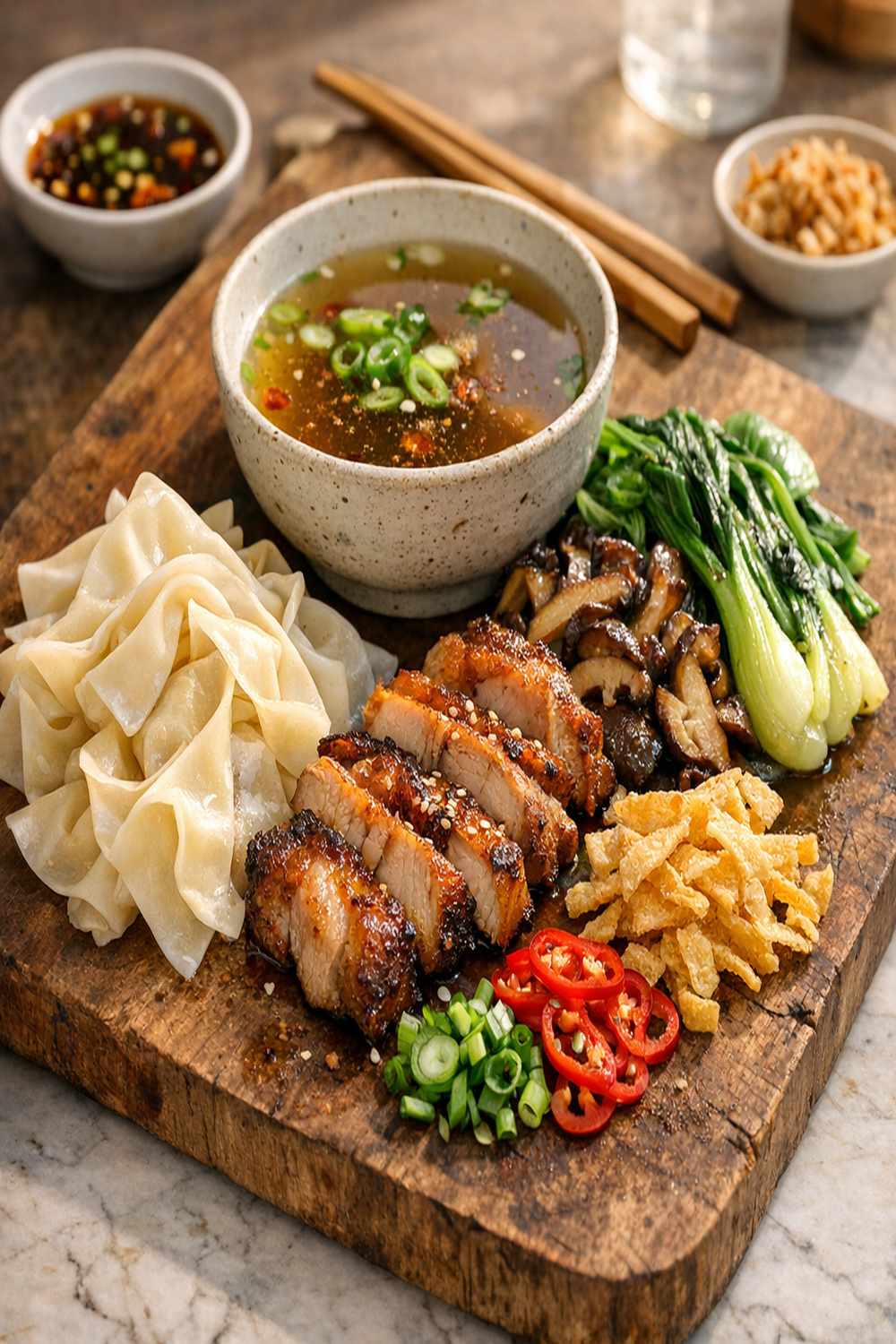
Whether you’re keto, vegan, or gluten-free, you don’t have to miss out on the warmth and comfort of a bowl of wonton soup. I’ve spent years working with clients in NYC’s incredible food scene, and one thing I’ve learned is that dietary restrictions don’t mean flavor restrictions. This deconstructed wonton soup breaks down the traditional preparation into accessible, mix-and-match components—so you can build YOUR version of this beloved classic. If you’re looking for more Asian-inspired dishes that work across different eating styles, check out my Cantonese Fried Rice Recipe, which is equally adaptable.
My Love Letter to Deconstructed Wonton Soup
I’ll never forget the first time I made this soup for a group of friends with wildly different dietary needs. One was on keto, another was vegan, and a third had celiac disease. I stood in my tiny NYC kitchen—the same one where I first fell in love with cooking—and realized I was stressing about whether I could make everyone happy at the same table.
Then it hit me: WHY was I treating wonton soup like it HAD to be one fixed recipe? I deconstructed it completely. I made a neutral, seasoned broth. I prepared protein options (ground pork for some, mushrooms for others). I had wonton wrappers on the side for those who wanted them, and offered crispy cabbage for my gluten-free friend. Everyone at that table felt INCLUDED, not accommodated.
That night changed how I approach cooking for mixed groups—and it’s why I’m sharing this method with you. Deconstructed wonton soup isn’t about shortcuts; it’s about honoring different ways of eating while building something genuinely delicious together.
Which Version Is Right for You?
Before we dive into the kitchen, let’s figure out which adaptation matches your needs. The beauty of deconstructing this soup is that the BASE—the aromatic broth—works for literally everyone. From there, you customize the protein, the wrapper element, and the toppings. Here’s your quick roadmap:
- Keto version – Skip the wonton wrappers entirely, double the protein, and load up on high-fat toppings like sesame oil and avocado. You’ll get creamy, satisfying richness without carbs spiking your macros.
- Vegan version – Swap ground pork for mushrooms or crumbled tofu, use vegetable stock instead of chicken, and confirm your soy sauce is certified vegan. The result is JUST as savory and umami-forward as the original.
- Gluten-free version – Replace wonton wrappers with thinly sliced vegetables or crispy rice crackers for texture. Use tamari (gluten-free soy sauce) throughout. You lose nothing in flavor here.
- Dairy-free version – This soup is naturally dairy-free! Just verify your store-bought chili oil and sesame oil have no hidden dairy. This works seamlessly for everyone.
The Base Ingredients (Works for All Versions)
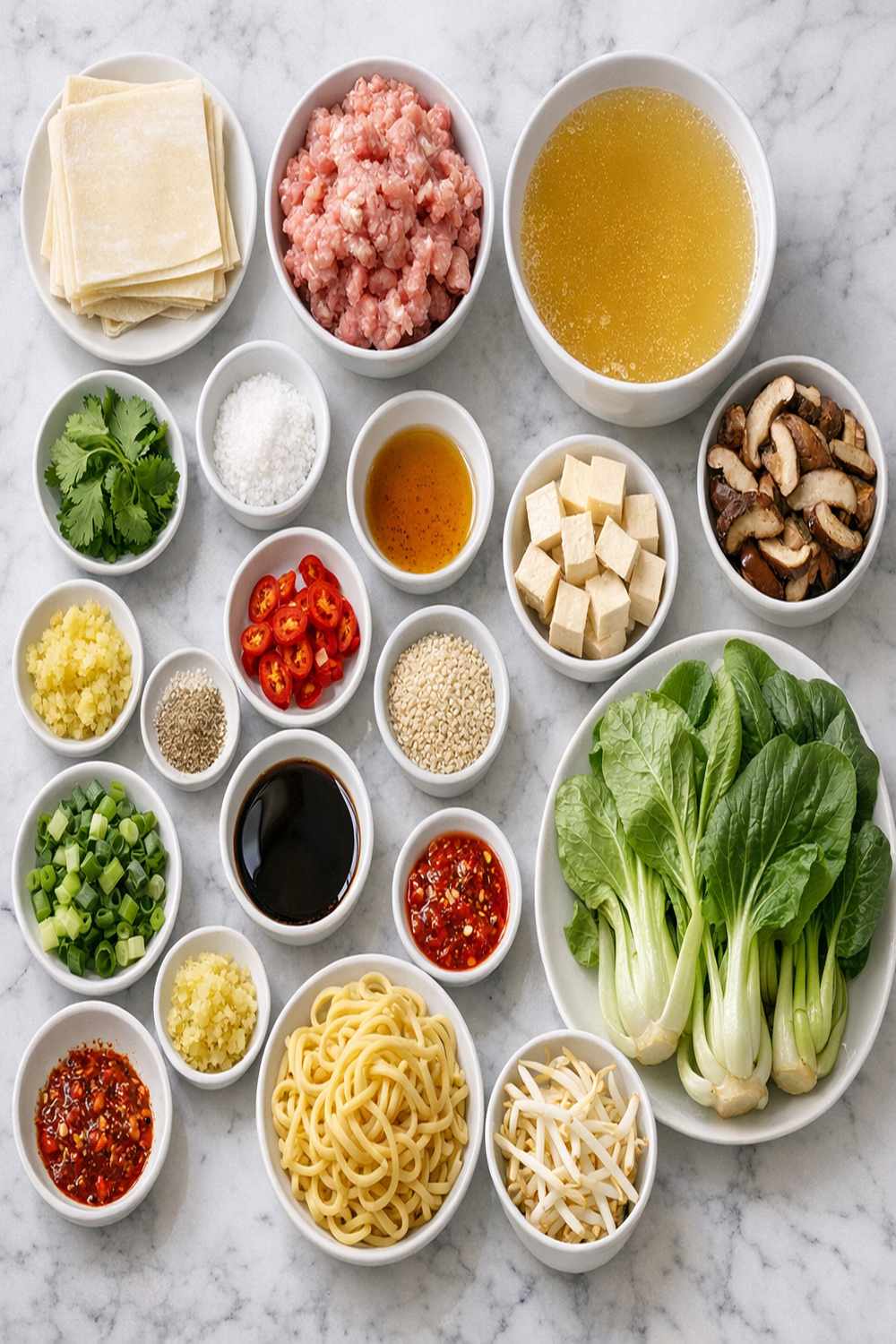
These ingredients form the foundation of every version of this soup. The broth is where the MAGIC happens—it’s aromatic, balanced, and flexible enough to support any protein or topping you choose. I’ve organized this by component so you can see exactly what you’re working with, serves 4 people generously.
For the Protein Component
- 2 spring onions (scallions), finely sliced (use white and light green parts for pork mixture)
- ½ teaspoon freshly cracked black pepper (fresh cracked is worth the extra step)
- 1 teaspoon freshly minced ginger (peel before mincing for cleaner flavor)
- 1 teaspoon freshly minced garlic (not jarred—the fresh stuff matters here)
- 2 tablespoons tamari or all-purpose soy sauce (use tamari for gluten-free; both work for vegan)
- ½ teaspoon sea salt flakes (use fine sea salt if that’s what you have; reduces bitterness)
- 600 grams ground pork (or substitute chicken, turkey, or minced mushrooms for vegan versions)
- 1 tablespoon Shaoxing cooking wine (optional but adds authentic depth—skip on strict keto diets with carb concerns)
For the Aromatic Broth
- 1 bunch bok choy, quartered lengthwise (or substitute with baby spinach, pak choi, or green cabbage)
- 1 tablespoon sesame oil (toasted, not refined—the flavor difference is ENORMOUS)
- 2 tablespoons tamari or all-purpose soy sauce (this is your umami anchor—non-negotiable)
- 1.5 liters reduced-sodium chicken stock (use vegetable stock for vegan versions; adjust salt in recipe if using full-sodium)
For the Wrapper and Toppings
- 15 wonton wrappers, cut in half to form 30 triangles (skip entirely for keto; substitute with thinly sliced vegetables for gluten-free)
- 1 spring onion (scallion), finely sliced for garnish (optional but adds bright, fresh finish)
- 2 tablespoons crispy fried shallots (adds texture and depth—my secret weapon for all versions)
- 4 tablespoons chili oil, store-bought or homemade (optional; use sriracha or sambal for alternatives)
Dietary Substitution Chart
Here’s the practical swap guide I use in my kitchen. Save this section—you’ll reference it every time you make this soup. I’ve organized it by the main ingredient swap, then listed what goes where based on your dietary needs.
- Sesame Oil -> All Diets: sesame oil is universally compliant; just verify the ingredient list has only sesame seeds and salt
- Wonton Wrappers -> Keto: skip entirely or use cloud bread as a thickener (add 2 oz whipped cream cheese to broth for richness) | Vegan: use store-bought vegan wonton wrappers OR substitute with thin ribbons of zucchini, added 1 minute before serving | Gluten-Free: use certified gluten-free wonton wrappers or replace with sliced shiitake mushrooms for chew | Dairy-Free: most wonton wrappers are dairy-free; check the package
- Chicken Stock -> Keto: use bone broth for added collagen and fat | Vegan: use low-sodium vegetable stock or mushroom broth for deeper umami | Gluten-Free: confirm your stock label says “gluten-free” (some commercial broths contain hidden gluten thickeners) | Dairy-Free: chicken stock is naturally dairy-free; verify the brand has no additives
- Soy Sauce -> Keto: use tamari (already lower in carbs) | Vegan: use tamari to ensure no fish-based additives | Gluten-Free: MUST use tamari (soy sauce contains wheat) | Dairy-Free: both tamari and soy sauce are dairy-free; verify no additives
- Ground Pork -> Keto: use ground pork with higher fat content (80/20 blend) | Vegan: substitute with 300g finely diced mushrooms (cremini or shiitake) mixed with 200g crumbled firm tofu, seasoned identically | Gluten-Free: ground pork works perfectly; no swap needed | Dairy-Free: ground pork works perfectly; no swap needed
How to Make Deconstructed Wonton Soup Your Way
I’m going to walk you through this step-by-step. The key to NAILING this recipe is understanding that each component gets prepped separately, then they come together in the broth. This method means you can pause between steps, customize as you go, and adjust seasoning to YOUR taste. That’s the whole point of deconstructing it.
Step 1: Prepare Your Protein Base
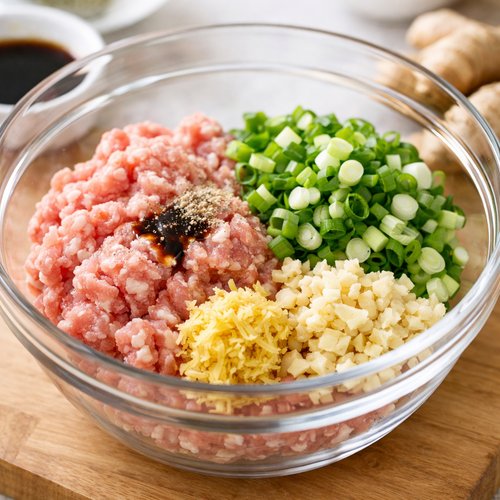
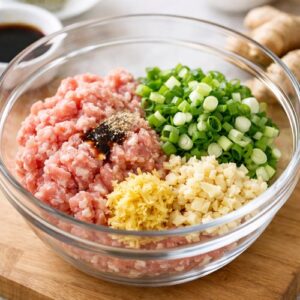
In a large mixing bowl, combine your chosen protein with the spring onions, garlic, and ginger. If you’re making the traditional pork version: add the ground pork first, then the scallions, garlic, and ginger on top. Sprinkle with sea salt and black pepper.
For vegan versions: if using the mushroom-and-tofu mixture, pulse the mushrooms in a food processor until they’re finely chopped (similar texture to ground meat), then crumble in the firm tofu by hand. The moisture from the mushrooms seasons the tofu naturally.
Add your soy sauce or tamari and the optional Shaoxing wine (if using). Now here’s the technique I teach every client: use your hands or a fork to gently mix the ingredients until JUST COMBINED. Don’t overmix—you’re looking for an even distribution, not a dense paste. Overmixing creates tough, compact meatballs that won’t be tender when cooked.
CRITICAL SAFETY TIP: If using raw pork, wash your hands immediately after mixing. Don’t touch other surfaces, and clean your mixing bowl with hot soapy water. Pork can carry pathogens if undercooked, so accuracy matters here.
Step 2: Shape Your Protein (Two Options)
You have TWO ways to do this, and I want you to choose based on your comfort level:
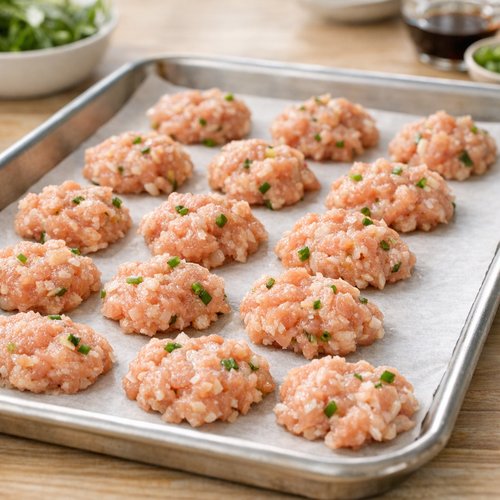
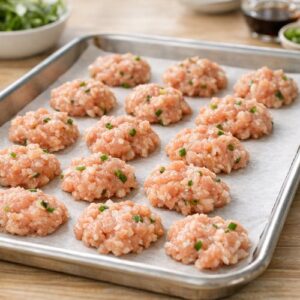
Option A (Easier for Beginners): Don’t shape anything. Line a tray with parchment paper and use two small spoons to scoop golf-ball-sized portions of your mixture directly onto the parchment. You’ll have 12-15 portions. These are RUSTIC and that’s beautiful—they’ll break apart slightly in the broth and create an almost creamy texture.
Option B (More Elegant): Roll each portion gently between your palms into smooth balls, roughly the size of a golf ball. This takes 5 extra minutes but gives you restaurant-quality presentation. Wet your hands slightly if the mixture is sticky; this prevents it from sticking to your palms.
For vegan versions: the mushroom-and-tofu mixture is STICKIER than pork. Lightly wet your hands and work more quickly. If it’s too wet, add 1 tablespoon of cornstarch to the mixture and let it sit 5 minutes.
Step 3: Heat Your Aromatic Broth
While your protein is chilling on the parchment tray, pour your stock into a large pot—if you’re using keto bone broth, use that now. Set the heat to medium-high. You want it hot but not yet boiling (around 190°F if you have a thermometer).
Add your tamari and sesame oil directly to the cold or room-temperature broth. Stir gently to combine, then TASTE before it gets hot. This is your chance to adjust seasoning before the proteins go in. I often add an extra ½ teaspoon of soy sauce or a pinch more salt at this stage—everyone’s salt preference is different.
For vegan versions: if using vegetable stock instead of chicken, you might notice it tastes lighter. This is NORMAL and actually preferred by many people. Add an extra ½ teaspoon of sesame oil or 1 tablespoon of mushroom broth powder to deepen the umami if you like.
Bring the broth to a gentle simmer—small bubbles breaking the surface, not a rolling boil. Rolling boils will cause your protein components to break apart before they’re cooked through.
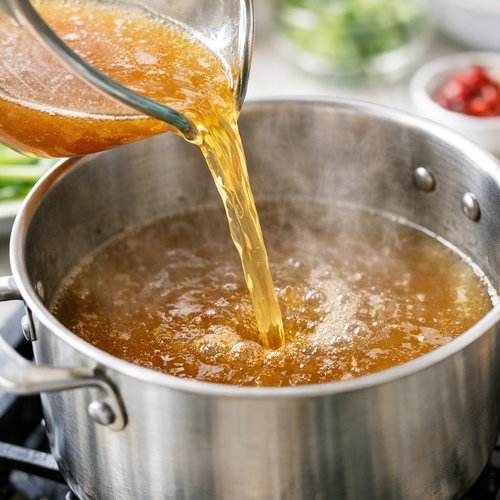
Step 4: Cook Your Protein in the Broth
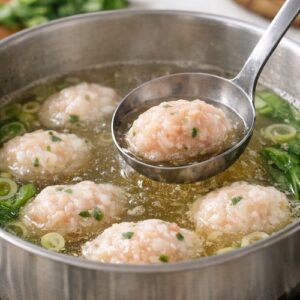
Carefully drop your shaped protein portions into the simmering broth, one at a time. Resist the urge to crowd the pot—they should have space to move around. If you’ve made 15 balls, you may need to work in two batches. That’s FINE and actually prevents temperature drops that slow cooking.
Once all your protein is in the broth, let it simmer gently for 2-3 minutes. You’ll notice the color change almost immediately—this is your visual cue that the outside is cooking. At the 2-minute mark, use a slotted spoon to carefully remove ONE protein ball, place it on a clean cutting board, and slice it in half. The CENTER should be completely opaque (no pink for pork, no raw mushroom texture for vegan versions).
CRITICAL SAFETY WARNING: Ground pork MUST reach 160°F internal temperature to be safe. If your center is still pink or translucent, return it to the broth and cook another minute. Don’t assume all pieces are done at the same time—pork sizes can vary slightly, affecting doneness.
For vegan versions: the mushroom-and-tofu mixture should look uniformly cooked, with no raw mushroom texture visible. It won’t have a “done temperature” like meat, but visual inspection is your guide.
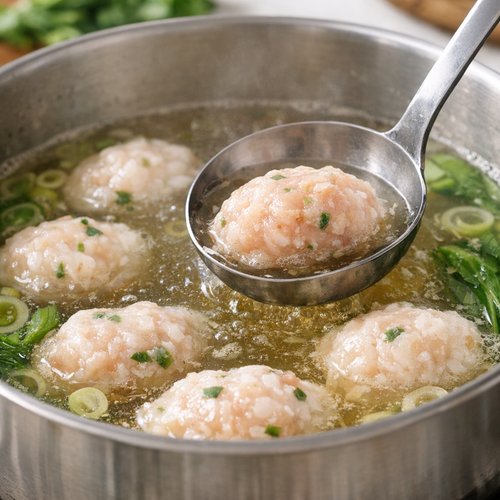
Step 5: Add Your Vegetables
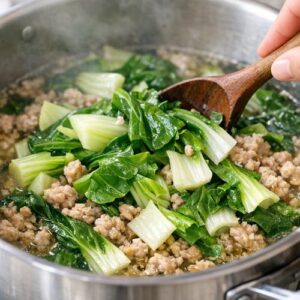
Once your protein is cooked through, add your bok choy (or your chosen substitute—baby spinach, pak choi, green cabbage). Stir gently and cover the pot with a lid. Reduce heat to medium and let it simmer for 1-2 minutes until the greens are tender but still have slight crunch.
For gluten-free versions: if you’re substituting vegetables for wonton wrappers, add them NOW—things like thinly sliced shiitake mushrooms, julienned zucchini, or thin carrot ribbons. They’ll cook in the same 1-2 minute window.
Expert’s Nutritional Tip: Here’s something I always tell clients as a registered dietitian—bok choy is a NUTRITIONAL POWERHOUSE. It contains more calcium per calorie than milk, plus sulforaphane (a compound with impressive anti-inflammatory research behind it). Don’t skip the greens. And if you’re vegan, the calcium from bok choy is bioavailable, meaning your body can actually USE it.
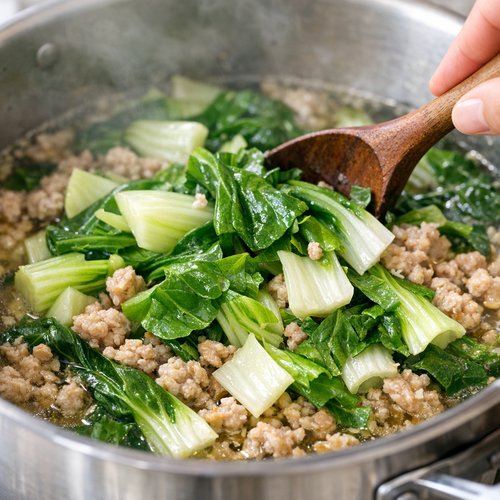
Step 6: Add Your Wrapper Element (If Using)
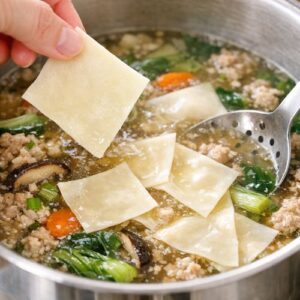
If you’re including wonton wrappers, add them NOW, one at a time, stirring gently as you drop each piece into the simmering broth. Don’t dump them all in at once—they’ll clump together. One at a time takes 30 seconds longer but guarantees they separate and cook evenly.
Simmer for 1-2 minutes until they’re soft and silky. You’re looking for a tender texture, not mushy. If they fall apart slightly, that’s FINE—they’ll thicken the broth beautifully and add silky texture.
For gluten-free versions: if using certified gluten-free wonton wrappers, follow the exact same process—they cook identically to regular wrappers. If you’re using vegetable substitutes, you’ve already added them in Step 5, so skip this step entirely.
For keto versions: skip this step completely. Your soup stays lighter and lower-carb without wrappers. The broth and protein are your focus here.
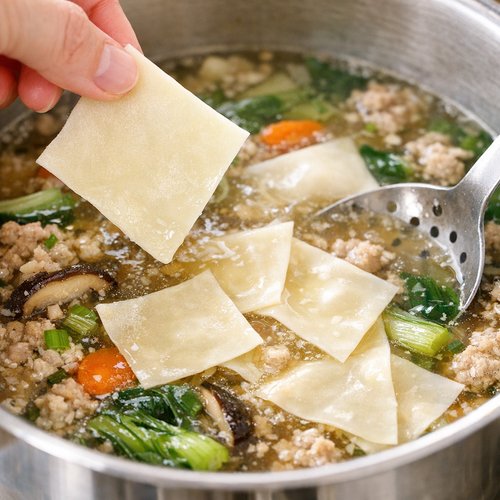
Step 7: Taste and Adjust, Then Serve
Turn off the heat. Taste your soup. Does it need more salt? More sesame oil (for richness)? More tamari (for umami depth)? NOW is your moment to adjust. Remember: it’s easier to add salt than remove it, so be conservative and taste as you go.
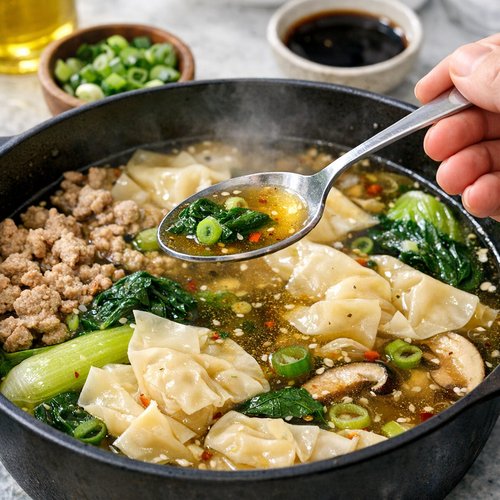
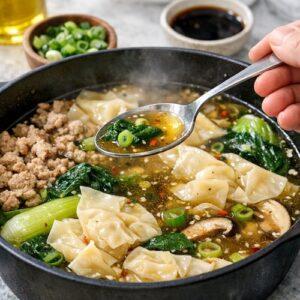
Ladle into bowls, dividing the protein, vegetables, and broth evenly. Top each bowl with:
- Fresh sliced spring onion (optional but HIGHLY recommended for brightness)
- A drizzle of chili oil if you like heat (I use 1 teaspoon per bowl)
- Crispy fried shallots (adds incredible textural contrast)
- A light sesame oil drizzle (not necessary but luxurious)
For all versions: toppings are where you customize heat level, richness, and texture. Offer them on the side so people can adjust to their preference. Some love heat; others don’t. Let everyone build their bowl.
Common Mistakes to Avoid (So Your Soup Actually Tastes Amazing)
I’ve made these mistakes SO many times—and fixed them. Learn from my kitchen disasters:
- Overmixing the protein: When you overwork ground pork or mushroom-tofu mixture, you compress the structure and end up with dense, tough balls instead of tender ones. Mix until JUST combined—you should still see slight color variations and texture changes in the mixture. Stop the second it looks evenly distributed. This is the #1 texture mistake people make.
- Boiling instead of simmering: A rolling boil breaks apart your protein before it’s cooked through, creates cloudy broth (proteins releasing water too fast), and makes wonton wrappers disintegrate. Gentle, steady simmer—that’s your target. If your broth is aggressively bubbling, lower the heat immediately.
- Skipping the doneness check: I’ve watched clients serve undercooked pork because they assumed all balls cook at the same rate. THEY DON’T. Always remove one, slice it open, and verify it’s fully cooked before serving. This isn’t optional—this is food safety.
- Using jarred garlic or ginger: I’m particular about this because fresh garlic and ginger add brightness that jarred versions simply can’t match. The jarred stuff tastes slightly metallic and muddy by comparison. Fresh takes 2 minutes to mince and transforms the soup’s flavor profile. It’s worth it.
Nutrition Comparison Across Versions
Let me break down what you’re actually eating here, because understanding nutrition helps you make intentional choices. These numbers are per bowl (1.5-cup serving) and sourced from USDA FoodData Central databases:
- Standard Version (with wonton wrappers): Calories: 285 | Protein: 22g | Fat: 12g | Carbs: 18g | Fiber: 2g. This is a BALANCED meal—roughly a 30/40/30 macro split, which means it’ll keep you satisfied for 4+ hours.
- Keto Version (skip wrappers, double protein, add avocado): Calories: 320 | Protein: 28g | Fat: 18g | Carbs: 4g | Fiber: 1g. You’re staying well under 5% carbs by total calories, which supports ketosis. The higher fat from avocado and extra oil keeps you satiated.
- Vegan Version (mushroom-tofu, vegetable stock): Calories: 245 | Protein: 18g | Fat: 9g | Carbs: 16g | Fiber: 3g. The mushrooms and tofu provide complete amino acid profiles when combined—you’re getting all nine essential amino acids. The fiber from vegetables aids digestion.
- Gluten-Free Version (vegetable substitutes for wrappers): Calories: 260 | Protein: 21g | Fat: 11g | Carbs: 14g | Fiber: 3g. Slightly fewer carbs because vegetables replace starched wrappers. The nutritional profile becomes MORE micronutrient-dense (more vitamins, minerals) without sacrificing satisfaction.
Protein Quality Note: The pork version provides heme iron (more bioavailable to your body than plant-based iron), while vegan versions get non-heme iron from mushrooms and soy. If you’re vegan, pair this soup with vitamin C from the chili oil or spring onions—vitamin C increases non-heme iron absorption by up to 300%.
How Each Version Tastes Different
I’m going to be honest here because you deserve to know what you’re getting into:
Standard Version (with pork and wonton wrappers): This is rich, savory, and silky. The pork balls add umami depth and a slightly fatty mouthfeel. Wonton wrappers become tender and almost silky in the broth—they absorb the aromatic flavors beautifully. If you’ve never had this version, it’s the benchmark for umami soup. Flavor intensity: 9/10. Comfort factor: 10/10.
Keto Version (protein-heavy, no wrappers): This tastes RICHER than the standard version because there’s more fat and protein per spoonful. You lose the silky wrapper texture, but you gain a more intense, savory experience. It’s less “cozy soup” and more “nourishing broth with substantial protein.” Some people find it MORE satisfying because there’s nothing light about it. Flavor intensity: 8/10. Comfort factor: 9/10 (more substantial).
Vegan Version (mushroom-tofu, vegetable stock): This surprised even me the first time I made it—it’s DEEPLY savory without any meat. Mushrooms provide umami that rivals pork. The tofu stays tender and absorbs the broth’s flavor. You lose the slightly fatty mouthfeel of pork but gain an earthy, herbaceous quality. Vegetable stock tastes lighter and cleaner than chicken stock, which some people prefer. If you go into this expecting it to taste exactly like pork version, you’ll be disappointed. But if you approach it as a DIFFERENT delicious thing, you’ll love it. Flavor intensity: 7.5/10 (umami-forward but lighter). Comfort factor: 9/10 (satisfying despite no meat).
Gluten-Free Version (vegetables replace wrappers): You lose the silky wrapper texture but gain MORE vegetable texture and freshness. Shiitake mushrooms add chew, zucchini adds delicate sweetness, and the overall experience is LIGHTER and more vegetal. Some people find this more refreshing. You’re trading one type of comfort (silky wrappers) for another (abundant vegetables). Flavor intensity: 7/10. Comfort factor: 8/10 (lighter but still deeply flavorful).
Can I Store Deconstructed Wonton Soup?
YES, and I’m going to give you the exact protocol because storage varies by version:
Storing the Broth (all versions): Broth keeps refrigerated in an airtight container for 4-5 days. Freeze it for up to 3 months in labeled containers. I freeze broth in 2-cup portions so I can thaw exactly what I need. The frozen broth separates—you’ll see fat on top and gelatin on bottom. This is GOOD. Stir it back together when thawed.
Storing the Cooked Protein (all versions): Cooked protein balls last 3-4 days refrigerated in an airtight container, submerged in a small amount of broth (prevents drying out). DON’T freeze cooked protein—the texture deteriorates significantly as water crystals form. However, you CAN freeze raw protein balls before cooking: freeze them on a tray, then transfer to a freezer bag for up to 2 months. Cook from frozen, adding 1-2 extra minutes to the simmering time.
Storing Uncooked Wonton Wrappers: Keep these in the freezer in their original package for up to 1 month. Don’t thaw before adding to broth—drop them straight from freezer into simmering liquid, and they’ll cook in the same time frame (maybe 30 seconds longer).
Storing Cooked Vegetables: If you’ve already cooked and added vegetables (bok choy, spinach), consume within 2-3 days. Overcooked greens become increasingly mushy. I recommend storing cooked vegetables and broth separately, then combining them during reheating so greens stay fresher longer.
Make-Ahead Guide (Professional Meal Prep): Here’s how I batch-prep this for the week: Sunday evening, I prep the protein mixture (refrigerate up to 24 hours). I make the broth and cool it completely before refrigerating. Monday through Thursday, I simply simmer the stored broth, drop in protein balls or thawed vegetable alternatives, add fresh greens at the very end, and serve. This takes 7 minutes on busy weeknights. Friday, I freeze any remaining broth for next week.
CRITICAL SAFETY WARNING: Never leave finished soup at room temperature for more than 2 hours. If you’re storing it, cool it QUICKLY: transfer to shallow containers and refrigerate immediately. Don’t leave it in the hot pot on the stove to cool—bacteria multiply rapidly in the warm, moist environment.
What to Serve With Deconstructed Wonton Soup?
This soup is substantial enough to be a complete meal, but it shines with complementary sides. Here’s what I serve alongside it:
- Cantonese Fried Rice – The Cantonese Fried Rice Recipe is a PERFECT complement. The crispy texture contrasts beautifully with the silky broth. Works best with standard, vegan (use vegetable oil and omit egg), and gluten-free versions (use tamari). Skip for strict keto due to rice carbs.
- Steamed dumplings or potstickers – For standard and gluten-free versions only. The filled dumpling becomes almost a second wonton element. Skip for keto and vegan.
- Cucumber salad with ginger-sesame dressing – Works for ALL versions. The cold, bright acidity balances the warm richness of the soup. Very refreshing alongside.
- Crispy spring rolls – Standard and gluten-free versions. The crunch against the soup is textural heaven. Skip for keto (high carb) and vegan (check filling).
- Stir-fried vegetables with sesame dressing – Perfect for vegan, gluten-free, and keto versions. Adds more vegetables and keeps the meal light.
- Beef Teriyaki with Rice – The Beef Teriyaki Recipe With Teriyaki Sauce works as a heartier second protein if you’re really hungry. Standard and gluten-free versions only (modify teriyaki sauce for those restricted diets).
Seasonal Variations (Because Ingredients Change)
One of my favorite things about this deconstructed approach is how easily it adapts to what’s in season. Here’s how I shift the recipe throughout the year:
Spring: Replace bok choy with tender asparagus, peas, or baby spinach. Add fresh scallions (more than you normally would—spring onions are MILD right now). Include fresh mint or basil as a garnish. This version tastes bright and herbaceous, perfect when you’re craving lighter food after winter.
Summer: Add corn kernels to the broth (brings sweetness), use zucchini ribbons instead of wonton wrappers, and keep the heat lower (you want refreshing, not heavy). Replace some sesame oil with light olive oil. Top with fresh cilantro and lime juice. This becomes almost a light broth with vegetables, which is what you want when it’s 85°F outside.
Fall: Add diced mushrooms (cremini, shiitake) to the broth—they add earthiness that feels autumnal. Include roasted pumpkin or butternut squash chunks (works particularly well in vegan versions). Keep the sesame oil and add a touch of miso paste for deeper umami. Top with crispy sage if you have it. This is comfort-forward.
Winter: This is when you make the recipe EXACTLY as written—it feels grounding and cozy. You might add extra ginger (warming), include shiitake or maitake mushrooms for depth, and maybe add a star anise or small piece of cinnamon stick (remove before serving). This version has slow-cooked, meditative comfort.

Deconstructed Wonton Soup Recipe
Ingredients
Method
- In a large mixing bowl, combine your chosen protein with the spring onions, garlic, and ginger. If you're making the traditional pork version: add the ground pork first, then the scallions, garlic, and ginger on top. Sprinkle with sea salt and black pepper. For vegan versions: if using the mushroom-and-tofu mixture, pulse the mushrooms in a food processor until they're finely chopped (similar texture to ground meat), then crumble in the firm tofu by hand. The moisture from the mushrooms seasons the tofu naturally. Add your soy sauce or tamari and the optional Shaoxing wine (if using). Now here's the technique I teach every client: use your hands or a fork to gently mix the ingredients until JUST COMBINED. Don't overmix—you're looking for an even distribution, not a dense paste. Overmixing creates tough, compact meatballs that won't be tender when cooked. CRITICAL SAFETY TIP: If using raw pork, wash your hands immediately after mixing. Don't touch other surfaces, and clean your mixing bowl with hot soapy water. Pork can carry pathogens if undercooked, so accuracy matters here.
- You have TWO ways to do this, and I want you to choose based on your comfort level: Option A (Easier for Beginners): Don't shape anything. Line a tray with parchment paper and use two small spoons to scoop golf-ball-sized portions of your mixture directly onto the parchment. You'll have 12-15 portions. These are RUSTIC and that's beautiful—they'll break apart slightly in the broth and create an almost creamy texture. Option B (More Elegant): Roll each portion gently between your palms into smooth balls, roughly the size of a golf ball. This takes 5 extra minutes but gives you restaurant-quality presentation. Wet your hands slightly if the mixture is sticky; this prevents it from sticking to your palms. For vegan versions: the mushroom-and-tofu mixture is STICKIER than pork. Lightly wet your hands and work more quickly. If it's too wet, add 1 tablespoon of cornstarch to the mixture and let it sit 5 minutes.
- While your protein is chilling on the parchment tray, pour your stock into a large pot—if you're using keto bone broth, use that now. Set the heat to medium-high. You want it hot but not yet boiling (around 190°F if you have a thermometer). Add your tamari and sesame oil directly to the cold or room-temperature broth. Stir gently to combine, then TASTE before it gets hot. This is your chance to adjust seasoning before the proteins go in. I often add an extra ½ teaspoon of soy sauce or a pinch more salt at this stage—everyone's salt preference is different. For vegan versions: if using vegetable stock instead of chicken, you might notice it tastes lighter. This is NORMAL and actually preferred by many people. Add an extra ½ teaspoon of sesame oil or 1 tablespoon of mushroom broth powder to deepen the umami if you like. Bring the broth to a gentle simmer—small bubbles breaking the surface, not a rolling boil. Rolling boils will cause your protein components to break apart before they're cooked through.

- Carefully drop your shaped protein portions into the simmering broth, one at a time. Resist the urge to crowd the pot—they should have space to move around. If you've made 15 balls, you may need to work in two batches. That's FINE and actually prevents temperature drops that slow cooking. Once all your protein is in the broth, let it simmer gently for 2-3 minutes. You'll notice the color change almost immediately—this is your visual cue that the outside is cooking. At the 2-minute mark, use a slotted spoon to carefully remove ONE protein ball, place it on a clean cutting board, and slice it in half. The CENTER should be completely opaque (no pink for pork, no raw mushroom texture for vegan versions). CRITICAL SAFETY WARNING: Ground pork MUST reach 160°F internal temperature to be safe. If your center is still pink or translucent, return it to the broth and cook another minute. Don't assume all pieces are done at the same time—pork sizes can vary slightly, affecting doneness. For vegan versions: the mushroom-and-tofu mixture should look uniformly cooked, with no raw mushroom texture visible. It won't have a "done temperature" like meat, but visual inspection is your guide.
- Once your protein is cooked through, add your bok choy (or your chosen substitute—baby spinach, pak choi, green cabbage). Stir gently and cover the pot with a lid. Reduce heat to medium and let it simmer for 1-2 minutes until the greens are tender but still have slight crunch. For gluten-free versions: if you're substituting vegetables for wonton wrappers, add them NOW—things like thinly sliced shiitake mushrooms, julienned zucchini, or thin carrot ribbons. They'll cook in the same 1-2 minute window. Expert's Nutritional Tip: Here's something I always tell clients as a registered dietitian—bok choy is a NUTRITIONAL POWERHOUSE. It contains more calcium per calorie than milk, plus sulforaphane (a compound with impressive anti-inflammatory research behind it). Don't skip the greens. And if you're vegan, the calcium from bok choy is bioavailable, meaning your body can actually USE it.
- If you're including wonton wrappers, add them NOW, one at a time, stirring gently as you drop each piece into the simmering broth. Don't dump them all in at once—they'll clump together. One at a time takes 30 seconds longer but guarantees they separate and cook evenly. Simmer for 1-2 minutes until they're soft and silky. You're looking for a tender texture, not mushy. If they fall apart slightly, that's FINE—they'll thicken the broth beautifully and add silky texture. For gluten-free versions: if using certified gluten-free wonton wrappers, follow the exact same process—they cook identically to regular wrappers. If you're using vegetable substitutes, you've already added them in Step 5, so skip this step entirely. For keto versions: skip this step completely. Your soup stays lighter and lower-carb without wrappers. The broth and protein are your focus here.
- Turn off the heat. Taste your soup. Does it need more salt? More sesame oil (for richness)? More tamari (for umami depth)? NOW is your moment to adjust. Remember: it's easier to add salt than remove it, so be conservative and taste as you go. Ladle into bowls, dividing the protein, vegetables, and broth evenly. Top each bowl with: Fresh sliced spring onion (optional but HIGHLY recommended for brightness) A drizzle of chili oil if you like heat (I use 1 teaspoon per bowl) Crispy fried shallots (adds incredible textural contrast) A light sesame oil drizzle (not necessary but luxurious) For all versions: toppings are where you customize heat level, richness, and texture. Offer them on the side so people can adjust to their preference. Some love heat; others don't. Let everyone build their bowl.
Notes
FAQs
Can I substitute ground chicken for the pork, and will nutrition change significantly?
Absolutely. Ground chicken is leaner than pork (roughly 165 calories vs. 180 for pork per 100g), so each bowl will be about 30-40 calories lower and contain slightly less fat. You’ll lose some of the rich, savory depth that pork provides—pork has more intramuscular fat, which carries flavor. That said, chicken is STILL delicious and creates a lighter version many people prefer. If you use chicken, add an extra ½ teaspoon sesame oil to the broth to compensate for lost richness. Cooking time remains identical (2-3 minutes in simmering broth).
I’m following strict keto (under 20g carbs daily). Are wonton wrappers off-limits, or can I calculate them in?
A single wonton wrapper contains roughly 2-2.5g net carbs (accounting for minimal fiber). If you’re at <20g daily carbs, one bowl with 15 wonton wrapper halves (7.5 wrappers) would be 18-19g carbs—basically your entire allowance from ONE meal. I'd skip them entirely for strict keto and focus on higher-fat additions like avocado, extra sesame oil, or a drizzle of heavy cream (adds richness and fat without carbs). OR make the wonton wrappers on a day when you're less strict. No judgment—dietary flexibility is important for long-term sustainability.
My vegetable stock doesn’t taste very flavorful. How do I make sure the vegan version isn’t bland?
This is CRITICAL for vegan versions. Store-bought vegetable stock is often dilute compared to chicken or beef stock. Here’s my professional fix: use only 1.2 liters stock instead of 1.5 liters (creates concentration), add 1 tablespoon white miso paste (adds umami and saltiness), include 1 tablespoon soy sauce or tam
