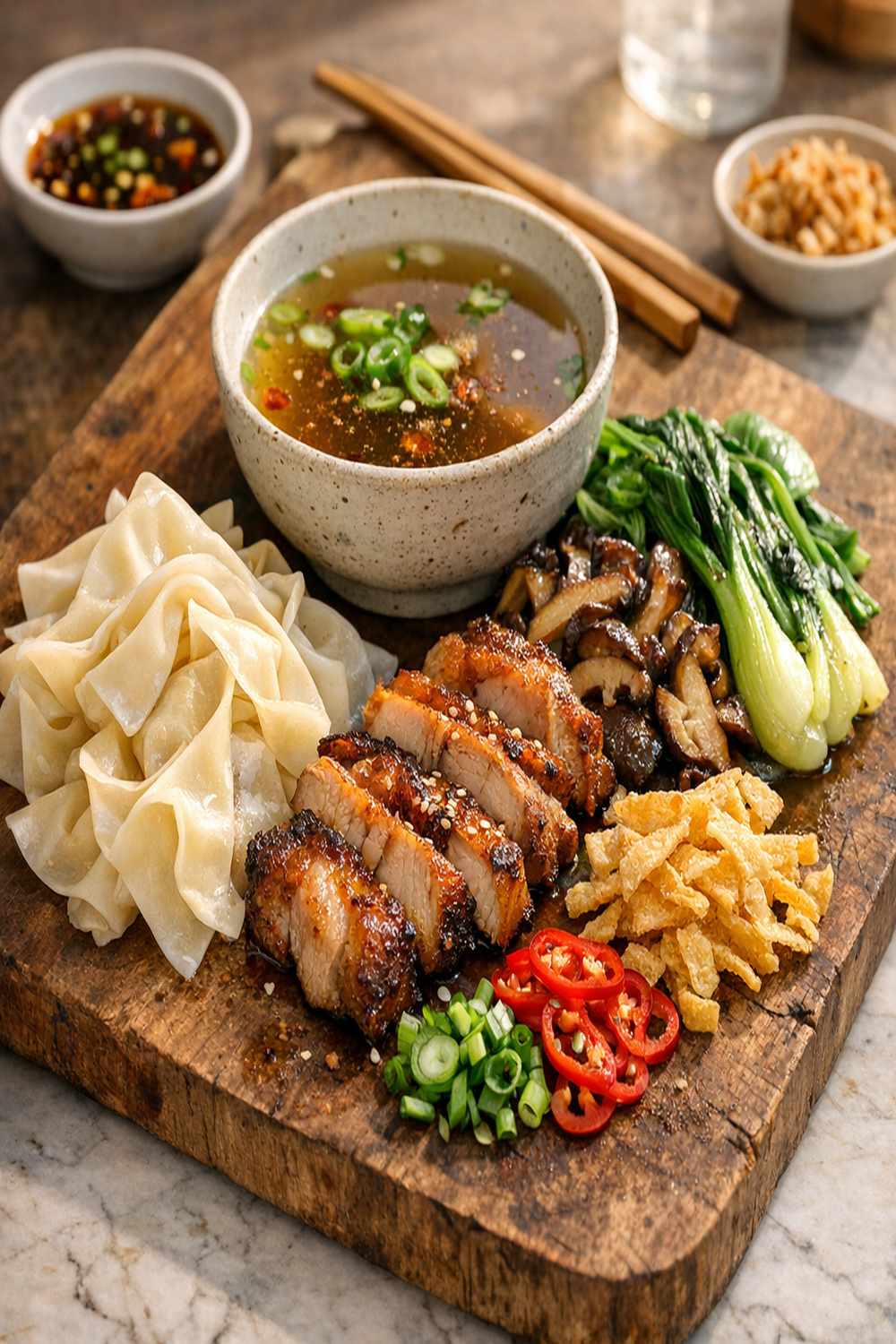

Ingredients
Method
Step 1: Prepare Your Protein Base
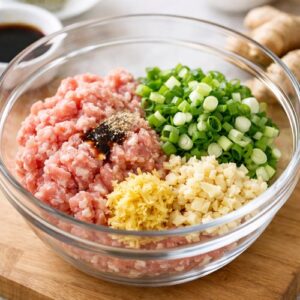
- In a large mixing bowl, combine your chosen protein with the spring onions, garlic, and ginger. If you're making the traditional pork version: add the ground pork first, then the scallions, garlic, and ginger on top. Sprinkle with sea salt and black pepper. For vegan versions: if using the mushroom-and-tofu mixture, pulse the mushrooms in a food processor until they're finely chopped (similar texture to ground meat), then crumble in the firm tofu by hand. The moisture from the mushrooms seasons the tofu naturally. Add your soy sauce or tamari and the optional Shaoxing wine (if using). Now here's the technique I teach every client: use your hands or a fork to gently mix the ingredients until JUST COMBINED. Don't overmix—you're looking for an even distribution, not a dense paste. Overmixing creates tough, compact meatballs that won't be tender when cooked. CRITICAL SAFETY TIP: If using raw pork, wash your hands immediately after mixing. Don't touch other surfaces, and clean your mixing bowl with hot soapy water. Pork can carry pathogens if undercooked, so accuracy matters here.
Step 2: Shape Your Protein (Two Options)
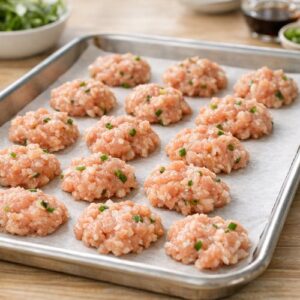
- You have TWO ways to do this, and I want you to choose based on your comfort level: Option A (Easier for Beginners): Don't shape anything. Line a tray with parchment paper and use two small spoons to scoop golf-ball-sized portions of your mixture directly onto the parchment. You'll have 12-15 portions. These are RUSTIC and that's beautiful—they'll break apart slightly in the broth and create an almost creamy texture. Option B (More Elegant): Roll each portion gently between your palms into smooth balls, roughly the size of a golf ball. This takes 5 extra minutes but gives you restaurant-quality presentation. Wet your hands slightly if the mixture is sticky; this prevents it from sticking to your palms. For vegan versions: the mushroom-and-tofu mixture is STICKIER than pork. Lightly wet your hands and work more quickly. If it's too wet, add 1 tablespoon of cornstarch to the mixture and let it sit 5 minutes.
Step 3: Heat Your Aromatic Broth
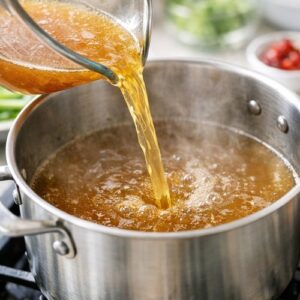
- While your protein is chilling on the parchment tray, pour your stock into a large pot—if you're using keto bone broth, use that now. Set the heat to medium-high. You want it hot but not yet boiling (around 190°F if you have a thermometer). Add your tamari and sesame oil directly to the cold or room-temperature broth. Stir gently to combine, then TASTE before it gets hot. This is your chance to adjust seasoning before the proteins go in. I often add an extra ½ teaspoon of soy sauce or a pinch more salt at this stage—everyone's salt preference is different. For vegan versions: if using vegetable stock instead of chicken, you might notice it tastes lighter. This is NORMAL and actually preferred by many people. Add an extra ½ teaspoon of sesame oil or 1 tablespoon of mushroom broth powder to deepen the umami if you like. Bring the broth to a gentle simmer—small bubbles breaking the surface, not a rolling boil. Rolling boils will cause your protein components to break apart before they're cooked through.
Step 4: Cook Your Protein in the Broth
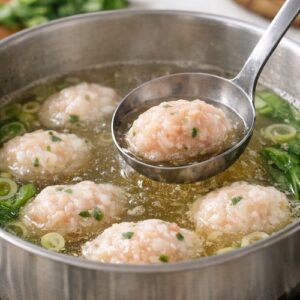
- Carefully drop your shaped protein portions into the simmering broth, one at a time. Resist the urge to crowd the pot—they should have space to move around. If you've made 15 balls, you may need to work in two batches. That's FINE and actually prevents temperature drops that slow cooking. Once all your protein is in the broth, let it simmer gently for 2-3 minutes. You'll notice the color change almost immediately—this is your visual cue that the outside is cooking. At the 2-minute mark, use a slotted spoon to carefully remove ONE protein ball, place it on a clean cutting board, and slice it in half. The CENTER should be completely opaque (no pink for pork, no raw mushroom texture for vegan versions). CRITICAL SAFETY WARNING: Ground pork MUST reach 160°F internal temperature to be safe. If your center is still pink or translucent, return it to the broth and cook another minute. Don't assume all pieces are done at the same time—pork sizes can vary slightly, affecting doneness. For vegan versions: the mushroom-and-tofu mixture should look uniformly cooked, with no raw mushroom texture visible. It won't have a "done temperature" like meat, but visual inspection is your guide.
Step 5: Add Your Vegetables
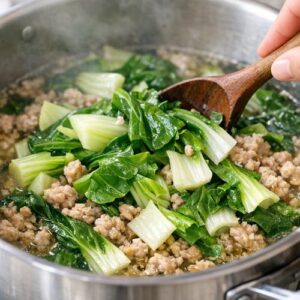
- Once your protein is cooked through, add your bok choy (or your chosen substitute—baby spinach, pak choi, green cabbage). Stir gently and cover the pot with a lid. Reduce heat to medium and let it simmer for 1-2 minutes until the greens are tender but still have slight crunch. For gluten-free versions: if you're substituting vegetables for wonton wrappers, add them NOW—things like thinly sliced shiitake mushrooms, julienned zucchini, or thin carrot ribbons. They'll cook in the same 1-2 minute window. Expert's Nutritional Tip: Here's something I always tell clients as a registered dietitian—bok choy is a NUTRITIONAL POWERHOUSE. It contains more calcium per calorie than milk, plus sulforaphane (a compound with impressive anti-inflammatory research behind it). Don't skip the greens. And if you're vegan, the calcium from bok choy is bioavailable, meaning your body can actually USE it.
Step 6: Add Your Wrapper Element (If Using)
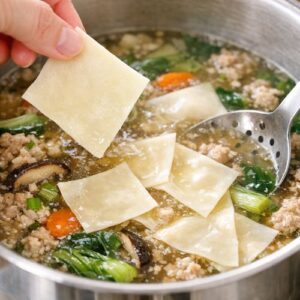
- If you're including wonton wrappers, add them NOW, one at a time, stirring gently as you drop each piece into the simmering broth. Don't dump them all in at once—they'll clump together. One at a time takes 30 seconds longer but guarantees they separate and cook evenly. Simmer for 1-2 minutes until they're soft and silky. You're looking for a tender texture, not mushy. If they fall apart slightly, that's FINE—they'll thicken the broth beautifully and add silky texture. For gluten-free versions: if using certified gluten-free wonton wrappers, follow the exact same process—they cook identically to regular wrappers. If you're using vegetable substitutes, you've already added them in Step 5, so skip this step entirely. For keto versions: skip this step completely. Your soup stays lighter and lower-carb without wrappers. The broth and protein are your focus here.
Step 7: Taste and Adjust, Then Serve
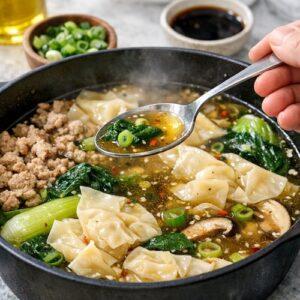
- Turn off the heat. Taste your soup. Does it need more salt? More sesame oil (for richness)? More tamari (for umami depth)? NOW is your moment to adjust. Remember: it's easier to add salt than remove it, so be conservative and taste as you go. Ladle into bowls, dividing the protein, vegetables, and broth evenly. Top each bowl with: Fresh sliced spring onion (optional but HIGHLY recommended for brightness) A drizzle of chili oil if you like heat (I use 1 teaspoon per bowl) Crispy fried shallots (adds incredible textural contrast) A light sesame oil drizzle (not necessary but luxurious) For all versions: toppings are where you customize heat level, richness, and texture. Offer them on the side so people can adjust to their preference. Some love heat; others don't. Let everyone build their bowl.
Notes
- Overmixing the protein: When you overwork ground pork or mushroom-tofu mixture, you compress the structure and end up with dense, tough balls instead of tender ones. Mix until JUST combined—you should still see slight color variations and texture changes in the mixture. Stop the second it looks evenly distributed. This is the #1 texture mistake people make.
- Boiling instead of simmering: A rolling boil breaks apart your protein before it's cooked through, creates cloudy broth (proteins releasing water too fast), and makes wonton wrappers disintegrate. Gentle, steady simmer—that's your target. If your broth is aggressively bubbling, lower the heat immediately.
- Skipping the doneness check: I've watched clients serve undercooked pork because they assumed all balls cook at the same rate. THEY DON'T. Always remove one, slice it open, and verify it's fully cooked before serving. This isn't optional—this is food safety.
- Using jarred garlic or ginger: I'm particular about this because fresh garlic and ginger add brightness that jarred versions simply can't match. The jarred stuff tastes slightly metallic and muddy by comparison. Fresh takes 2 minutes to mince and transforms the soup's flavor profile. It's worth it.