
Ingredients
Method
Step 1: Crack and Toast Your Peppercorns
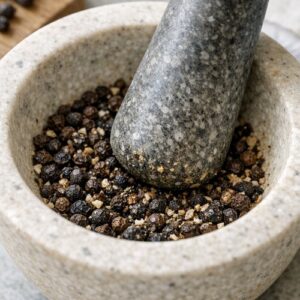
- Place all 3 tablespoons of whole black peppercorns in a mortar and use steady pressure with your pestle to crack them coarsely. If you don't have a mortar and pestle—which honestly, many New Yorkers don't have space for—put the peppercorns in a heavy freezer bag and use a rolling pin or the bottom of a heavy pan to crush them. This takes about 2 minutes, and YES, it matters. Here's my insider tip: FRESH-CRACKED peppercorns are NON-NEGOTIABLE for this recipe. The volatile oils that give black pepper its bite and complexity dissipate rapidly once cracked. If you crack these the night before, you'll lose 40% of their impact. Crack them RIGHT before you start cooking. Divide the cracked pepper into two portions—one for the marinade and one for garnishing at the end.
Step 2: Build Your Marinade and Start Beef Soaking
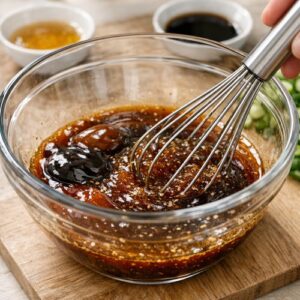
- In a large mixing bowl, whisk together 2 tablespoons oyster sauce, 3 tablespoons Shaoxing wine, 2.5 teaspoons soy sauce, 2.5 teaspoons toasted sesame oil, and most of your cracked black pepper (save about ½ teaspoon for garnish). The mixture should smell INCREDIBLE—savory, deep, slightly sweet. Add 2.5 teaspoons potato starch and whisk VIGOROUSLY until there are absolutely no lumps remaining. Potato starch clumps will create weird texture pockets in your beef, so take 30 seconds here to get it smooth. Now add your 1.75 pounds of cubed beef tenderloin and stir until every single piece is coated in the marinade. While the beef marinates, start prepping your vegetables. Having everything chopped and ready to go is called "mise en place," and it's the DIFFERENCE between controlled, efficient cooking and chaos. Chop your onions into ½-inch squares, slice your bell peppers into similar-sized chunks, and mince your garlic. Store these in separate containers so you can ADD them quickly when the time comes.
Step 3: Heat Your Pan and Brown the Beef in Batches
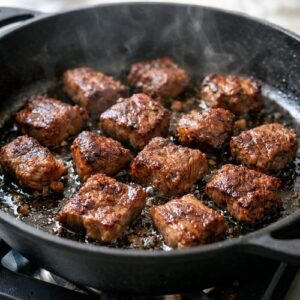
- Here's the reality of meal prep: you're cooking larger quantities, which means your pan can only hold so much beef at once. DO NOT overcrowd your pan. Use a large skillet (12-inch is ideal) and heat it over medium-high heat until it's genuinely HOT. You want to feel warmth radiating when you hold your hand 2 inches above the surface. Add 2.5 tablespoons of vegetable oil and let it shimmer for about 45 seconds. Using tongs, add the beef in a SINGLE LAYER, leaving as much of the marinade in the bowl as possible. This is crucial—excess liquid on the meat creates steam instead of a proper sear. Let the beef sit undisturbed for 2-3 minutes. RESIST the urge to move it around. You want those golden-brown caramelized edges, which come from contact and heat, not from constant stirring. Flip each piece and cook the second side for another 2-3 minutes until it's browned. The beef doesn't need to be fully cooked through at this point—it's going to finish cooking when you add the vegetables and sauce. Transfer the browned beef to a clean plate and repeat with any remaining beef. This process takes about 12-15 minutes total depending on how much beef you're cooking.
Step 4: Cook Vegetables and Build Sauce
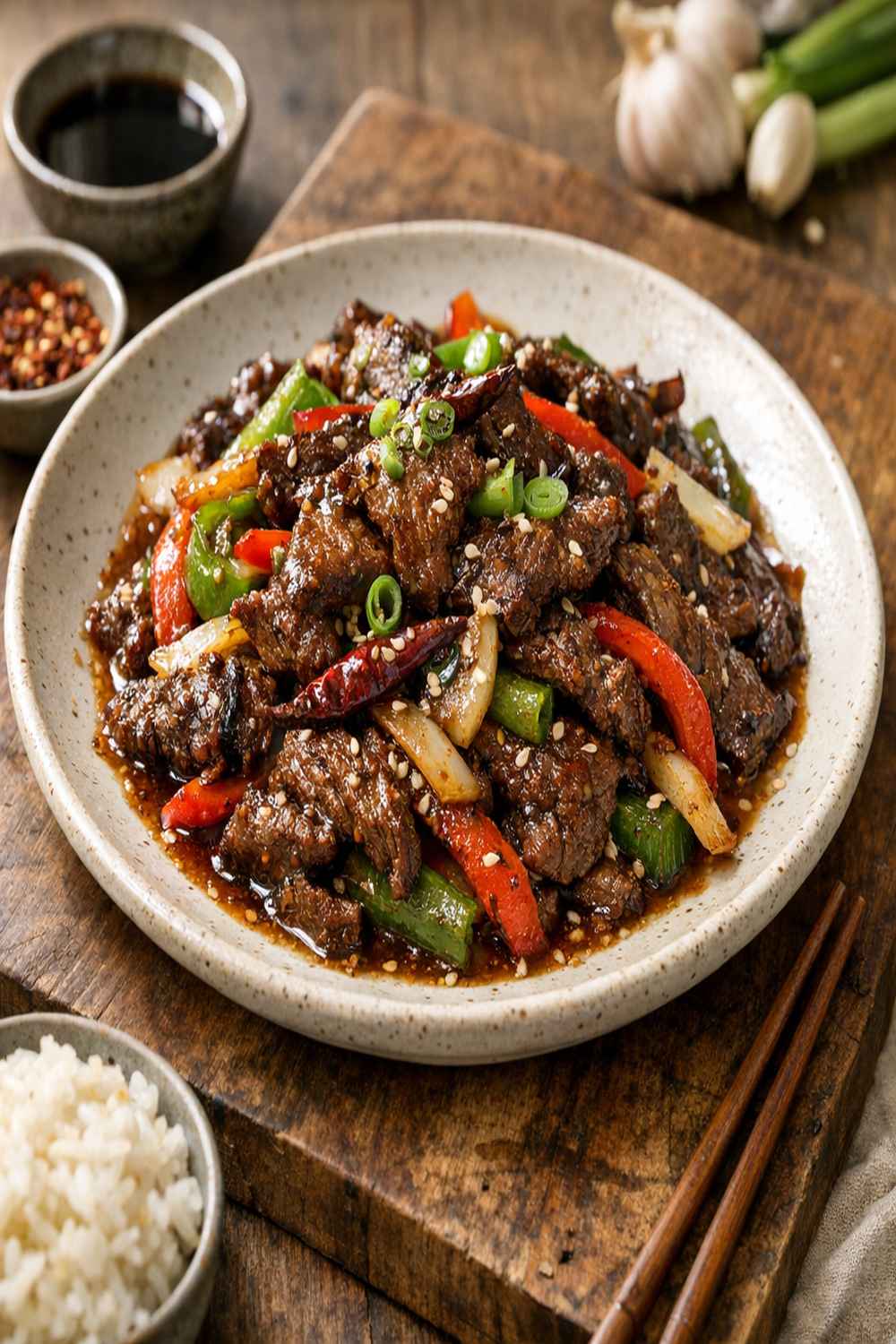
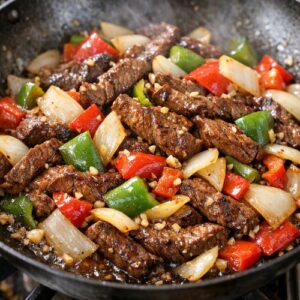
- Return all the browned beef to the pan along with all your chopped onions, bell peppers, and garlic. Turn the heat to HIGH. This is where the recipe COMES ALIVE. The vegetables will start to soften, the garlic will become fragrant, and everything will begin melding into one cohesive dish. Stir and toss constantly for about 4-5 minutes. You're looking for the onions to transition from opaque white to translucent, which signals that they're starting to caramelize and release their natural sugars. The peppers should still have a tiny bit of firmness—you're not going for mushy vegetables here. Once the onions reach that translucent stage, add the remaining marinade that's still sitting in your bowl. Toss EVERYTHING together for about 2-3 minutes. The sauce will coat the beef and vegetables, thickening slightly from the potato starch. The whole dish should look glossy and BEAUTIFUL, with a rich brown sauce clinging to every piece.
Step 5: Cool and Portion for Storage
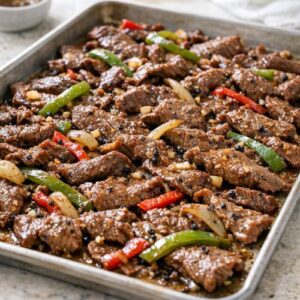
- Spread the cooked pepper beef onto a sheet pan or large platter and let it cool to room temperature for about 15-20 minutes. This is IMPORTANT for food safety—you don't want to trap heat inside airtight containers, which creates condensation and can compromise texture and shelf life. While it cools, wash and dry your storage containers. I use glass containers with locking lids because they don't retain odors, they don't stain, and I can actually SEE what's inside without opening them. Once cooled, divide the pepper beef into 8 equal portions. If you're eating lunch AND dinner most days, I recommend doing 4 larger portions instead—it's simpler math and you're less likely to mess up your portions. Store each portion with an appropriate amount of sauce. The sauce is FLAVOR, so don't skimp on it.