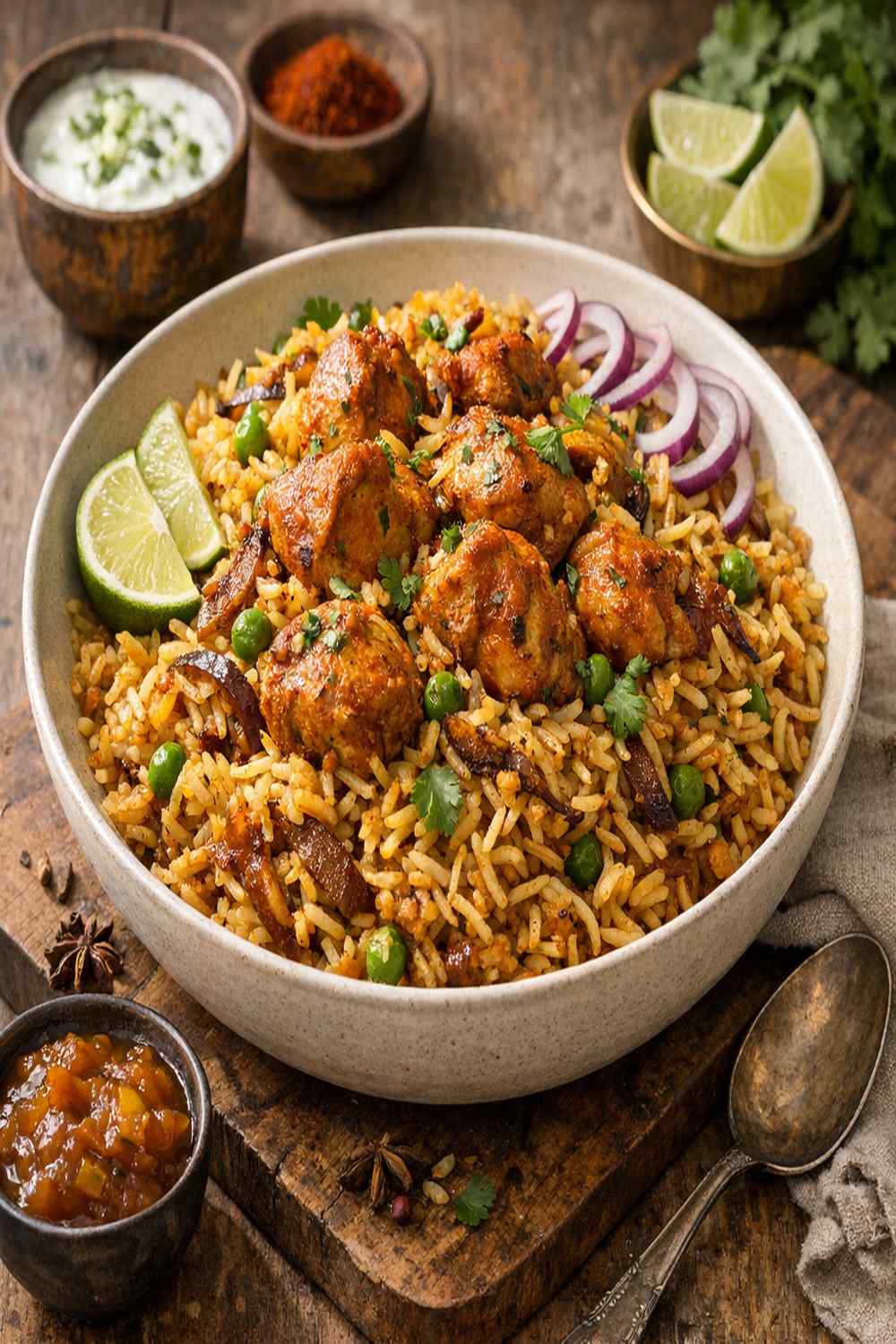

Ingredients
Method
Step 1: Build Flavor with the Marinade
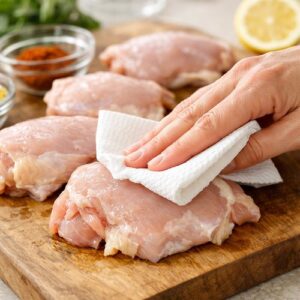
- Pat your chicken thighs completely dry with paper towels. Moisture is the enemy of browning, and browning is where you develop the flavor that makes this dish sing. In a shallow bowl, combine your lemon juice, garlic paste, ginger paste, turmeric, red chili powder, garam masala, and soy sauce. Pro tip: This marinade base costs under $1 total and is the difference between "good" and "restaurant-quality." Garam masala is the secret weapon—it's a warm blend of toasted spices (cinnamon, cardamom, cloves, cumin, coriander) that adds complexity that no single spice can achieve. Don't use generic "curry powder." Add the chicken thighs to the bowl, turning each piece to coat all sides—skin included. Season generously with salt and pepper (this is where seasoning begins; you're building layers, not salting at the end). Cover the bowl with plastic wrap and refrigerate for at least 30 minutes, ideally 2 hours if you have time. This isn't just about marinating—it's about time allowing the spices to penetrate the meat so every bite tastes intentional.
Step 2: Brown the Chicken Properly (This Is Critical)
- Heat your ghee and oil in a large, heavy-bottomed pan (cast iron is IDEAL because it retains heat, but a stainless steel pan works fine) over medium-high heat. When the fat shimmers and moves easily, it's ready. You'll know it's hot enough when a piece of chicken skin hits the pan and immediately sizzles—not a gentle sizzle, a confident sizzle. Working in batches if needed (don't crowd the pan—space is your friend), place the marinated chicken thighs skin-side DOWN into the pan. DO NOT MOVE THEM. This is the hardest part for home cooks, but it's essential. Let them sit undisturbed for 4–5 minutes while the skin renders and turns golden brown. SAFETY WARNING: Watch the heat carefully. If the pan smokes heavily or the spices smell burnt (not toasty, but acrid), your heat is too high. Adjust immediately to medium. You want browning, not charring. Flip each thigh and cook the other side for 3–4 minutes until golden. At this stage, the chicken should be about 70–75% cooked through (it will finish in the rice, so don't overcook it now). Transfer to a clean plate.

Step 3: Toast the Rice Briefly
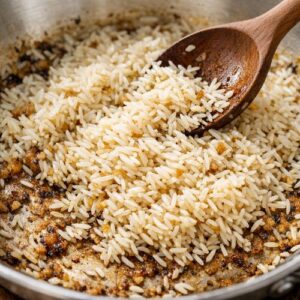
- In the same pan with all those wonderful browned bits stuck to the bottom (that's called fond, and it's GOLD), add your rinsed basmati rice. Stir constantly for 2–3 minutes. You'll hear it click slightly as the grains toast. The rice should smell warm and slightly nutty, not burnt. This toasting step adds a subtle depth that makes people say, "How did you make rice taste like THIS?" Budget hack: Toasting rice is the free move that costs nothing but takes 3 minutes and changes everything.
Step 4: Add Liquid and Aromatics (The Assembly)
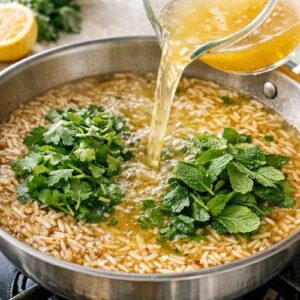
- Pour your room-temperature chicken stock into the pan with the toasted rice. Add the remaining lemon juice, the fresh cilantro, and the fresh mint. Stir everything together gently but thoroughly, scraping up all that fond from the bottom. This is where all your flavor comes together. Taste a small spoonful of the liquid and adjust salt and pepper. Remember: you're seasoning the rice and the chicken simultaneously, and salt travels differently in liquid than in dry spices. Err slightly toward under-seasoned now because the liquid will reduce and concentrate flavor. Place the browned chicken thighs on top of the rice in a single layer. Don't submerge them completely—let the skin stay partially above the liquid so it stays crispy.
Step 5: The Final Cook (Low and Slow)
- Increase the heat to high and bring everything to a boil—you'll see large bubbles breaking the surface. Once it reaches a boil, reduce the heat to the LOWEST setting, place a tight-fitting lid on the pan, and let it simmer undisturbed for 12–15 minutes. CRITICAL: Do not peek. Every time you lift the lid, you release steam and add 2–3 minutes to cooking time. Trust the process. Listen instead—you should hear gentle, occasional pops and sizzles, not aggressive bubbling. After 12 minutes, lift the lid carefully (avert your face from the steam). The rice should be tender, the liquid should be completely absorbed, and the chicken should be cooked through (internal temperature 165°F if you have a thermometer, but you'll see juices run clear when you pierce the thickest part). If there's still liquid pooling at the bottom, replace the lid and cook another 2–3 minutes. If the rice is tender but liquid remains, increase the heat to medium for 1–2 minutes to evaporate excess moisture without burning the bottom.
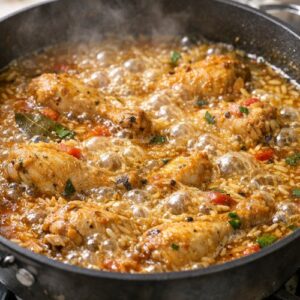
Step 6: Rest and Finish
- Remove from heat and let the pan sit covered for 5 minutes. This resting period allows residual heat to finish the cooking and helps the rice grains separate. Fluff the rice gently with a fork, breaking up any clumps. Taste and adjust salt one final time. Transfer to a serving platter and garnish with additional fresh cilantro, lemon wedges, and pomegranate arils if using. That jewel-like color and the tartness of the pomegranate against the warm spices is the move that makes people think you spent hours on this.

Notes
- Buy chicken thighs at discount grocers on Sundays (their meat sale day) - Lidl, Aldi, and discount ethnic markets rotate sales weekly. Sign up for their apps and you'll see 40% discounts regularly. Thighs freeze beautifully for up to 3 months, so buy double when they're on sale.
- Visit Indian grocery stores for bulk spices and basmati rice - A 10-lb bag of basmati rice costs $8–$12 at Indian markets versus $4–$6 per pound at regular grocers. Bulk garam masala, turmeric, and chili powder cost $1–$2 per pound versus $4–$8 in grocery store jars. One trip saves you $15–$20.
- Make your own garlic and ginger paste in batches and freeze it - Fresh garlic and ginger (costs $0.15 each at bulk stores) minced and frozen in ice cube trays gives you paste for $0.05 per serving. Store-bought paste costs $1–$2 per jar and loses potency.
- Buy cilantro and mint at farmers markets or grow them - Farmers market bunches in summer cost $0.50–$0.75 and are TRIPLE the size of grocery store packages. Mint grows from a single cutting—literally zero maintenance—and yields fresh leaves for months.
- Choose stock strategically: homemade > store brands > organic brands - If you roast chicken regularly, save your bones and make stock ($0.25 cost for 4 cups). If not, store brands at discount grocers cost $0.50 per carton. Skip organic here—the spices cover everything.