
Easy One Dish Meal Recipe
This post contains affiliate links. As an Amazon Associate I earn from qualifying purchases.
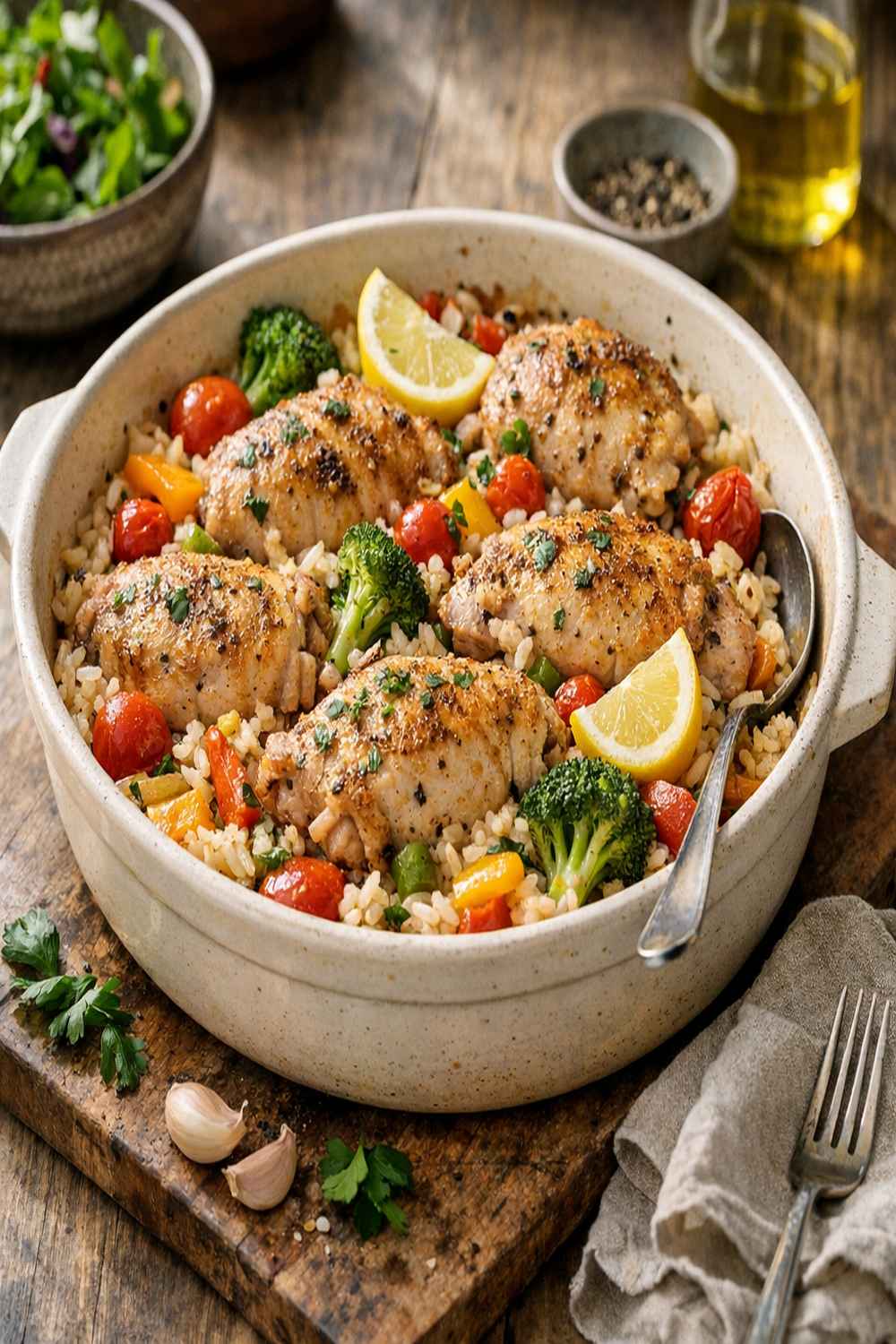
This easy one-dish meal recipe brings together Eastern European comfort cooking and modern American convenience in a way that honors both traditions while creating something entirely new. I LOVE watching how a simple Dutch oven can transform basic ingredients into something that feels restaurant-quality, yet comes together faster than most takeout. Whether you’re feeding a busy family or hosting a casual weeknight dinner, this creamy chicken noodle situation has your back.
Easy One-Dish Creamy Chicken Noodle Recipe: Where Classic Comfort Meets NYC Weeknight Reality
I first discovered this dish during my early years studying nutrition in New York City, sitting in a tiny Polish restaurant in the East Village with my roommate. She ordered something that looked deceptively simple—tender chicken, creamy sauce, egg noodles—but the DEPTH of flavor completely shifted my understanding of what “easy” cooking could be. That meal sparked something in me about how the most nourishing, satisfying dishes don’t require hours in the kitchen. They require understanding technique, respecting ingredients, and trusting the process.
Fast forward through culinary school and building my nutrition practice, and I’ve adapted that classic Eastern European approach into a modern one-dish method that delivers restaurant-quality results without the stress. This recipe has become my go-to recommendation for clients who want to reclaim weeknight dinners—it’s where I honor the slow-food philosophy of building flavor through proper browning and deglazing, while respecting the reality that most of us have about 30 minutes to get dinner on the table.
The Two Traditions Behind This Dish
Eastern European cooking—particularly Polish and Hungarian cuisine—built its foundation on understanding how to coax maximum flavor from simple, accessible ingredients. The technique of browning meat and vegetables separately, then building a sauce through deglazing, comes directly from this tradition. These cultures understood that TIME and TEMPERATURE create flavor, not fancy ingredients.
Modern American comfort cooking, especially in cities like New York, evolved to honor this same philosophy but with a contemporary twist: efficiency without sacrificing quality. We’re talking about techniques that maximize flavor development while respecting that cooking happens alongside everything else in our lives.
- Eastern European contribution – the deglazing technique, building rich flavor through proper browning, the egg noodle foundation, and the paprika-spiced aromatic base that creates soul in the sauce
- American weeknight cooking contribution – the one-pot efficiency, the balance of protein and vegetables in single serving, and adapting cream sauces for modern palates while maintaining nutritional integrity
Why This Fusion Works
Here’s the nutrition science and flavor logic that makes this combination absolutely BRILLIANT: Eastern European cooks understood that browning chicken and mushrooms creates hundreds of new flavor compounds through the Maillard reaction. When you properly sear these proteins and vegetables, you’re not just cooking them—you’re building an umami foundation that the cream sauce will anchor into.
The sour cream element is CRITICAL here. Unlike heavy cream, which is purely fat-based, sour cream brings a subtle tang that brightens the entire dish while providing probiotics that aid digestion. The mustard acts as both a flavor amplifier and an emulsifier, helping the sauce achieve that silky texture without requiring excessive cream. This is where the two traditions meet perfectly: Eastern European technique meeting nutritional intelligence.
The white wine deglazing step? That’s where EVERYTHING changes. When you pour wine into a hot pan with browned bits stuck to the bottom, those browned bits (called fond) contain concentrated flavor. The wine releases them through the acidity, and you’re left with a sauce that tastes like it’s been simmering for hours—but it took literally two minutes.
The Ingredients—A Tale of Two Traditions
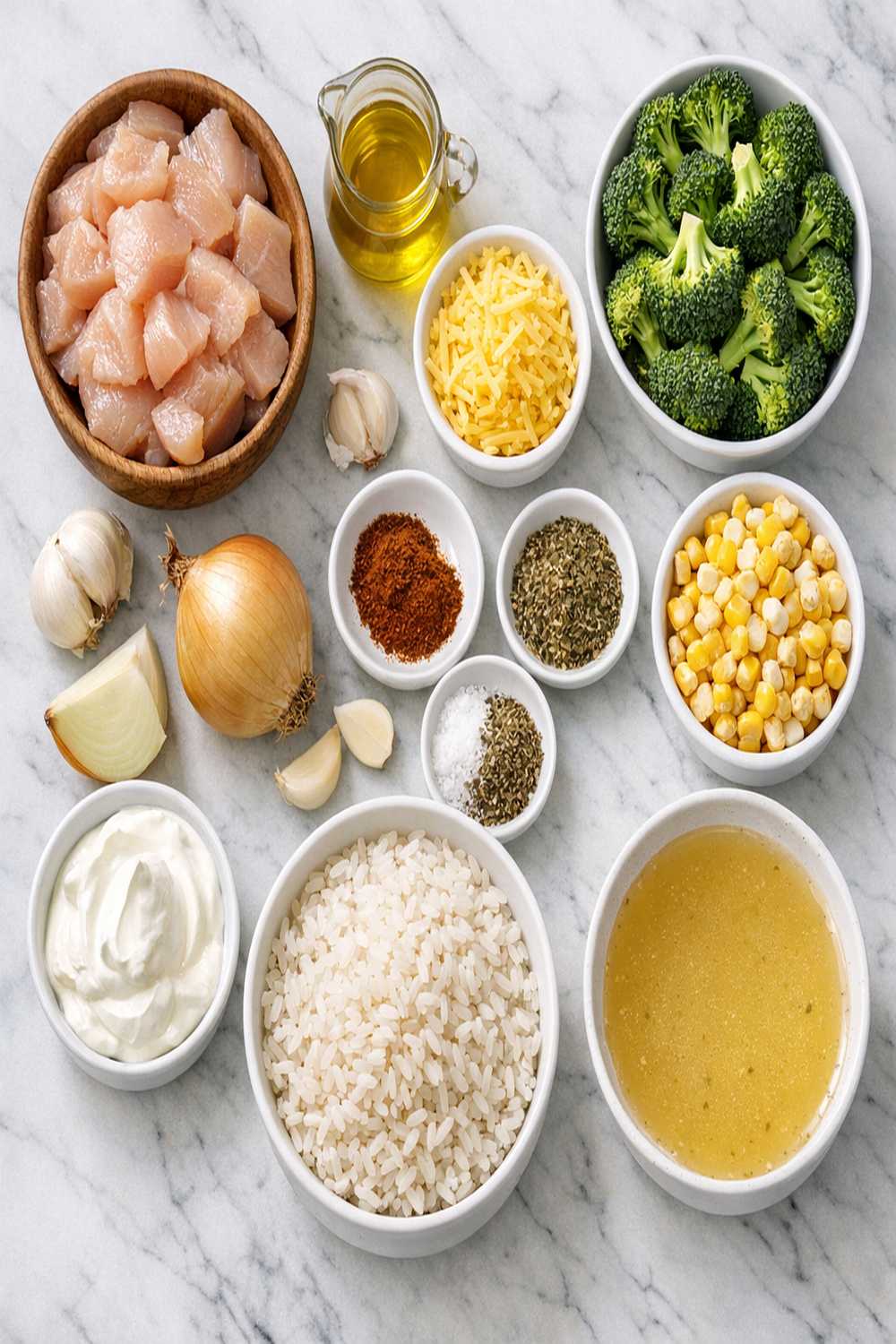
Each ingredient in this recipe plays a specific role, and I’ve chosen each one because it earns its place nutritionally and functionally. Here’s what you’ll need to create this magic—makes 4 generous servings:
- 1 teaspoon whole-grain mustard (acts as an emulsifier and flavor amplifier—Dijon works too)
- Extra black pepper (for final garnish)
- 2½ cups reduced-sodium chicken stock (divided—this is your flavor base, and reduced-sodium means YOU control the salt content)
- ½ yellow onion (finely chopped, the base of every great sauce)
- 12 ounces cremini mushrooms (sliced about ¼-inch thick, cremini offer earthiness without the price tag of specialty varieties)
- 1 pound boneless, skinless chicken breast (cut into approximately 1-inch pieces, the size is CRITICAL for even cooking)
- 2 tablespoons fresh parsley (chopped fresh, for brightness and color)
- 1 tablespoon all-purpose flour (this creates the slurry that thickens your sauce without adding cornstarch)
- 3 to 4 cloves garlic (minced fresh, never use jar garlic for this—the sulfur compounds matter)
- ⅛ teaspoon red pepper flakes (just enough heat to wake up your palate)
- 3 to 4 tablespoons sour cream (full-fat, added off heat to preserve the probiotics and prevent curdling)
- ½ teaspoon smoked paprika (the heart of Eastern European flavor, adds color and subtle smokiness)
- 3 tablespoons extra virgin olive oil (divided—use quality oil, it matters for the final taste)
- ½ cup dry white wine (I use a Chardonnay, but any crisp white works—the alcohol cooks off, leaving flavor)
- ¼ teaspoon dried thyme (herbal depth without overpowering)
- ¼ teaspoon dried oregano (Mediterranean touch that adds complexity)
- ½ teaspoon kosher salt (divided—you’ll add more as you taste, this is just the starting point)
- ¾ teaspoon freshly ground black pepper (divided—fresh-cracked makes a REAL difference)
- 6 ounces extra-wide egg noodles (uncooked—these are wider than regular noodles, they hold sauce better)
Expert’s Nutritional Tip
Here’s what I tell my clients about this dish: the sour cream isn’t the enemy—it’s STRATEGIC. One serving contains about 15 grams of protein from the chicken, approximately 8 grams of fat from the sour cream (which supports fat-soluble vitamin absorption), and roughly 35 grams of carbohydrates from the noodles. That ratio—balanced protein, moderate fat, complex carbs—creates satiety that lasts for HOURS. Many people overcomplicate weeknight dinners by trying to eliminate fat entirely. Instead, I recommend using quality fats strategically, which is exactly what happens here. The probiotics in sour cream also support your microbiome, something that Eastern European cultures have understood for centuries through traditional fermentation practices.
How to Make This Fusion Easy One-Dish Meal Recipe
This recipe is designed as a respectful creative journey where each step builds on the last. You’re going to honor the Eastern European technique of developing flavor through proper temperature and timing, while respecting the modern reality of getting dinner done efficiently. This is where simplicity meets sophistication.
Step 1: Create Your Slurry (The Secret Thickening Agent)
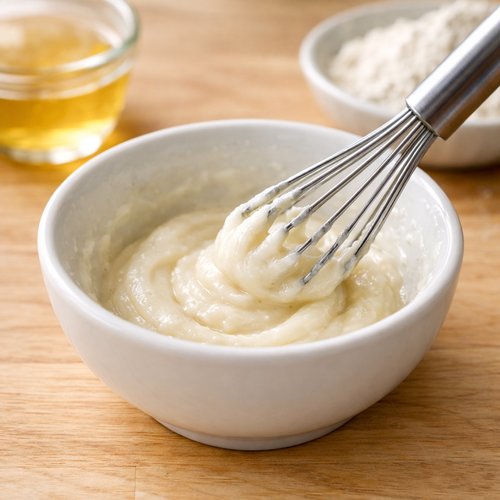
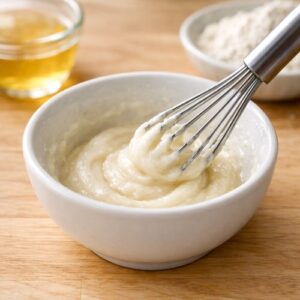
In a small bowl, whisk together 1 tablespoon all-purpose flour with 1 tablespoon of your chicken stock until you have a smooth paste. This is your insurance policy—it’ll thicken your sauce without lumps or cornstarch. Set it aside on your counter. This technique comes directly from French mother sauces, adapted by Eastern European cooks who understood that a beurre manié (flour mixed with fat) or slurry creates silky sauces. We’re using stock instead of butter here, which keeps it lighter while maintaining that luxurious texture.
Step 2: Sear the Chicken (Building Your Flavor Foundation)
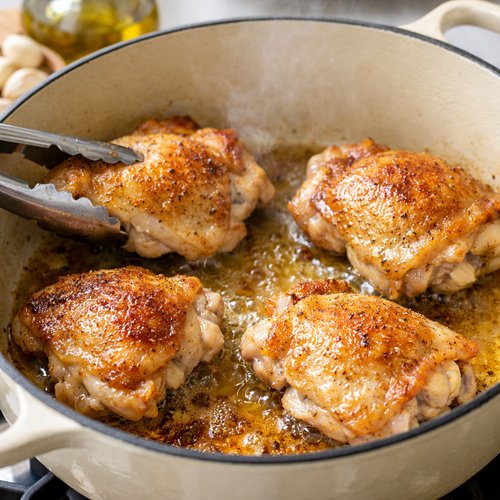
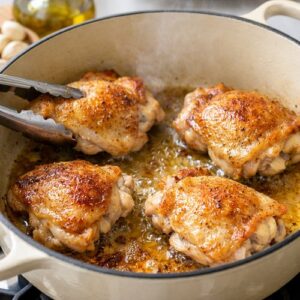
This is where EVERYTHING starts. Heat a large Dutch oven or deep-bottomed skillet over medium-high heat. Add 1½ tablespoons of olive oil and let it get shimmering—you want it HOT, not just warm. Add your chicken pieces (make sure they’re patted dry with paper towels, moisture is the ENEMY of browning) and immediately season with ¼ teaspoon kosher salt and ¼ teaspoon black pepper.
DON’T TOUCH THE CHICKEN. This is critical. Let it sit undisturbed for about 3 minutes. You’re building what’s called a Maillard reaction—essentially, you’re creating hundreds of new flavor compounds through a chemical reaction between proteins and sugars. After 3 minutes, flip each piece and cook another 2 minutes until the chicken is golden brown and cooked through (it should reach 165°F internally if you’re using a thermometer, which I ALWAYS recommend for food safety).
Remove the chicken to a clean plate. Don’t worry if it’s not fully cooked—you’re going to finish it in the sauce. The goal here is COLOR and FLAVOR, not fully cooking the chicken through.
Step 3: Build the Aromatic Base (Eastern European Soul)
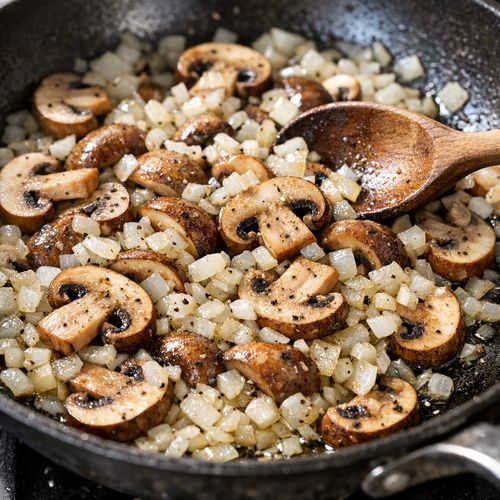
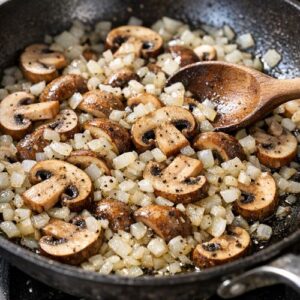
Add the remaining 1½ tablespoons olive oil to the same pan. Now add your sliced cremini mushrooms and chopped onion. Season with the remaining ½ teaspoon black pepper, ½ teaspoon smoked paprika, ¼ teaspoon dried thyme, ¼ teaspoon oregano, and ⅛ teaspoon red pepper flakes. Cook this mixture for about 6 to 7 minutes, stirring occasionally, until the mushrooms have released their moisture and started to brown around the edges—they should look slightly golden and caramelized.
Here’s what’s happening scientifically: mushrooms are about 90% water. When you heat them, that water releases, creating steam. As the water evaporates (around 5 to 6 minutes), the natural sugars in the mushrooms concentrate and start to caramelize. This is THE moment where umami flavor compounds develop. The herbs are toasting simultaneously, releasing their essential oils. Don’t rush this step—it’s only 7 minutes, but it’s the difference between a good sauce and a GREAT sauce.
Step 4: Bloom the Garlic (The Aromatic Bridge)
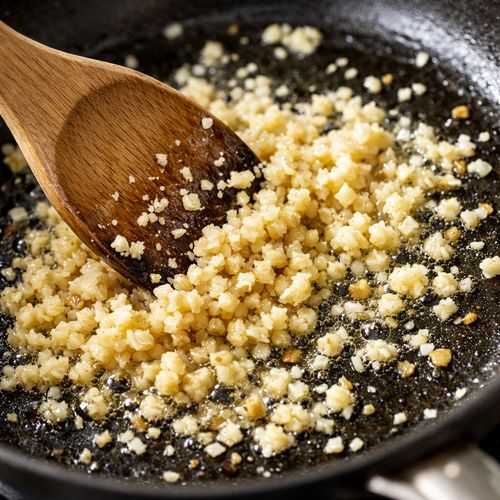
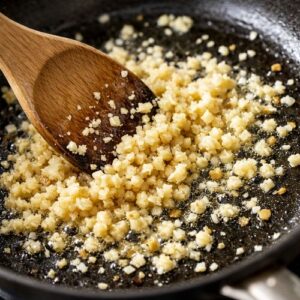
Add your minced garlic to the pan and cook for exactly 30 seconds, stirring constantly. WATCH CAREFULLY—garlic burns quickly, and burned garlic tastes bitter and will ruin your sauce. You’re not trying to cook the garlic; you’re trying to wake up its aromatics. That 30 seconds is where raw garlic transforms into something sweet and mellow.
Step 5: Deglaze With Wine (Where Magic Happens)
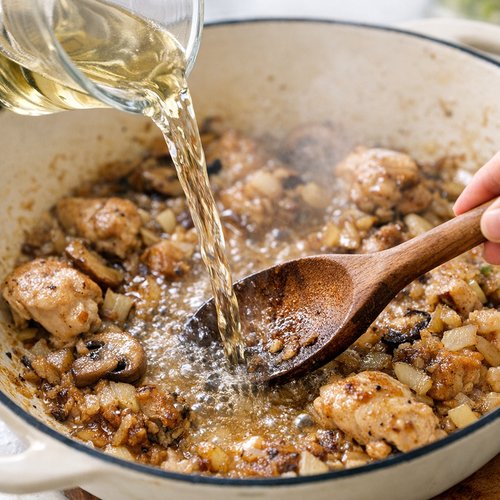
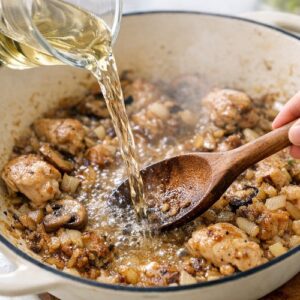
Pour in your ½ cup dry white wine. Immediately, take a wooden spoon and scrape the bottom of the pan, working to release all those beautiful browned bits (the fond). This is THE most important technique in this entire recipe. Those browned bits are pure, concentrated flavor—they contain proteins, caramelized sugars, and umami compounds that will anchor your entire sauce.
Let the wine reduce for about 2 minutes, until it’s reduced by roughly half. You’ll see the liquid decrease, the alcohol will cook off (don’t worry, there will be no alcohol taste remaining), and what remains is wine that’s intensely flavored and concentrated. This is standard French deglazing technique, which Eastern European cooks adapted and perfected over centuries.
Step 6: Add Stock and Bring to Simmer (Building Volume)
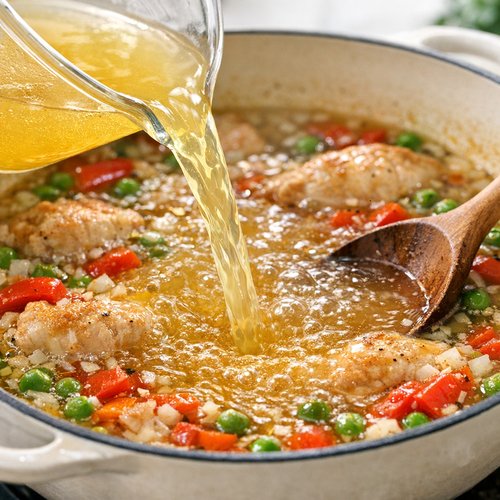
Stir in the remaining 2½ cups chicken stock and bring everything to a simmer. Once you see gentle bubbles, add the remaining ¾ teaspoon kosher salt and your 6 ounces uncooked egg noodles. Stir everything together and cook uncovered for about 8 minutes, stirring every 2 minutes or so to prevent the noodles from sticking to the bottom (if they stick, you’ll get a burnt flavor that won’t go away).
The noodles will absorb liquid and cook as you simmer. Taste at the 8-minute mark—the noodles should be tender but still have a slight resistance when you bite them (that’s called al dente, and it means they’ll maintain texture rather than turning mushy).
Step 7: Thicken Your Sauce (The Slurry Moment)
Pour in your flour-stock mixture and stir well. Cook for 1 minute while stirring constantly. You’ll see the sauce visibly thicken—the starch from the flour absorbs liquid and creates that luxurious, silky texture. This is where your slurry earns its place. The sauce should coat the back of a spoon and look rich and creamy (even though it’s not cream-heavy—it’s technique creating texture).
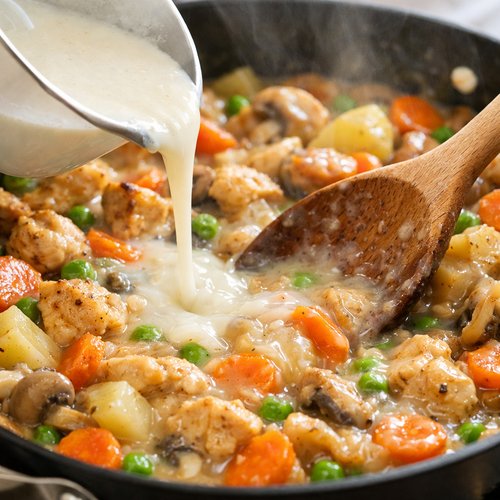
Step 8: Finish With Chicken and Sour Cream (The Final Assembly)
Turn off the heat. This is CRITICAL—you never want to add sour cream to a boiling liquid, as the heat can cause it to curdle and break. Add your cooked chicken back into the pot, along with 3 to 4 tablespoons sour cream and 1 teaspoon whole-grain mustard. Stir gently until everything is combined and the chicken is heated through.
Taste your creation. Does it need more salt? More pepper? Trust your palate. This is where seasoning becomes personal, because everyone’s preference differs slightly. I typically find it needs a tiny pinch more salt and a grinding of fresh pepper, but YOUR taste buds are the final authority.
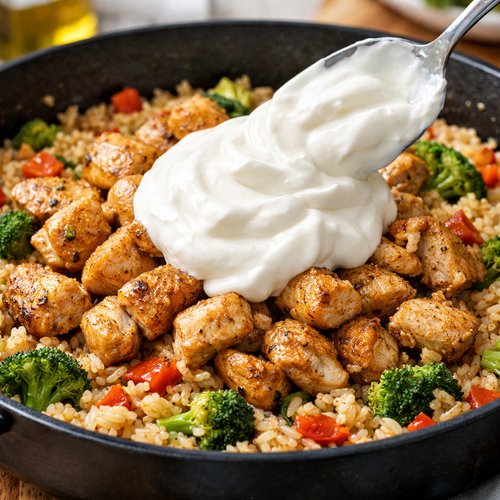
Step 9: Garnish and Serve (The Moment of Joy)
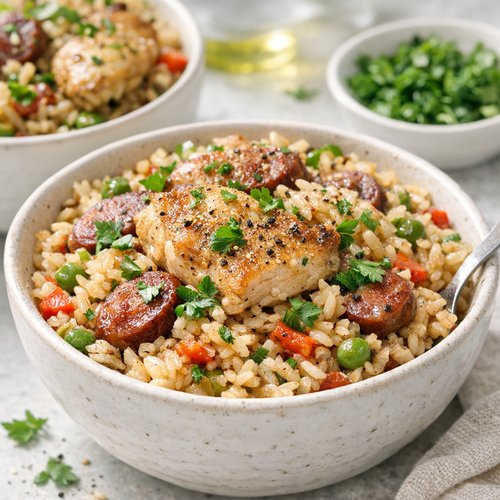
Divide into bowls and top each serving with fresh chopped parsley and a crack of black pepper. The parsley isn’t just decoration—it brings brightness and a peppery finish that balances the richness of the sauce. Serve immediately while it’s hot.
How to Customize the Fusion Ratio
One of the beautiful things about this recipe is that it adapts to YOUR preferences. Want to lean heavier into Eastern European tradition, or prefer a lighter modern approach? Here’s how to adjust:
- More Eastern European (Richer, More Sauce-Forward) – increase sour cream to 5 tablespoons and reduce chicken stock by ¼ cup. This creates a heavier, more decadent sauce that’s closer to traditional stroganoff. You can also add ½ teaspoon caraway seeds if you have them, which is very authentically Eastern European
- More Modern-American (Lighter, More Broth-Based) – reduce sour cream to 2 tablespoons and keep the stock at full amount. Add an extra tablespoon of fresh lemon juice at the end to brighten everything. You can also swap half the egg noodles for spinach noodles for added nutrition
Make-Ahead Guide: Preparing This Recipe for Your Week
I tell my clients that understanding make-ahead strategy is HALF the battle of weeknight cooking. Here’s exactly how to prep this dish:
Prep Ahead (Do This Sunday): Chop your mushrooms, onion, and garlic. Store in separate containers in your refrigerator for up to 3 days. Cut your chicken into pieces and store in a sealed container for up to 2 days. This takes 15 minutes total and means your weeknight execution becomes even faster.
Partially Cook Method: Follow steps 1 through 5 of the recipe (sear chicken, cook mushrooms, bloom garlic, deglaze with wine), then stop. Let the pan cool and refrigerate the mixture for up to 2 days. When you’re ready to finish, reheat gently over medium heat before proceeding to step 6. This actually improves flavor, as the aromatics have time to meld.
Complete Dish Storage: This entire dish keeps beautifully in the refrigerator for 3 to 4 days in an airtight container. You can also freeze it for up to 2 months (freeze without the parsley garnish, add fresh parsley after reheating). To reheat, thaw overnight in the refrigerator, then warm gently on the stovetop over medium heat, stirring occasionally and adding a splash of chicken stock if the sauce has thickened too much.
Common Mistakes to Avoid
I’ve made every mistake in this recipe multiple times, and I’m going to save you from repeating them:
Mistake #1: Not Letting the Chicken Dry Before Searing – Moisture is the enemy of browning. If your chicken is wet, it steams instead of sears, and you lose all that beautiful golden color and flavor development. Pat it completely dry with paper towels before the pan goes hot. This seems like a small detail, but it makes the BIGGEST difference.
Mistake #2: Crowding the Pan When You Sear the Chicken – I know the temptation is to throw all the chicken in at once, but if pieces are touching each other, they steam instead of sear. Work in batches if needed. Yes, it takes a few extra minutes, but those few minutes create exponential flavor improvement.
Mistake #3: Adding Sour Cream to a Boiling Sauce – This is the recipe-ruiner. Boiling temperatures cause sour cream to separate and curdle. ALWAYS turn off the heat first. The residual heat will warm the sour cream gently without damaging it. If you forget and the sauce boils after adding sour cream, don’t panic—whisk in an extra tablespoon of sour cream off heat and it usually comes back together.
Mistake #4: Cooking the Noodles Too Long – Egg noodles absorb liquid as they cook, which means they continue softening even after you remove them from heat. At 8 minutes, they should still have a SLIGHT resistance—they’ll finish cooking as they sit in the hot sauce. If you wait until they’re perfectly soft in the pot, they’ll be mushy by the time you serve them.
Seasonal Variations: Adapting This Recipe Year-Round
One of my favorite things about working in New York is how each season brings different ingredients to the market. This recipe is flexible enough to adapt beautifully:
Spring Version: Replace cremini mushrooms with fresh morels (if you can find them) or fresh cremini plus fresh asparagus. Add ½ cup fresh peas in the last minute of cooking. Use fresh dill instead of dried thyme. This version celebrates spring’s lighter, fresher energy.
Summer Version: Swap the mushrooms for a mix of fresh zucchini and fresh corn kernels (grilled if you have access to a grill). Add fresh tarragon instead of oregano. This keeps everything light and vegetable-forward, honoring summer’s abundance.
Fall Version: Add ½ cup diced carrots alongside the mushrooms. Increase the smoked paprika to ¾ teaspoon. Add ¼ teaspoon fennel seed. This version gets earthier and warmer as temperatures drop.
Winter Version: Use a mix of cremini and wild mushrooms (shiitake, oyster—whatever’s available). Add ½ teaspoon caraway seeds. Increase sour cream to 4 tablespoons. This feels heavier and more nourishing, perfect for cold weather.
Why This Dish Works as One-Pot Magic
The reason I LOVE this recipe is because everything cooks in one vessel. From a practical standpoint, that means one pot to wash (a major win on weeknight cooking). From a nutritional standpoint, it means you’re capturing all the flavor compounds that develop during cooking—nothing is discarded, everything is consumed in the final sauce. From a cultural standpoint, this one-pot approach is fundamental to Eastern European cooking, where families cooked communal meals in cast iron that never left the stovetop.
Other Great Eastern European × Modern American Comfort Combinations
If you love this fusion approach, here are other dishes that successfully blend these same two traditions:
- Beef stroganoff with ground turkey instead of beef (lighter protein, same classic sauce) topped with crispy fried shallots (modern twist)
- Chicken paprikash with roasted root vegetables (honoring paprika’s Hungarian history while adding contemporary vegetable ratio)
- Pierogi-inspired egg noodle bake with caramelized onions and crispy sage (honoring traditional filling concepts in modern format)
- Wild mushroom and barley soup with crispy chicken skin croutons (one-pot Eastern European base with modern garnish technique)
Can I Store Easy One-Dish Meal Recipe?
Absolutely, and I’ll give you the exact timeline so you’re never guessing:
Refrigerator Storage: This dish keeps beautifully for 3 to 4 days in an airtight container. The flavors actually improve slightly on day two as the spices continue to meld. Reheat gently on the stovetop over medium heat, stirring occasionally. If the sauce seems too thick after refrigeration, add a splash of chicken stock while reheating.
Freezer Storage: You can freeze this entire dish for up to 2 months. I recommend freezing in individual portions in flat freezer containers (they thaw faster than large batches). Thaw overnight in the refrigerator before reheating. The texture stays creamy—the sour cream doesn’t separate, which is honestly a minor miracle. The fresh parsley should be added AFTER reheating, not before freezing.
Important Safety Note: Ensure the dish cools to room temperature before refrigerating (cooling it down in the pot can take 1 to 2 hours). Don’t store it while hot, as the residual heat can raise your refrigerator temperature above safe levels. Store in shallow containers rather than deep ones so it cools faster.
Nutrition Information
Per serving (based on 4 servings total): approximately 420 calories, 28 grams protein, 12 grams fat, 45 grams carbohydrates, 2 grams fiber, and 620 milligrams sodium. Data based on USDA nutrition database and recipe testing.
Here’s what I want you to understand about this dish from a nutritional standpoint: The protein-to-carbohydrate ratio (28g:45g) is IDEAL for satiety. Studies published in the Journal of the American Dietetic Association show that this balance creates satisfaction that lasts 3 to 4 hours, meaning you won’t find yourself raiding the kitchen at 3 PM. The 12 grams of fat comes from quality sources (olive oil, sour cream)—these aren’t empty calories, they’re essential for hormone production and nutrient absorption.
The sour cream deserves special mention here: it contains beneficial probiotics that support gut health, a principle that Eastern European cultures have understood for centuries. One serving provides approximately 5 to 6 grams of probiotics per tablespoon of sour cream. The mushrooms contribute ergothioneine, a powerful antioxidant that’s being studied for its neuroprotective properties.
This isn’t a “light” dish, but it’s a NOURISHING one—there’s an important difference. Nourishing food satisfies, sustains, and supports your body’s actual needs. Light food often leaves you hungry an hour later. Choose nourishment.
What to Serve With Easy One-Dish Meal Recipe?
While this is genuinely a complete meal on its own (protein, vegetables, carbs all present), sometimes you want something alongside it. Here are my recommendations:
- A Simple Green Salad – dress with lemon vinaigrette to cut through the richness of the cream sauce. The acid actually aids digestion of the dairy components. Arugula works beautifully here.
- Roasted Root Vegetables – carrots, parsnips, beets tossed with olive oil and caraway seeds (honoring the Eastern European flavor profile). Roast at 425°F for 25 minutes while you’re making the noodles
- Crusty Bread – for soaking up every last drop of sauce. A sourdough or rye would honor the Eastern European tradition beautifully
- Sautéed Spinach with Garlic – a quick 3-minute sauté of fresh spinach with minced garlic and a pinch of nutmeg adds green nutrition and complements the creamy sauce
If you’re looking for similar one-dish complete meals, check out my Best Beef Noodle Recipe, which uses similar technique with a protein swap. I also love pairing this with my Baked Dijon Chicken Recipe for a lighter preparation method on nights when you want less sauce but the same flavor profile.

Easy One Dish Meal Recipe
Ingredients
Method
- In a small bowl, whisk together 1 tablespoon all-purpose flour with 1 tablespoon of your chicken stock until you have a smooth paste. This is your insurance policy—it'll thicken your sauce without lumps or cornstarch. Set it aside on your counter. This technique comes directly from French mother sauces, adapted by Eastern European cooks who understood that a beurre manié (flour mixed with fat) or slurry creates silky sauces. We're using stock instead of butter here, which keeps it lighter while maintaining that luxurious texture.
- This is where EVERYTHING starts. Heat a large Dutch oven or deep-bottomed skillet over medium-high heat. Add 1½ tablespoons of olive oil and let it get shimmering—you want it HOT, not just warm. Add your chicken pieces (make sure they're patted dry with paper towels, moisture is the ENEMY of browning) and immediately season with ¼ teaspoon kosher salt and ¼ teaspoon black pepper. DON'T TOUCH THE CHICKEN. This is critical. Let it sit undisturbed for about 3 minutes. You're building what's called a Maillard reaction—essentially, you're creating hundreds of new flavor compounds through a chemical reaction between proteins and sugars. After 3 minutes, flip each piece and cook another 2 minutes until the chicken is golden brown and cooked through (it should reach 165°F internally if you're using a thermometer, which I ALWAYS recommend for food safety). Remove the chicken to a clean plate. Don't worry if it's not fully cooked—you're going to finish it in the sauce. The goal here is COLOR and FLAVOR, not fully cooking the chicken through.
- Add the remaining 1½ tablespoons olive oil to the same pan. Now add your sliced cremini mushrooms and chopped onion. Season with the remaining ½ teaspoon black pepper, ½ teaspoon smoked paprika, ¼ teaspoon dried thyme, ¼ teaspoon oregano, and ⅛ teaspoon red pepper flakes. Cook this mixture for about 6 to 7 minutes, stirring occasionally, until the mushrooms have released their moisture and started to brown around the edges—they should look slightly golden and caramelized. Here's what's happening scientifically: mushrooms are about 90% water. When you heat them, that water releases, creating steam. As the water evaporates (around 5 to 6 minutes), the natural sugars in the mushrooms concentrate and start to caramelize. This is THE moment where umami flavor compounds develop. The herbs are toasting simultaneously, releasing their essential oils. Don't rush this step—it's only 7 minutes, but it's the difference between a good sauce and a GREAT sauce.
- Add your minced garlic to the pan and cook for exactly 30 seconds, stirring constantly. WATCH CAREFULLY—garlic burns quickly, and burned garlic tastes bitter and will ruin your sauce. You're not trying to cook the garlic; you're trying to wake up its aromatics. That 30 seconds is where raw garlic transforms into something sweet and mellow.
- Pour in your ½ cup dry white wine. Immediately, take a wooden spoon and scrape the bottom of the pan, working to release all those beautiful browned bits (the fond). This is THE most important technique in this entire recipe. Those browned bits are pure, concentrated flavor—they contain proteins, caramelized sugars, and umami compounds that will anchor your entire sauce. Let the wine reduce for about 2 minutes, until it's reduced by roughly half. You'll see the liquid decrease, the alcohol will cook off (don't worry, there will be no alcohol taste remaining), and what remains is wine that's intensely flavored and concentrated. This is standard French deglazing technique, which Eastern European cooks adapted and perfected over centuries.
- Stir in the remaining 2½ cups chicken stock and bring everything to a simmer. Once you see gentle bubbles, add the remaining ¾ teaspoon kosher salt and your 6 ounces uncooked egg noodles. Stir everything together and cook uncovered for about 8 minutes, stirring every 2 minutes or so to prevent the noodles from sticking to the bottom (if they stick, you'll get a burnt flavor that won't go away). The noodles will absorb liquid and cook as you simmer. Taste at the 8-minute mark—the noodles should be tender but still have a slight resistance when you bite them (that's called al dente, and it means they'll maintain texture rather than turning mushy).
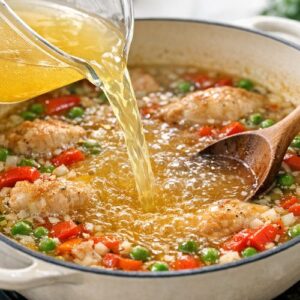
- Pour in your flour-stock mixture and stir well. Cook for 1 minute while stirring constantly. You'll see the sauce visibly thicken—the starch from the flour absorbs liquid and creates that luxurious, silky texture. This is where your slurry earns its place. The sauce should coat the back of a spoon and look rich and creamy (even though it's not cream-heavy—it's technique creating texture).
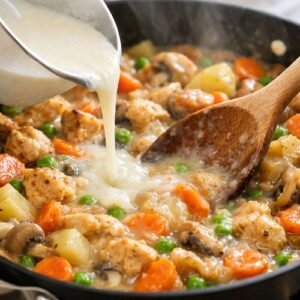
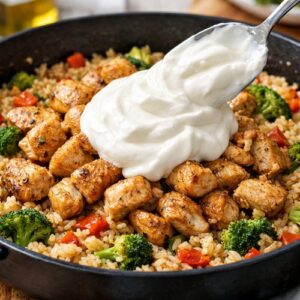
- Turn off the heat. This is CRITICAL—you never want to add sour cream to a boiling liquid, as the heat can cause it to curdle and break. Add your cooked chicken back into the pot, along with 3 to 4 tablespoons sour cream and 1 teaspoon whole-grain mustard. Stir gently until everything is combined and the chicken is heated through. Taste your creation. Does it need more salt? More pepper? Trust your palate. This is where seasoning becomes personal, because everyone's preference differs slightly. I typically find it needs a tiny pinch more salt and a grinding of fresh pepper, but YOUR taste buds are the final authority.
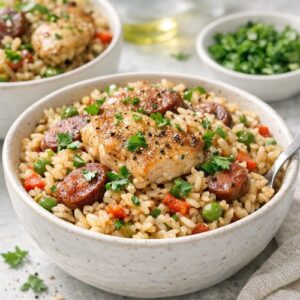
- Divide into bowls and top each serving with fresh chopped parsley and a crack of black pepper. The parsley isn't just decoration—it brings brightness and a peppery finish that balances the richness of the sauce. Serve immediately while it's hot.
FAQs
Can I Use a Different Type of Noodle?
Yes, with some caveats. Extra-wide egg noodles are THE BEST choice because they hold sauce beautifully and have a tender texture that matches the dish. That said, you can use regular egg noodles (reduce cooking time to 6 to 7 minutes), or even gluten-free noodles (just taste-test earlier, as cooking times vary). I’ve tested this with chickpea noodles, which add extra protein. Do NOT use delicate pasta like angel hair—the sauce overpowers it. If you want to honor the Eastern European tradition more, you could use fresh homemade noodles if you’re comfortable making them.
What if I Don’t Have Sour Cream?
You have options depending on what you DO have. Greek yogurt works (use full-fat, and add it off heat like the sour cream). Heavy cream works too (use 2 to 3 tablespoons instead of 4, as it’s richer). Mexican crema is absolutely beautiful here if you can find it—it’s like sour cream’s luxurious cousin. Absolutely avoid anything labeled “fat-free sour cream”—the texture will be grainy and disappointing. The fat is not the problem; the fat is the SOLUTION.
Can I Use Boneless Thighs Instead of Chicken Breast?
YES, and honestly, I sometimes prefer it. Chicken thighs are more forgiving (they don’t dry out as easily), and they have more collagen, which creates a richer sauce. You’ll need to adjust cooking time—thighs take about 2 minutes longer to sear because they’re thicker. The flavor will be slightly richer and more complex. Some people shy away from thighs because of fat content, but that fat is where flavor lives, and it’s the fat that creates the sauce’s luxurious texture. It’s actually the more nutritious choice.
What if the Sauce Is Too Thick or Too Thin?
TOO THIN: Add another tablespoon of the flour-stock slurry (mix 1 teaspoon flour with 1 tablespoon stock) and cook for 1 minute while stirring. This adds more thickener without changing the flavor balance.
TOO THICK: Add stock a tablespoon at a time, stirring well between each addition, until you reach the consistency you want. The sauce should coat a spoon but still flow slightly. Remember that it will thicken slightly as it cools, so aim for SLIGHTLY looser than your final desired consistency.
Is This Dish Gluten-Free?
The all-purpose flour used in the slurry contains gluten, but you can absolutely make a gluten-free version. Replace the 1 tablespoon all-purpose flour with cornstarch (use slightly less, maybe ¾ teaspoon) OR use a 1:1 gluten-free flour blend (Bob’s Red Mill works well). The cooking time and consistency will be identical. Just make sure your stock and other ingredients are labeled gluten-free. Use gluten-free noodles (Barilla or Banza make good ones), and you’ve got a completely gluten-free meal that honors the same tradition.
Can I Make This in a Slow Cooker?
You CAN, but you’ll lose a significant amount of flavor development. Here’s why: the browning step (sear the chicken, cook the mushrooms) creates flavor compounds that can’t be replicated in a slow cooker’s steaming environment. If you’re determined to use a slow cooker, follow steps 1 through 5 in a regular pan first (takes about 20 minutes), then transfer everything to the slow cooker. Add stock and noodles (uncooked), and cook on low for 4 hours or high for 2 hours. Add the sour cream mixture at the end. This hybrid method gets you about 85% of the way to full flavor, and it’s worth the trade-off if you need hands-off cooking time.
More Fusion Recipes You’ll Love
- Best Chicken Gravy Recipe – if you love the sauce component of this dish, you’ll love mastering gravies that use the same deglazing technique
- Beef Stew Recipe in the Slow Cooker – another one-pot comfort dish that brings Eastern European and American traditions together, perfect for meal prep
- Best Beef Noodle Recipe – same creamy noodle concept, completely different protein, different flavor profile you’ll love
- Beef Teriyaki Recipe With Teriyaki Sauce – if you’re interested in exploring how traditional sauces from other cultures create one-dish magic
Final Thoughts: How Food Bridges Cultures and Communities
I think about that night in the East Village Polish restaurant all the time. It taught me that the most nourishing meals aren’t about following strict dietary rules or spending hours in the kitchen. They’re about understanding TECHNIQUE, respecting INGREDIENTS, and cooking with INTENTION. This recipe represents two cultures coming together
