
Italian Sausage Pasta Recipe
This post contains affiliate links. As an Amazon Associate I earn from qualifying purchases.
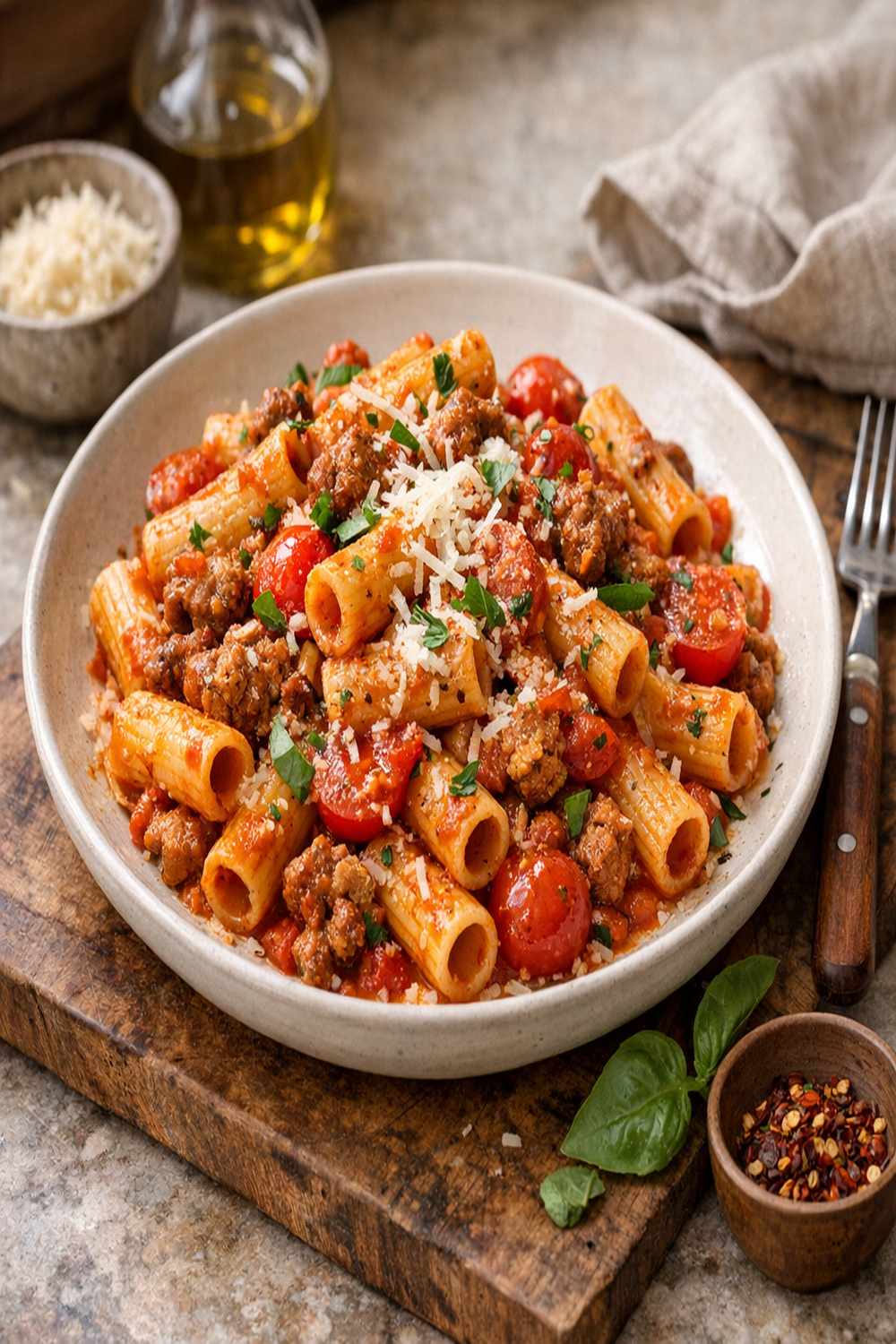
I still remember the first time I tasted this dish at a tiny trattoria tucked between a bodega and a laundromat in the East Village. The owner’s grandmother had just arrived from Campania, and she was teaching the kitchen staff her family’s version of sausage pasta—rich, garlicky, and finished with a whisper of cream that turned everything into pure comfort. That night, I watched her work with such intentional simplicity: quality sausage, fresh spinach, real cheese. No shortcuts, no fuss. I walked out thinking, “I NEED to learn how to make this at home.” Years later, as a registered dietitian working with clients across NYC’s incredible neighborhoods, I’ve watched this dish bring people together time and again—whether it’s at a family dinner in Astoria or a quick weeknight meal in a tiny Washington Heights kitchen.
Authentic Italian Sausage Pasta: The Story Behind This Beloved Dish
Growing up, I watched my own family experiment endlessly in the kitchen, and it was through those experiments that I discovered something profound: food isn’t just fuel—it’s a connection to culture, memory, and identity. When I moved to New York City to pursue my nutrition degree, I was immediately struck by how many communities here still cook the way their grandmothers did. Italian neighborhoods especially taught me that authenticity doesn’t mean complicated—it means respecting your ingredients and letting them shine.
This creamy Italian sausage pasta represents a beautiful evolution of Italian cooking. It’s rooted in the peasant traditions of Southern Italy, where families stretched affordable proteins with vegetables and fat to create satisfying, nourishing meals. Over generations, Italian immigrants adapted these techniques to what was available in their new homes, and this version—with its luxurious cream sauce—became a distinctly Italian-American classic that honors both traditions.
The History and Cultural Significance of Italian Sausage Pasta
Italian sausage pasta doesn’t have a single birthplace—it’s a product of migration, adaptation, and ingenuity. In Southern Italy, particularly in regions like Campania and Calabria, sausage has been a cornerstone of home cooking for centuries. Families would make their own sausage using pork, fennel seeds, and red pepper flakes, then incorporate it into pasta dishes that were humble yet deeply flavorful.
When Italian immigrants arrived in America in the late 1800s and early 1900s, they brought their techniques but had to work with what was available. American-made sausage was often meatier and less heavily spiced than what they knew back home. So they adapted—adding cream to balance flavors, incorporating abundant leafy greens like spinach, and layering in Parmesan cheese for richness and umami depth. This dish became iconic in Italian-American neighborhoods across the country, particularly in New York City where I’ve spent the last decade studying how different communities use food to maintain cultural identity.
What’s fascinating from a nutritional and cultural perspective is how this dish evolved to include spinach. In traditional Southern Italian cooking, greens were often cooked separately or used in specific preparations. But Italian-American cooks realized that wilting spinach directly into the cream sauce was both practical and delicious—it added nutrients, color, and a subtle earthiness that complemented the richness of the cream and sausage beautifully.
What Makes an Authentic Italian Sausage Pasta Recipe
Here’s what I want you to understand: authentic doesn’t mean rigid. It means making intentional choices that respect the soul of the dish. Many Western versions simplify Italian sausage pasta into something almost unrecognizable—pre-made sauce from a jar, mass-produced sausage, cheap cheese. The authentic version, whether made in Naples or New York, honors three fundamental principles.
- Quality sausage with visible spicing – Traditional Italian sausage isn’t finely ground into oblivion. You should see fennel seeds, notice the texture, taste the individual spices. This matters because it creates complexity and depth that ground meat alone cannot provide. The sausage IS the star protein here, so it deserves your attention when shopping.
- Fresh, never-from-a-jar greens – Authentic versions use fresh leafy vegetables—spinach, arugula, or even bitter greens like broccoli rabe in certain regions. These aren’t added for nutrition alone (though that’s wonderful). They provide a textural contrast and a slight bitterness that balances the richness of cream and cheese. This is flavor architecture, not afterthought.
- Real cream and genuine Parmigiano-Reggiano – I can’t stress this enough. The cream creates the silky sauce that makes this dish craveable, but it only works if you’re using ACTUAL cream, not half-and-half or evaporated milk. And Parmigiano-Reggiano isn’t just cheese—it’s umami in solid form. It contains natural glutamates that trigger satisfaction signals in your brain. Pre-shredded cheese contains anti-caking agents that prevent it from melting as smoothly.
The Ingredients – Sourcing the Real Thing
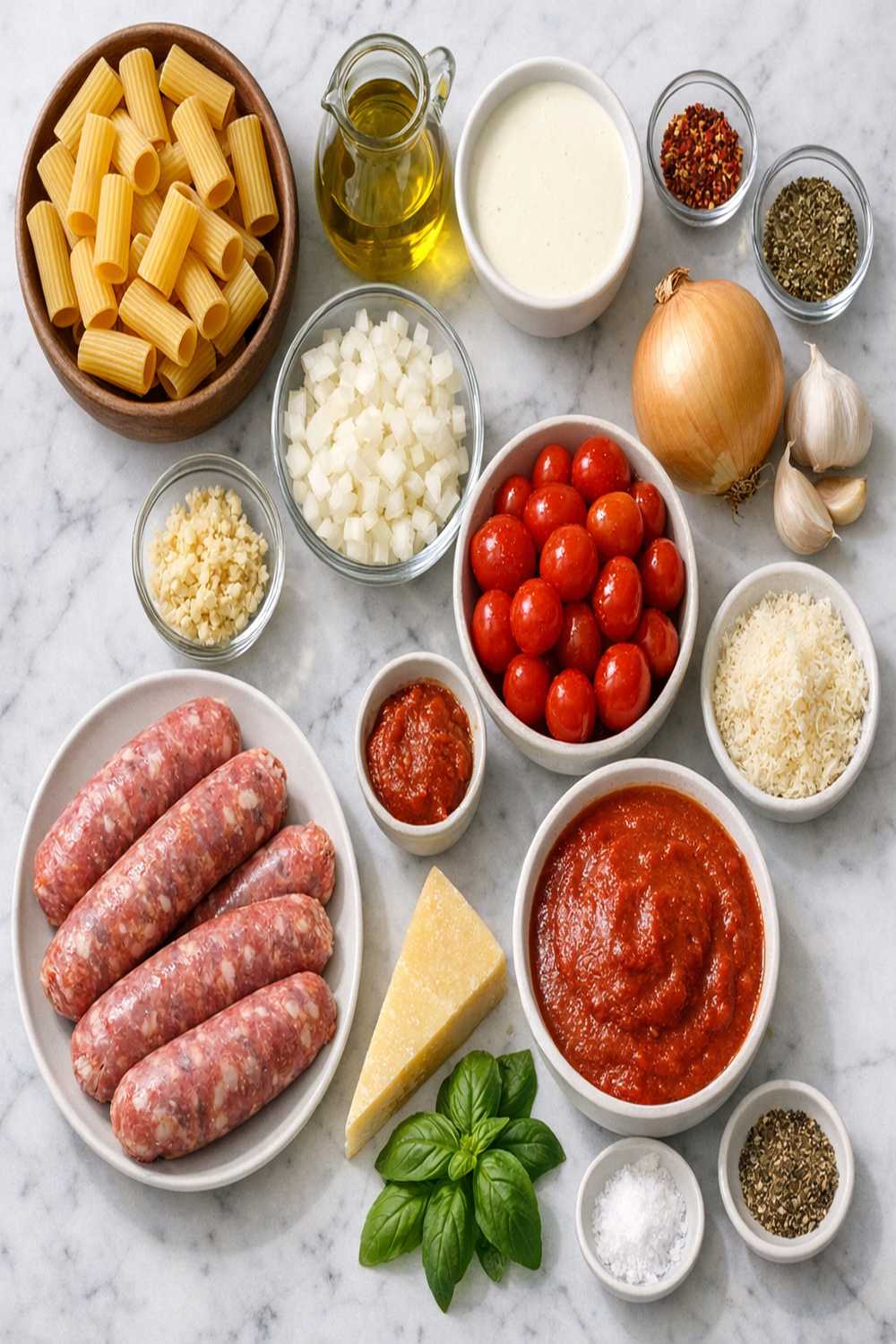
I want to make ingredient sourcing feel approachable, not intimidating. Yes, specialty items elevate this dish, but I also know that not everyone lives near an Italian market—and honestly, many excellent Italian products are now available at mainstream grocers. Here’s my honest guide to finding what you need and understanding why each ingredient matters.
- 1 pound penne pasta, bronze-cut if possible (the rough texture holds sauce better than smooth pasta)
- 3 tablespoons extra-virgin olive oil, divided (quality matters here for both flavor and nutrition—look for “first cold-pressed”)
- ½ yellow onion, finely minced (yellow onions have more natural sweetness than white, balancing the heat)
- 1 cup Parmigiano-Reggiano cheese, freshly grated (grate it yourself just before using)
- 5 ounces fresh baby spinach, loosely packed (frozen spinach works in a pinch, but squeeze it thoroughly—excess water breaks the sauce)
- ¼ teaspoon freshly ground black pepper, or to taste (white pepper is traditional in Italian cooking, but I prefer black for the visual appeal)
- 3 garlic cloves, minced (never pre-minced in a jar—the flavor compounds deteriorate rapidly)
- 2 cups heavy cream, full-fat (this is non-negotiable—light cream won’t create the proper sauce consistency)
- ½ teaspoon kosher salt, plus more to taste (kosher salt has larger crystals and distributes more evenly than table salt)
- 2 tablespoons fresh basil, chiffonade (optional but traditional—added just before serving)
- 1 pound Italian sausage, bulk or casings removed (look for brands that list fennel seed and red pepper flakes in the ingredients—this is your quality indicator)
- ½ teaspoon crushed red pepper flakes (adjust based on heat preference—this is YOUR kitchen)
Sourcing advice: If you live near an Italian market, ask the counter person for their sausage recommendation—they’ll steer you right. Whole Foods, Trader Joe’s, and most major supermarkets now carry quality Parmigiano-Reggiano in their specialty sections. For olive oil, Whole Foods’ 365 brand is reliable, or look for DeLallo, Carapelli, or Colavita at any grocery store. The spinach doesn’t need to be fancy—standard baby spinach from any produce section works beautifully.
The Traditional Method: How to Make Authentic Italian Sausage Pasta
This recipe makes 4 generous servings as a main course, or 6 servings if you’re including substantial sides. Each step builds on the last, creating layers of flavor that feel effortless but taste intentional. I’m going to walk you through exactly how I make this—the way that works in a busy NYC kitchen and honors the traditional technique simultaneously.
Step 1: Start Your Pasta Water and Get Your Mise en Place Ready
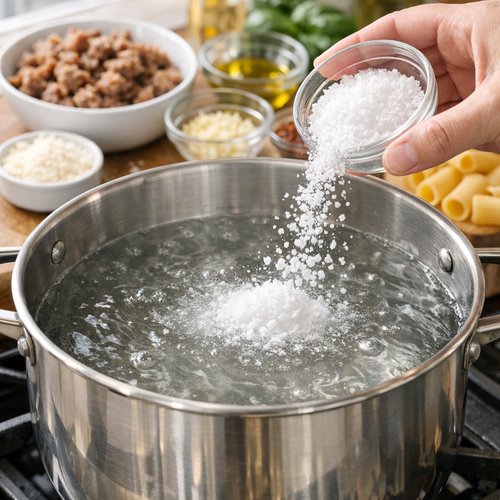
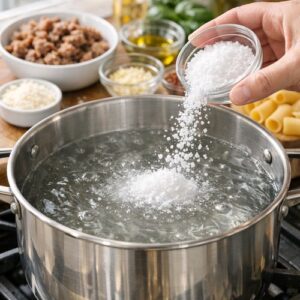
Fill a large pot with 4-5 quarts of cold water and add a generous handful of kosher salt—about 2 tablespoons. This is your foundation. Bring it to a rolling boil over high heat. While that’s heating, prepare all your ingredients in small bowls or on a cutting board: minced onion, minced garlic, measured cream, grated cheese, and fresh spinach.
WHY THIS MATTERS: In Italian cooking, mise en place (everything in its place) is sacred. Once you start cooking the sausage, you’re moving quickly. Having everything prepped prevents panic and ensures even cooking. The salted water is essential—it seasons the pasta from within, not just on the outside. Without proper salt in the cooking water, no amount of seasoning later will fix it.
Step 2: Cook the Pasta Until Just Shy of Al Dente
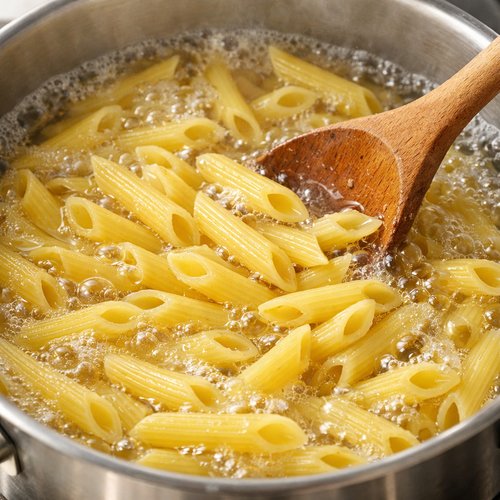
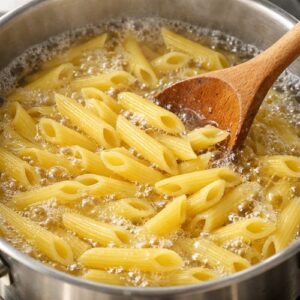
Once your water is at a rolling boil, add the penne. Stir immediately to prevent sticking. Cook according to package directions, but remove it about 1 minute BEFORE the package says it’s done. This is crucial—you’ll finish cooking it in the sauce. Taste a piece; it should have a slight resistance when you bite it. Reserve 1 cup of starchy pasta water before draining, then set the drained pasta aside.
The starchy pasta water is your secret weapon. It contains starches that help emulsify the sauce and create that silky, cling-to-the-noodles texture that makes this dish so satisfying. I cannot overstate how important this is.
Step 3: Build the Sausage Foundation
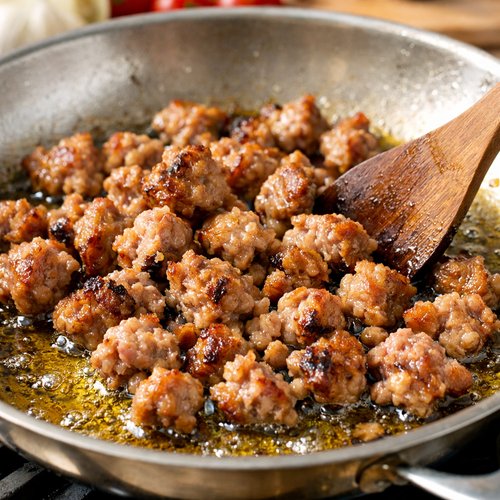
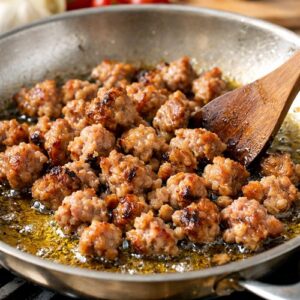
While the pasta cooks, heat 2 tablespoons of olive oil in a large skillet (12-inch is ideal) over medium-high heat. When the oil shimmers and smells fragrant—about 1 minute—add your sausage, breaking it apart with a wooden spoon as it hits the pan. Don’t stir constantly. Let it sit for 2-3 minutes so it develops a golden crust, then stir and break it into smaller pieces.
CRITICAL SAFETY WARNING: Italian sausage contains raw pork. It MUST reach an internal temperature of 160°F to be safe. Use a meat thermometer inserted into the largest piece. Do not rely on color alone—sausage can appear browned while still undercooked internally.
As the sausage cooks, its rendered fat creates an incredible flavor base. This is the essence of traditional cooking—letting protein contribute its own richness to the dish rather than adding fat separately.
Step 4: Add Aromatics and Spices
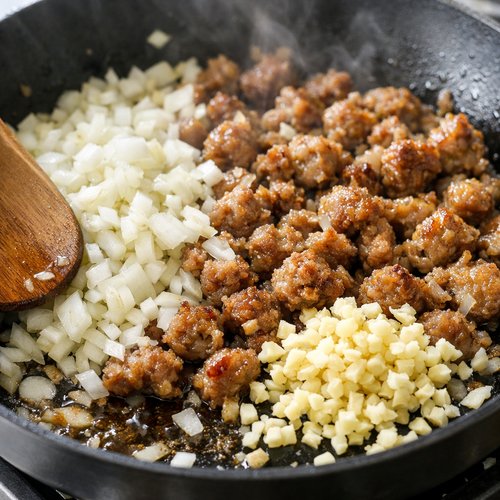
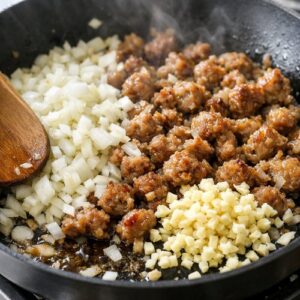
Once the sausage is mostly cooked through and golden, add your minced onion and cook for 2 minutes until softened and fragrant. Add the minced garlic and red pepper flakes, stirring constantly for about 30 seconds. This prevents the garlic from burning—burned garlic tastes bitter and ruins the whole dish. At this point, your kitchen should smell absolutely incredible: savory, garlicky, with that warm pepper spice underneath.
Add the salt and freshly ground black pepper. Taste a tiny piece of sausage—it should taste fully seasoned, not underseasoned. This is your moment to adjust.
Step 5: Create the Cream Sauce (The Magic Happens Here)
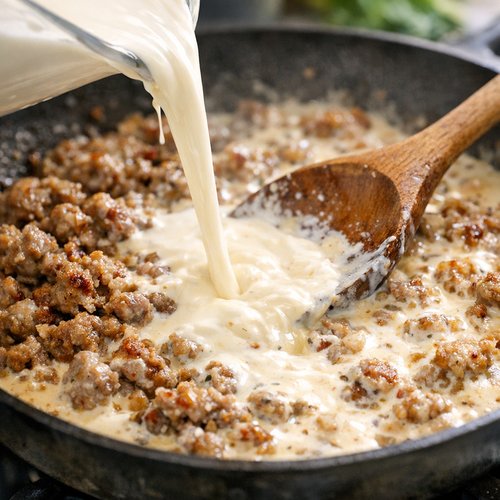
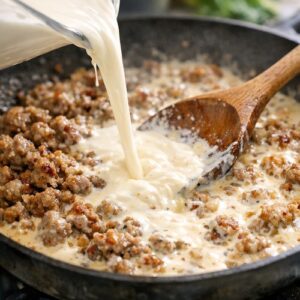
Turn the heat down to medium-low. Pour in the 2 cups of heavy cream slowly, stirring constantly. The cream will immediately absorb all those gorgeous browned bits from the bottom of the pan—that’s called deglazing, and it’s where enormous flavor lives. Bring the mixture to a gentle simmer. DO NOT let it boil rapidly. A rolling boil can cause cream to break and separate, creating a grainy texture.
Let it simmer gently for about 2 minutes, stirring occasionally. The cream should thicken very slightly and coat the back of a spoon.
TROUBLESHOOTING TIP: If your sauce seems too thin after 2 minutes, simmer it for another minute or two. If it seems too thick, add pasta water 2 tablespoons at a time. If the cream looks separated or grainy, this means it got too hot. Immediately remove it from heat, let it cool for 1 minute, then whisk in 2-3 tablespoons of cold pasta water to bring it back together.
Step 6: Wilt the Spinach Into the Sauce
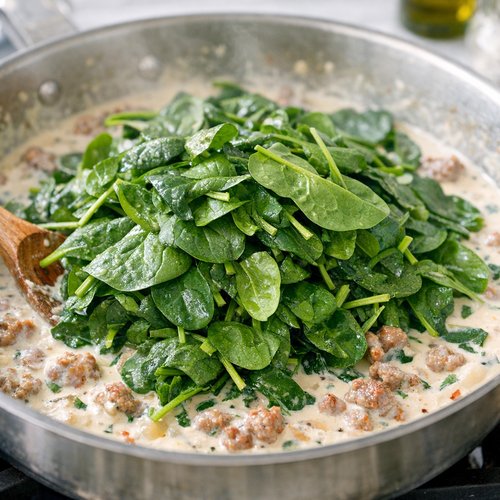
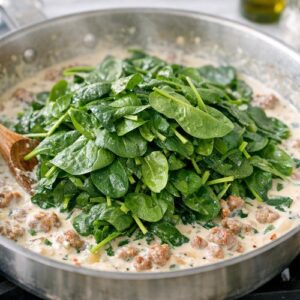
Add all 5 ounces of fresh spinach to the hot cream sauce. It will look like CHAOS—like you’ve dumped an entire salad into cream sauce. Don’t panic. Stir constantly for about 3 minutes. The spinach will gradually wilt and darken, incorporating into the sauce while releasing its moisture. This moisture actually helps loosen the sauce to the perfect consistency.
After 3 minutes, the spinach should be completely wilted with no large leaves remaining. Taste the sauce now—adjust salt and pepper if needed. Remember that you’ll be adding salty Parmigiano-Reggiano next, so be slightly conservative.
Step 7: Incorporate the Cheese and Combine With Pasta
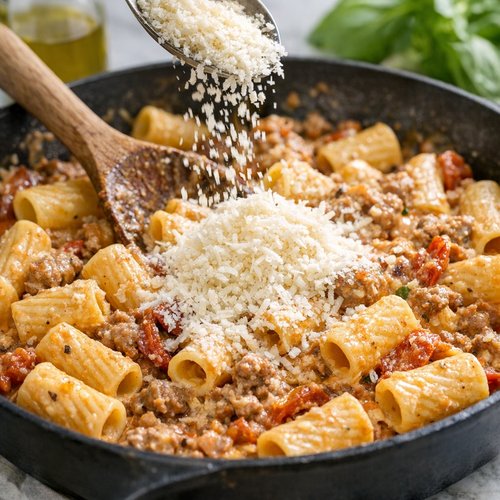
Remove the skillet from heat. Add the freshly grated Parmigiano-Reggiano cheese about ¼ cup at a time, stirring constantly after each addition. The residual heat will melt it beautifully without risking that grainy, broken texture that happens if cheese is added to boiling liquid.
Now add your drained penne directly to the cream sauce. Toss gently but thoroughly, using tongs or two wooden spoons to coat every piece of pasta. If the sauce seems too thick or clingy, add pasta water 2-3 tablespoons at a time, tossing as you go. The goal is a sauce that coats the pasta but doesn’t pool at the bottom of the pan.
Taste once more. Adjust salt, pepper, or red pepper flakes to your preference. This is YOUR dish—make it taste how you want it to taste.
Step 8: Serve Immediately and Beautifully
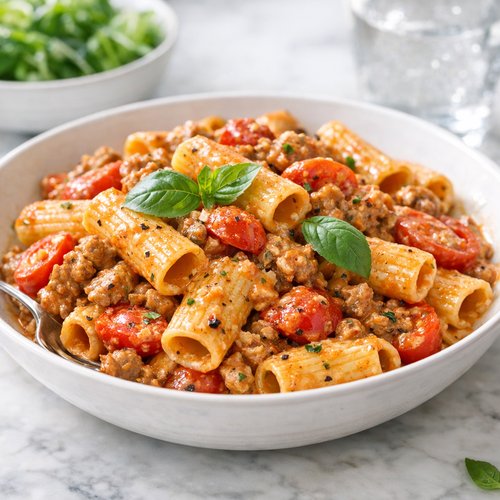
Transfer to warm bowls or plates immediately. The sauce will continue to coat everything as it rests. If you’re using fresh basil, add a few leaves on top right before serving. A final twist of fresh black pepper and maybe a tiny pinch more Parmigiano-Reggiano adds elegance without overwhelming the dish.
Serve immediately while everything is hot and creamy. Leftover sauce will thicken as it cools, so this dish is best enjoyed fresh from the pan.
Regional Variations Around the World
- Southern Italy (Campania/Calabria) – The original versions use less cream and often finish with a crack of black pepper and minimal cheese. Some families add a splash of white wine to the sausage before adding cream, which brightens the flavors. Greens might be broccoli rabe instead of spinach, adding a pleasant bitterness.
- Northern Italy (Piedmont/Liguria) – Northern Italian versions tend to be lighter on the cream and might include white wine or chicken broth instead. They sometimes use butter as the fat base rather than sausage rendering, creating a different flavor profile that’s more delicate. Fresh herbs like parsley are more prominent.
- Italian-American (New York, New Jersey, Philadelphia) – This is where the cream really shines. Italian-American versions are unabashedly rich, with more cream and cheese than their European counterparts. Some families add a pinch of nutmeg—a classic pairing with cream in Italian cooking. This version reflects 20th-century American abundance and the belief that more richness equals more love.
- Modern Italian (Contemporary Italian Chefs) – Newer interpretations sometimes use light cream or even crème fraîche, add unexpected elements like sun-dried tomatoes or artichokes, and focus on seasonal greens. These versions honor the tradition while pushing boundaries.
Traditional Serving Customs
In Italy, this dish is typically served as a primo piatto (first course), not the main event. It’s followed by a protein course like braised meat or roasted fish, then salad, then cheese and fruit. But in Italian-American tradition and in American households generally, pasta IS the main course, and that’s absolutely valid.
Traditionally, you serve this family-style when possible—one large platter in the center of the table where everyone helps themselves. It creates a sense of abundance and community. Italians rarely serve individual portions; that feels impersonal and limiting. If serving at a dinner party, I plate individual portions in warmed bowls and bring them to the table hot.
The dish is typically served with crusty bread for soaking up extra sauce—essential. A simple green salad comes after, helping to cut through the richness. Wine pairing: a crisp white like Pinot Grigio or Vermentino, or a lighter red like Barbera. Both have enough acidity to refresh your palate between bites.
Etiquette note: In traditional Italian dining, you twirl pasta on your fork using the spoon as a guide, never cutting it with a knife. The pace of eating is leisurely—meals are about conversation and connection, not speed.
Can I Store Italian Sausage Pasta Recipe?
Yes, but with caveats. This dish is best served immediately while the sauce is silky and the pasta is perfectly tender. However, life happens—you’ll have leftovers, and that’s okay.
Refrigerator Storage: Store in an airtight container for up to 3 days. The sauce will thicken significantly as it cools because the cream solidifies. When reheating, do it gently over low heat on the stovetop, adding pasta water or additional cream 1-2 tablespoons at a time to restore creaminess. NEVER microwave this dish—the heat distribution is uneven and can cause the cream to break.
Freezer Storage: This is trickier because cream-based sauces can separate when frozen, but it IS possible. Let leftovers cool completely, then transfer to a freezer-safe container, pressing plastic wrap directly onto the surface to minimize air exposure. Freeze for up to 1 month. Thaw overnight in the refrigerator, then reheat gently on the stovetop with added cream to restore texture. The sauce may not be quite as silky as fresh, but it’ll still taste good.
Make-Ahead Strategy: Here’s what I actually recommend: make the sausage-cream sauce up to 1 day ahead and refrigerate separately from the pasta. Cook the pasta fresh when you’re ready to serve, then combine them. This gives you 80% of the convenience without compromising texture. The sauce reheats beautifully, and fresh pasta changes everything.
Expert’s Nutritional Tip: Understanding the Cream
As a registered dietitian, I want to be real with you about this dish’s nutrition profile. Heavy cream contains saturated fat—about 5 grams per 2-tablespoon serving—and that’s worth understanding rather than ignoring.
Here’s the thing: modern nutrition science increasingly recognizes that saturated fat from whole food sources (like real cream) behaves differently in your body than we once thought. The fat in cream actually helps your body absorb fat-soluble vitamins like A, D, E, and K. It signals satiety, meaning you feel satisfied longer. It contains butyric acid, a short-chain fatty acid that supports gut health. And perhaps most importantly, a reasonable portion of creamy, satisfying food eaten mindfully creates a different metabolic and psychological experience than restrictive eating followed by overconsumption.
I never recommend deprioritizing cream for artificial “light” substitutes. What I DO recommend: enjoy this dish as the treat it is, serve it in appropriate portions, pair it with plenty of non-starchy vegetables (the spinach is wonderful for this), and save it for times when you’re going to savor it rather than rushing through it. One generous serving of this pasta with a side salad and crusty bread is satisfying, nourishing, and genuinely good for you—body and soul.
Make-Ahead Guide: Meal Prep for Busy Weeknights
I work with countless clients in Manhattan who think cooking from scratch requires hours. It doesn’t. Here’s exactly how I make this work during a busy week.
Sunday Preparation (30 minutes): Brown the sausage with onion and garlic, then cool completely. Make the cream sauce without the pasta or spinach, cool it completely, and store both separately in airtight containers. This is your ingredient foundation—no longer than 3 days refrigerated.
Weeknight Assembly (15 minutes): Bring salted water to boil and cook fresh pasta. While it cooks, reheat the sausage mixture over low heat, then add the cream, bring to a simmer, add spinach, finish with cheese. Combine with hot pasta and serve. Dinner is on the table in the time it takes to boil water.
Sausage-Only Prep Option: If even that feels like too much, just cook and cool the sausage with aromatics on Sunday. During the week, you have quality sausage ready to build the sauce from. This saves you the most time-consuming step.
Common Mistakes to Avoid
Mistake #1: Using Low-Quality Sausage – I see people grab the cheapest sausage and wonder why their dish tastes flat. The sausage IS the protein star. It deserves your attention. Look at the ingredient list. If it lists “spices” instead of actual spices, keep shopping. If it’s more filler than meat, pass. Higher-quality sausage might be $1-2 more per pound, but it transforms the entire dish.
Mistake #2: Letting the Cream Boil Aggressively – This is the number-one texture problem I see. A rolling boil breaks the cream, creating a grainy, separated sauce that tastes broken. Gentle simmer, always. If you see it starting to boil, reduce heat immediately.
Mistake #3: Not Reserving Pasta Water – This feels optional until you realize it’s actually essential. Starchy pasta water helps bind the sauce to the noodles and adjusts consistency perfectly. Cooking pasta in salted water and reserving some of that water is the difference between home-cooked and restaurant-quality.
Mistake #4: Pre-Shredded Cheese – I understand the convenience. I really do. But pre-shredded cheese contains cellulose (wood fibers) to prevent clumping. These fibers don’t melt smoothly, leaving a grainy texture. Freshly grated Parmigiano-Reggiano melts into silk. A microplane grater takes 2 minutes. It’s worth it.
Seasonal Variations: Adapting This Recipe Throughout the Year
Spring: Replace spinach with fresh peas and tender asparagus pieces. Add fresh lemon zest to brighten the cream sauce. Use fresh basil instead of dried red pepper flakes for a lighter, fresher finish. The seasonal vegetables lighten the dish while keeping it luxurious.
Summer: Cherry tomatoes wilted into the sauce at the very end add brightness without overwhelming the cream. Use half spinach, half fresh arugula for a peppery note. Add a tiny pinch of fresh thyme if you have it. Consider serving at room temperature as a pasta salad if you’re eating outside.
Fall: This is actually the BEST season for this dish as written. Everything about it—the richness, the warmth, the comfort—aligns with autumn. You might add a pinch of nutmeg to the cream sauce, which is traditional. Some families add roasted mushrooms or butternut squash. Fresh sage instead of basil bridges the seasons perfectly.
Winter: This is soul food territory. Add a splash of white wine to deglaze the pan before adding cream—it adds complexity. Consider using heartier greens like kale or Swiss chard instead of spinach. A pinch of red pepper flakes becomes essential for warmth. This is the version I make on cold January nights.
What Can I Serve With Italian Sausage Pasta Recipe?
From a nutritional standpoint, I always recommend rounding out this rich, protein-forward dish with vegetables and acid. Here’s what works beautifully and why:
- Simple Green Salad with Lemon Vinaigrette – The acidity cuts through richness and aids digestion. Use a 3:1 ratio of good olive oil to fresh lemon juice, add minced garlic and salt, dress tender greens like arugula or mixed lettuces. The greens should be crisp and refreshing—this is the palate cleanser.
- Crusty Bread for Sauce Soaking – This isn’t optional in Italian tradition. The bread catches every drop of sauce—that’s not waste, that’s the POINT. Look for bakery bread, never pre-sliced. A 24-hour-old baguette or ciabatta is ideal because it has structure.
- Roasted Vegetables (Broccoli, Cauliflower, or Zucchini) – Toss vegetables with olive oil, garlic, salt, and pepper. Roast at 425°F until golden and tender. This adds nutrients, fiber, and textural contrast without competing with the pasta.
- Sautéed Mushrooms with Garlic – Earthy mushrooms pair beautifully with sausage. Sauté thinly sliced mushrooms in olive oil with garlic and a pinch of salt until golden and tender. This is umami on umami—deeply satisfying.
For a complete meal that nourishes without overwhelming, I plate it this way: a generous serving of pasta in the center of a warm bowl, a side of green salad, and a piece of crusty bread. This honors Italian tradition while hitting nutritional targets across proteins, fats, carbohydrates, vegetables, and minerals.

Italian Sausage Pasta Recipe
Ingredients
Method
- Fill a large pot with 4-5 quarts of cold water and add a generous handful of kosher salt—about 2 tablespoons. This is your foundation. Bring it to a rolling boil over high heat. While that's heating, prepare all your ingredients in small bowls or on a cutting board: minced onion, minced garlic, measured cream, grated cheese, and fresh spinach. WHY THIS MATTERS: In Italian cooking, mise en place (everything in its place) is sacred. Once you start cooking the sausage, you're moving quickly. Having everything prepped prevents panic and ensures even cooking. The salted water is essential—it seasons the pasta from within, not just on the outside. Without proper salt in the cooking water, no amount of seasoning later will fix it.
- Once your water is at a rolling boil, add the penne. Stir immediately to prevent sticking. Cook according to package directions, but remove it about 1 minute BEFORE the package says it's done. This is crucial—you'll finish cooking it in the sauce. Taste a piece; it should have a slight resistance when you bite it. Reserve 1 cup of starchy pasta water before draining, then set the drained pasta aside. The starchy pasta water is your secret weapon. It contains starches that help emulsify the sauce and create that silky, cling-to-the-noodles texture that makes this dish so satisfying. I cannot overstate how important this is.
- While the pasta cooks, heat 2 tablespoons of olive oil in a large skillet (12-inch is ideal) over medium-high heat. When the oil shimmers and smells fragrant—about 1 minute—add your sausage, breaking it apart with a wooden spoon as it hits the pan. Don't stir constantly. Let it sit for 2-3 minutes so it develops a golden crust, then stir and break it into smaller pieces. CRITICAL SAFETY WARNING: Italian sausage contains raw pork. It MUST reach an internal temperature of 160°F to be safe. Use a meat thermometer inserted into the largest piece. Do not rely on color alone—sausage can appear browned while still undercooked internally. As the sausage cooks, its rendered fat creates an incredible flavor base. This is the essence of traditional cooking—letting protein contribute its own richness to the dish rather than adding fat separately.
- Once the sausage is mostly cooked through and golden, add your minced onion and cook for 2 minutes until softened and fragrant. Add the minced garlic and red pepper flakes, stirring constantly for about 30 seconds. This prevents the garlic from burning—burned garlic tastes bitter and ruins the whole dish. At this point, your kitchen should smell absolutely incredible: savory, garlicky, with that warm pepper spice underneath. Add the salt and freshly ground black pepper. Taste a tiny piece of sausage—it should taste fully seasoned, not underseasoned. This is your moment to adjust.
- Turn the heat down to medium-low. Pour in the 2 cups of heavy cream slowly, stirring constantly. The cream will immediately absorb all those gorgeous browned bits from the bottom of the pan—that's called deglazing, and it's where enormous flavor lives. Bring the mixture to a gentle simmer. DO NOT let it boil rapidly. A rolling boil can cause cream to break and separate, creating a grainy texture. Let it simmer gently for about 2 minutes, stirring occasionally. The cream should thicken very slightly and coat the back of a spoon. TROUBLESHOOTING TIP: If your sauce seems too thin after 2 minutes, simmer it for another minute or two. If it seems too thick, add pasta water 2 tablespoons at a time. If the cream looks separated or grainy, this means it got too hot. Immediately remove it from heat, let it cool for 1 minute, then whisk in 2-3 tablespoons of cold pasta water to bring it back together.
- Add all 5 ounces of fresh spinach to the hot cream sauce. It will look like CHAOS—like you've dumped an entire salad into cream sauce. Don't panic. Stir constantly for about 3 minutes. The spinach will gradually wilt and darken, incorporating into the sauce while releasing its moisture. This moisture actually helps loosen the sauce to the perfect consistency. After 3 minutes, the spinach should be completely wilted with no large leaves remaining. Taste the sauce now—adjust salt and pepper if needed. Remember that you'll be adding salty Parmigiano-Reggiano next, so be slightly conservative.
- Remove the skillet from heat. Add the freshly grated Parmigiano-Reggiano cheese about ¼ cup at a time, stirring constantly after each addition. The residual heat will melt it beautifully without risking that grainy, broken texture that happens if cheese is added to boiling liquid. Now add your drained penne directly to the cream sauce. Toss gently but thoroughly, using tongs or two wooden spoons to coat every piece of pasta. If the sauce seems too thick or clingy, add pasta water 2-3 tablespoons at a time, tossing as you go. The goal is a sauce that coats the pasta but doesn't pool at the bottom of the pan. Taste once more. Adjust salt, pepper, or red pepper flakes to your preference. This is YOUR dish—make it taste how you want it to taste.
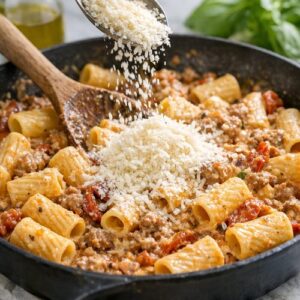
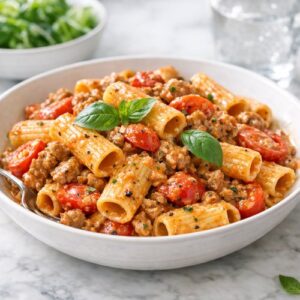
- Transfer to warm bowls or plates immediately. The sauce will continue to coat everything as it rests. If you're using fresh basil, add a few leaves on top right before serving. A final twist of fresh black pepper and maybe a tiny pinch more Parmigiano-Reggiano adds elegance without overwhelming the dish. Serve immediately while everything is hot and creamy. Leftover sauce will thicken as it cools, so this dish is best enjoyed fresh from the pan.
FAQs
Can I Use Turkey or Chicken Sausage Instead of Pork?
Technically yes, but it changes the dish fundamentally. Turkey and chicken sausages are much leaner—they release far less fat during cooking, which means you lose the richness that makes this dish special. If you DO use poultry sausage, I’d recommend adding 1 tablespoon of olive oil or butter to compensate for lost fat, and potentially using full-fat cream (not light cream) to maintain richness. The flavor will be lighter and less complex, but it’s still edible. I’d reserve this substitution for people with specific dietary restrictions, not preferences.
What’s the Difference Between Italian Sausage and Regular Ground Pork?
Italian sausage contains spices—primarily fennel seed (which tastes like licorice-adjacent anise), red pepper flakes, and often garlic and paprika—mixed into the meat before casing or forming into bulk sausage. Ground pork is just pork, no spices. This is why the dish calls specifically for Italian sausage; the built-in spicing creates depth. If you can only find plain ground pork, you’d need to add 2 tablespoons minced fennel fronds, ½ teaspoon red pepper flakes, and 1 minced garlic clove to replicate the flavor profile. But honestly, Italian sausage is widely available now—most grocery stores carry it in the meat section.
Is There a Dairy-Free or Vegan Version of This Dish?
I’ll be honest: this is fundamentally a cream-based dish, and achieving that texture without dairy is genuinely difficult. You could use cashew cream (blend soaked cashews with water, salt, and garlic), but the flavor profile changes substantially. You’d also need plant-based sausage, which varies wildly in quality. My recommendation: if you’re dairy-free, this might not be the best recipe for you. Instead, try the Beef Ragu Crock Pot Recipe, which is naturally more adaptable to dietary restrictions and equally satisfying.
How Do I Prevent My Cream Sauce From Breaking?
Cream breaks when it gets too hot (above 160°F) or when it’s exposed to high acidity without buffering. Prevention strategies: (1) Never let the cream boil—maintain a gentle simmer. (2) If adding wine or acidic ingredients, add them BEFORE the cream, not after. (3) Add cheese AFTER removing from heat, using residual warmth to melt it. (4) If your sauce does break and separates, remove from heat immediately, let it cool for 1 minute, then whisk in cold pasta water 2 tablespoons at a time until it comes back together. It may not be perfectly smooth, but it’ll be salvageable.
Can I Make This Dish in Advance for a Dinner Party?
Partially yes, strategically. Make the sausage-cream sauce (without pasta) up to 1 day in advance and refrigerate. Cook the pasta fresh about 10 minutes before serving—this takes no time and ensures proper texture. When your guests arrive, reheat the sauce gently on the stove, cook the pasta, and combine them fresh. This gives you the advantage of a make-ahead dish without the texture compromise. If you MUST combine them ahead, do it no more than 2 hours before serving, and know that the pasta will absorb sauce and become softer than ideal. When reheating, add pasta water to restore proper consistency.
More Recipes From This Tradition
- Italian Easter Pie – A savory pastry-wrapped creation filled with eggs, cheese, and cured meats that represents celebration in Italian-American families
- Baked Dijon Chicken Recipe – Another creamy, elegant preparation that draws from similar flavor principles
- Asian Pork Belly Recipe – If you love sausage’s richness, pork belly’s luxurious fat will speak to you similarly
- my favorite salad – The perfect bright, crunchy side dish to balance creamy pasta
Food connects us to our histories, our families, and the people we love. This Italian sausage pasta exists because immigrants brought traditions forward, adapted them with gratitude for new abundance, and shared them at tables where multiple languages were spoken and everyone felt welcome. Every time you make this dish—whether you’re a third-generation Italian-American, someone discovering Italian cooking for the first time, or just a busy New Yorker trying to feed yourself well on a weeknight—you’re part of that legacy.
I’ve spent years watching how food creates identity and community in this city. I’ve seen grandmothers teach granddaughters their family recipes. I’ve watched friends bond over homemade meals
